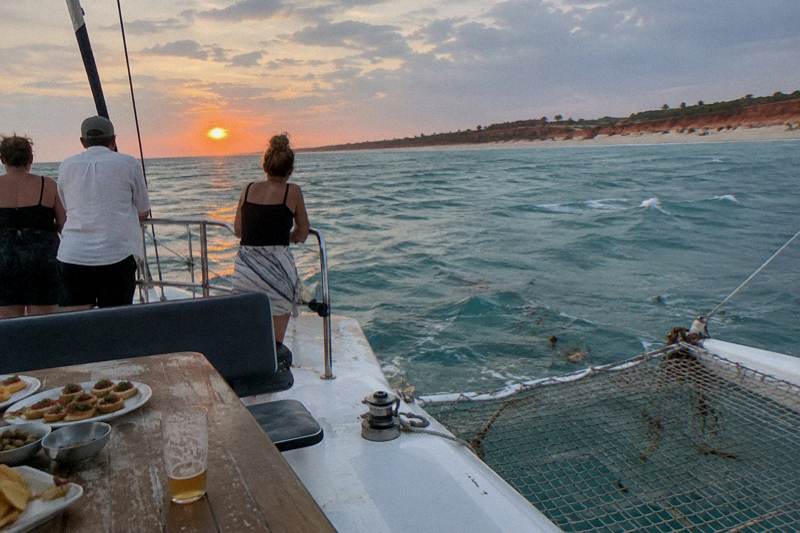
Accessibility On A Sunset Cruise: Boarding And Mobility
Broome has no marina and no jetty, so every sunset cruise starts with a walk across sand and a wade or amphibious ride to the boat. Here is exactly what each operator says about boarding, mobility and wheelchair access.
Short answer
None of Broome's sunset cruise operators offers wheelchair access on board or at the beach, and each states that guests need some mobility to board. Broome Whale Watching says outright that it has no wheelchair access; Broome Tours says passengers must be mobile.
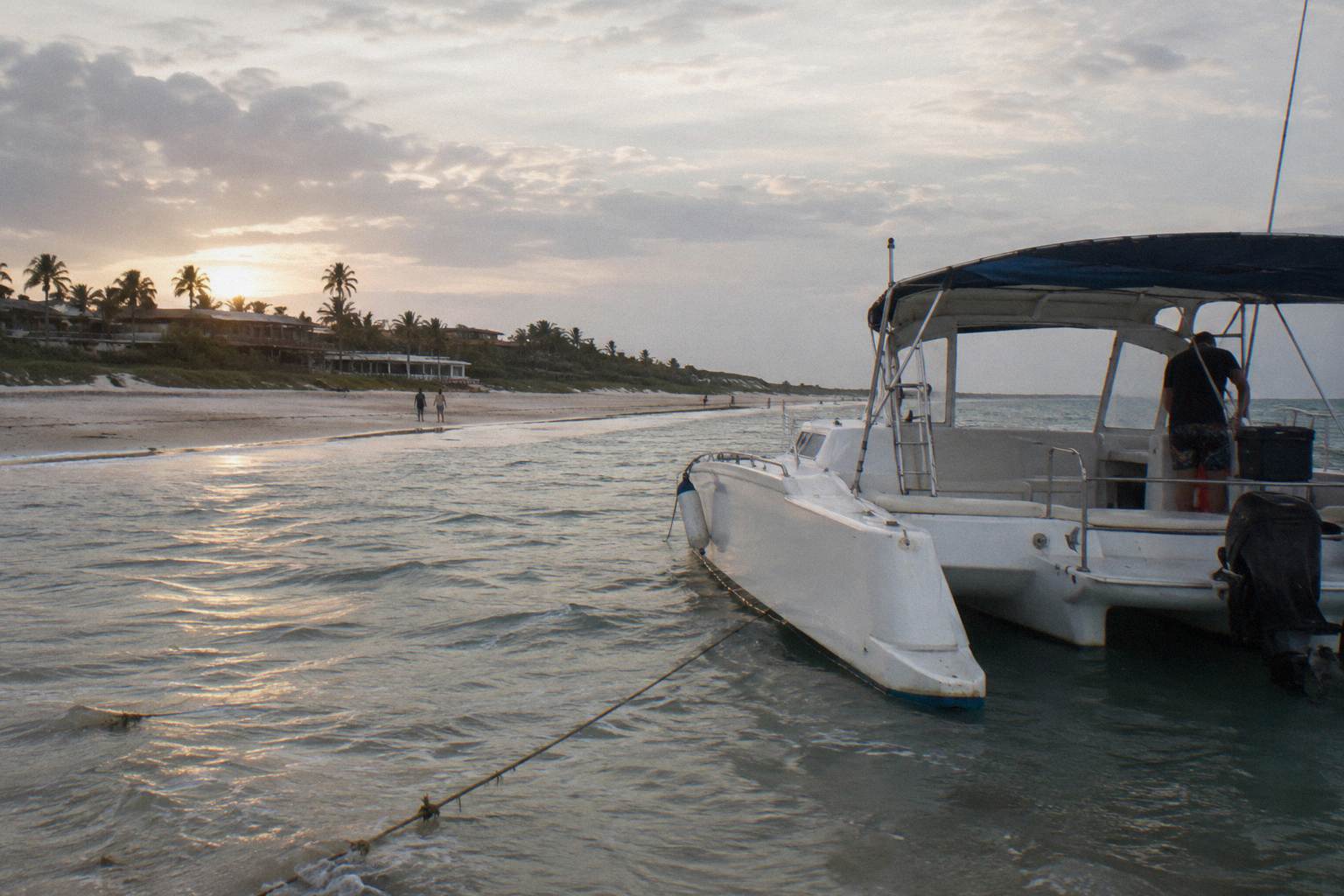
Broome sits on a peninsula between two bodies of water, and its sunset boats use neither a marina nor a jetty, because the town has neither. Every cruise on the local roster begins on a beach, and every guest reaches the boat either by wading through shallow salt water to a tender or by stepping onto an amphibious vessel that drives from the sand straight into the sea. That single fact shapes the whole accessibility picture, and it is the reason this page exists.
This guide sets out, operator by operator, exactly what is stated about boarding, mobility, wheelchairs, strollers, children and the practical questions that follow. Nothing here is padded with optimism. Where an operator says something plainly, it is quoted or paraphrased closely; where nothing is stated, the page says so, and the honest answer becomes a question to put to the operator before you book.
How Does Boarding Work Without A Marina?
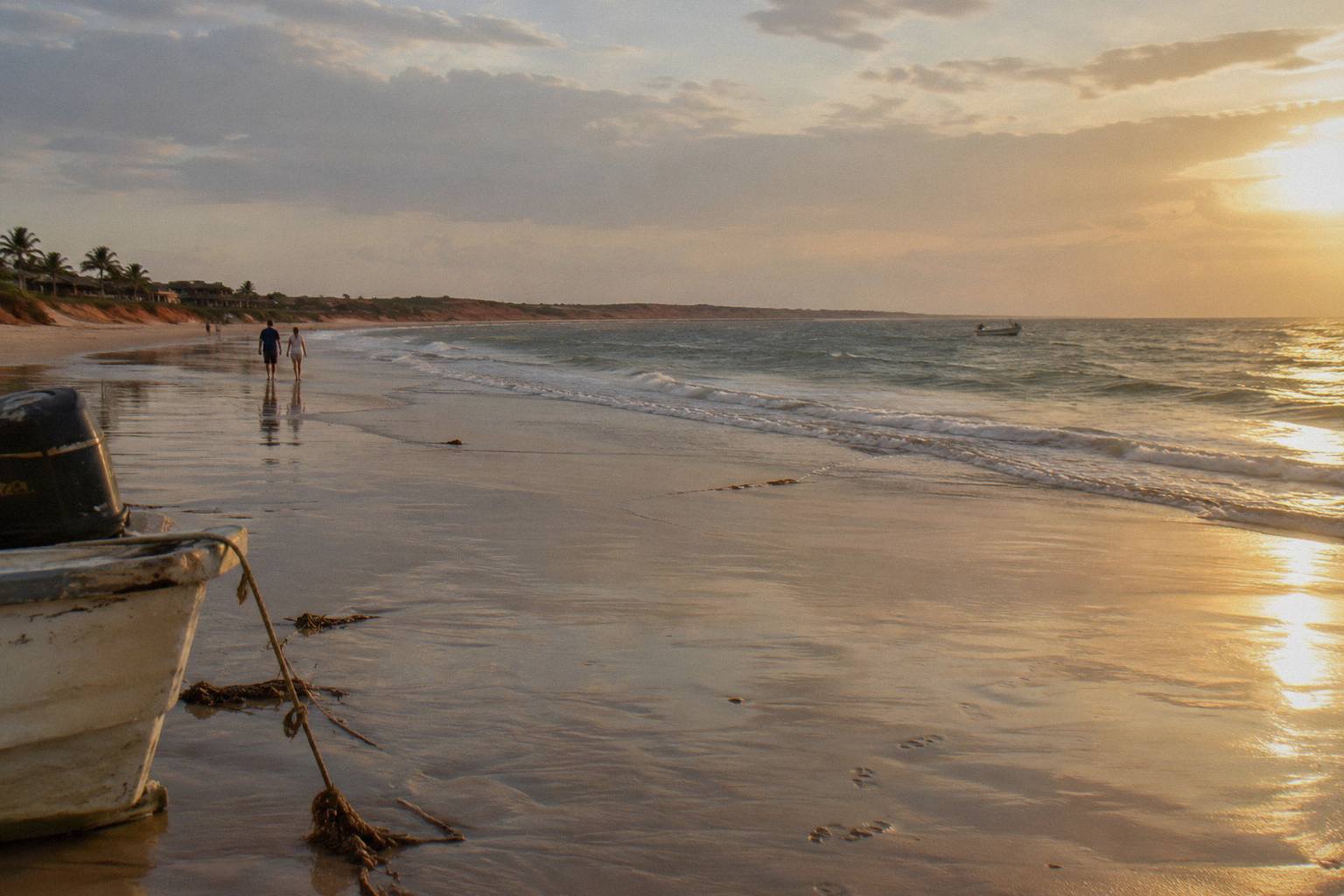
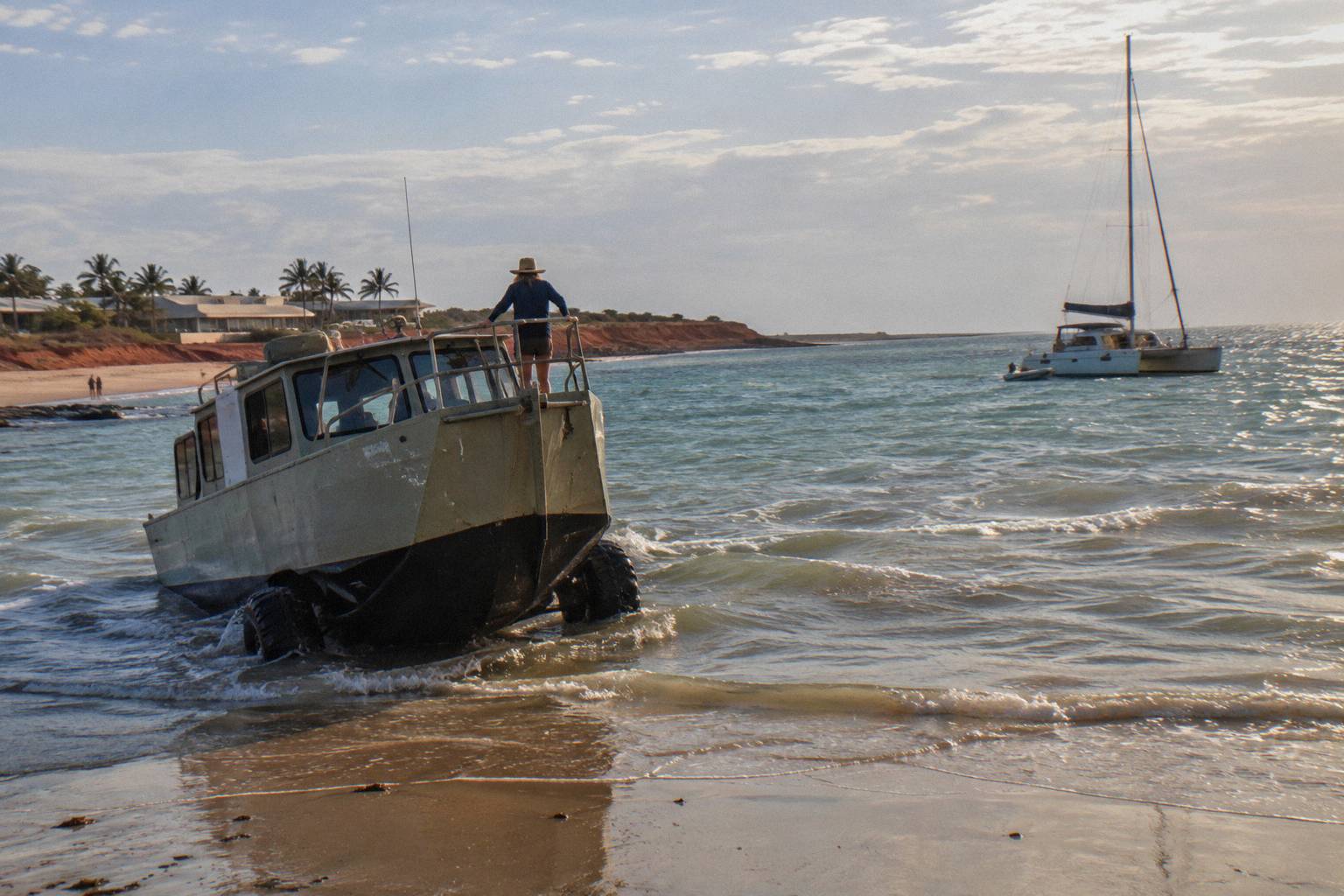
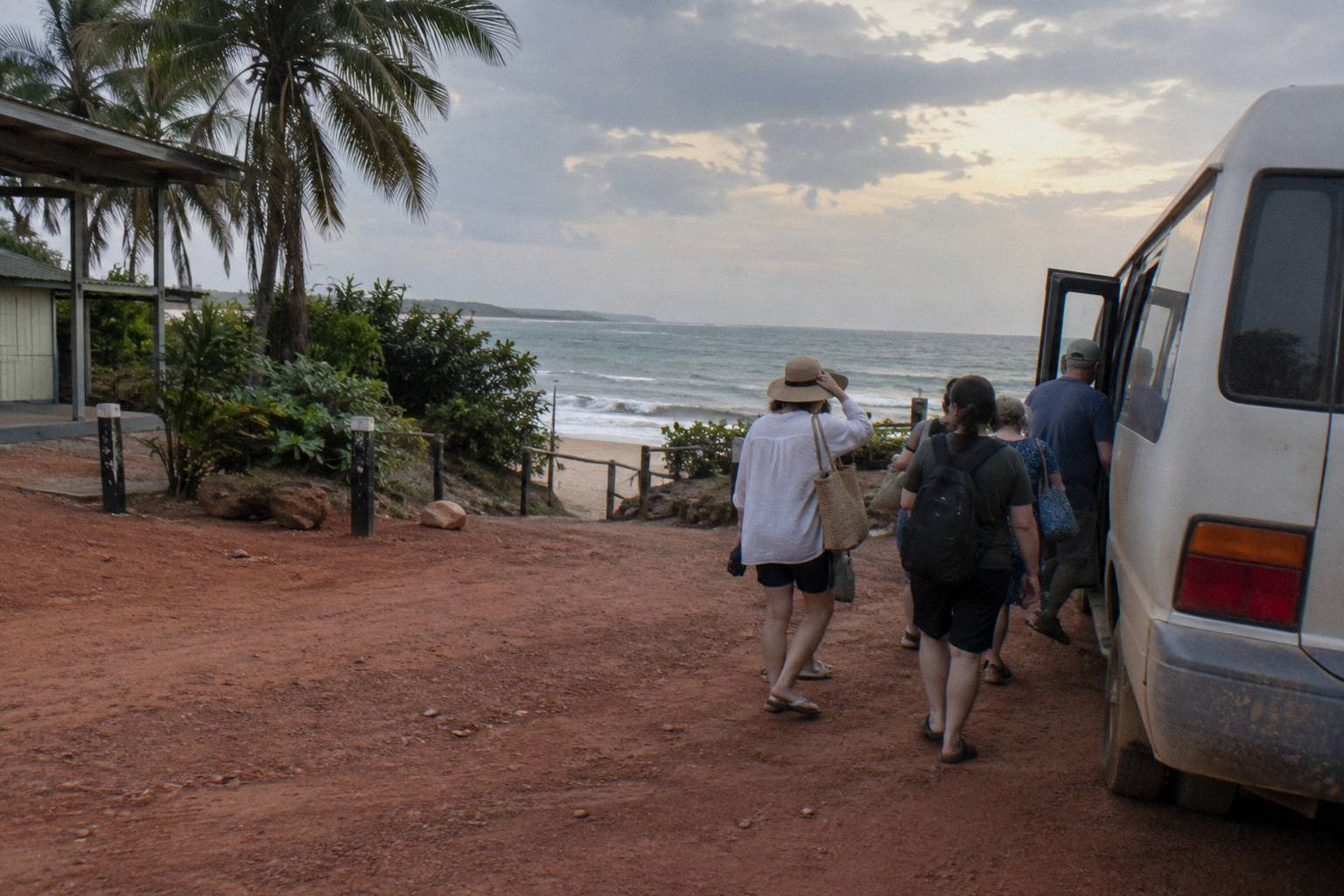
Boarding happens from the beach at every operator: Broome Whale Watching drives an amphibious transfer vessel off the sand in Roebuck Bay, while Broome Tours guests wade ankle-deep to a tender from Cable Beach or Roebuck Bay. No jetty, marina or pier boarding exists anywhere in Broome, so every guest should expect sand, shallow water or both at the start of the evening.
That is the operators' own description of their departures, and it is worth reading twice, because it removes the most common assumption visitors bring: that a sunset cruise in Broome works like a harbour cruise in a capital city. It does not. There is no gangway from a dock, no pontoon to roll onto, and no sheltered boarding area. The beach is the terminal.
The sequence differs a little by operator. Broome Whale Watching, run by owner and skipper Cam, boards its 50-foot catamaran Orcaella in Roebuck Bay via an amphibious transfer vessel, a boat that leaves the beach under its own power. Guests walk onto that transfer craft from the sand. Broome Tours, using the 42-foot catamaran Ballena, asks guests to wade ankle-deep through salt water to a tender, and notes that slip-on shoes can stay on the bus during the wade.
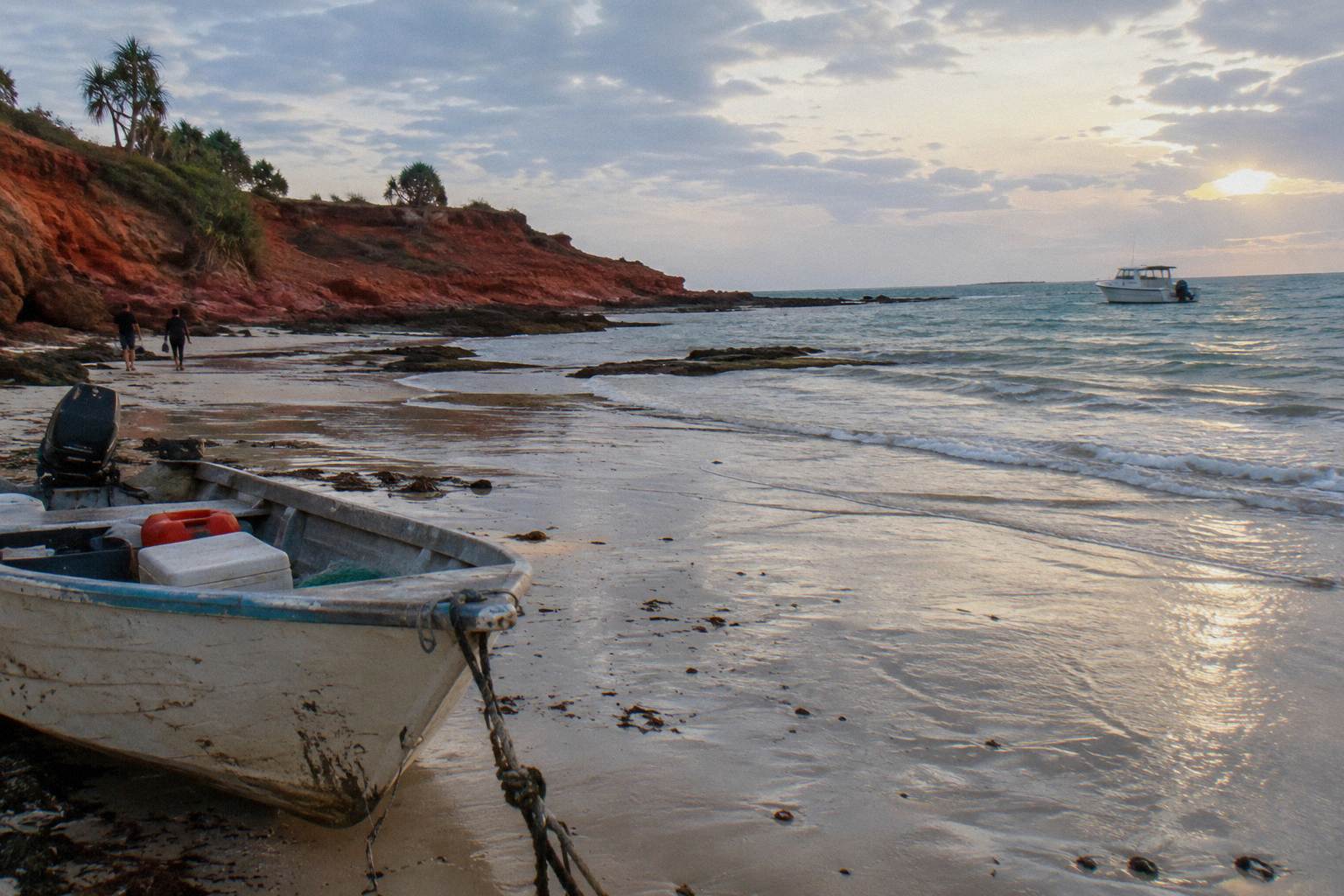
A courtesy bus runs from accommodation for the pickup products. Broome Tours adds a brief town tour en route; Broome Whale Watching also runs pickups ahead of the cruise. The small-group whale cruise lists a Gantheaume Beach meeting point, and its pickup is not stated on the listing. Exact pickup times are not printed anywhere in the operators' pages; the booking confirmation is where they appear, so a guest with mobility constraints should raise timing and boarding needs at the moment of booking rather than on the day. For the broader logistics of reaching the sand, the getting to the departure beach guide covers the ground side of the trip.
The routes themselves vary by operator and season. Broome Whale Watching states that from April to June it departs Roebuck Bay and cruises Reddell Beach and Cable Beach, and from September to November it departs and returns to Roebuck Bay. None of this changes the boarding reality, but it does explain why the departure beach can differ between operators on the same evening.
| Operator | Boarding method | Departure beach | Wade depth stated |
|---|---|---|---|
| Broome Whale Watching | Amphibious transfer vessel | Roebuck Bay | None stated; "some agility required" |
| Broome Tours | Tender from the beach | Cable Beach or Roebuck Bay | Ankle-deep |
| Small-group whale cruise | Amphibious transfer | Gantheaume Beach | Not stated; check the booking page |
The small-group whale cruise runs on a 42-foot vessel named Zenysis with an amphibious transfer, and it is run by Broome Whale Watching. Its listing gives a Gantheaume Beach meeting point and does not state a pickup, and its pages state no wade depth, so a mobility question about that trip belongs in a message to the listing before booking, not in an assumption carried onto the sand.
Can You Take A Sunset Cruise In A Wheelchair?
By the operators' own statements, no Broome sunset cruise operator states wheelchair access, and two address it directly: Broome Whale Watching states it has no wheelchair access on board or at the beach, and Broome Tours states passengers must be mobile to board and disembark and that wheelchairs are not carried. For the sunset cruises bookable on this site, that is the full picture, so raise any mobility need with the operator before booking rather than on the day.
That is a hard answer, and this site will not soften it into a maybe. The physical constraint is structural: a beach departure with no pontoon means a wheelchair user would need to cross sand, transfer at water level into a moving tender or amphibious hull, and then step up into a catamaran or mothership from that small craft. None of the operators describes a system that achieves this.
What each operator does offer is worth knowing precisely. Broome Whale Watching accepts Companion Cards, which cover the support person accompanying a paying guest with a disability, and its own accessibility page is the place to read the detail: the operator's accessibility information. That page states there is no stroller room either, and that while the bow is in the sun, the back deck and top deck are shaded, which matters for guests managing heat as well as mobility.
Broome Tours frames its requirement around mobility rather than equipment: passengers must be mobile to board and disembark, wheelchairs are not carried, and there is no minimum age, with adults responsible for children. Its FAQ page, published by Broome Tours, is the source for those statements and for the vessel detail: an air-conditioned saloon, 8 shaded cockpit seats, bow shade seating for 10, two toilets below deck and filtered desalinated water. A guest who can walk short distances with support may find that workable; a full-time wheelchair user will not, and the operator says as much.
For guests with limited mobility who can walk, the choice between operators may come down to the boarding method. Ankle-deep wading works for Broome Tours, while the amphibious boarding at Broome Whale Watching involves no stated wade but does involve stepping onto and off a moving amphibious hull. Neither is easy or hard in the abstract; the honest position is that each is a different physical task, and the right operator is the one whose task a guest can actually perform.
Which Boat Asks The Least Of Your Body?
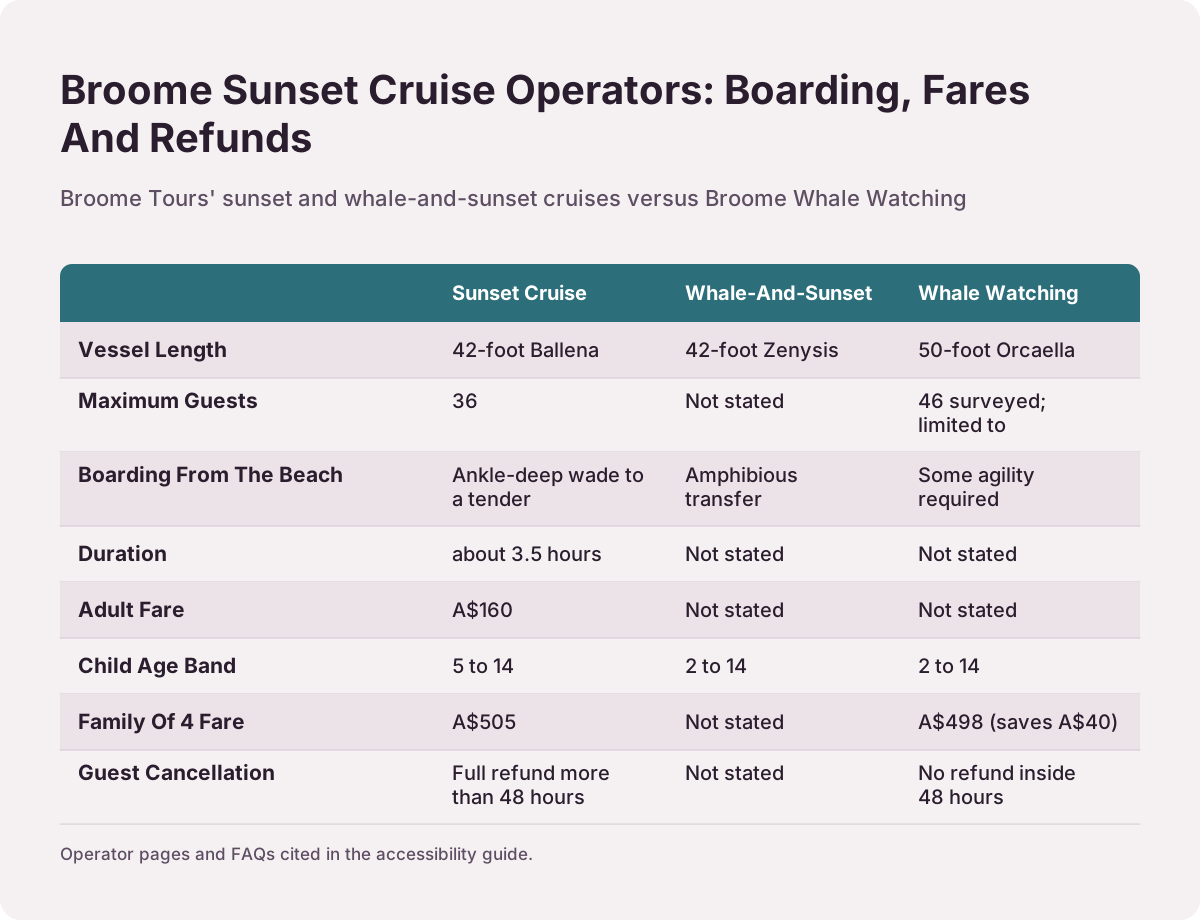
By the operators' own statements, Broome Tours asks for the shallowest wade at ankle depth and carries the most on-board comforts, including an air-conditioned saloon and two toilets below deck; Broome Whale Watching avoids a wade via its amphibious transfer but notes some agility is required for stepping onto and off the vessel. Between these two, the physical task of boarding differs, and the right operator is the one whose task a guest can perform.
Start with the vessels, because the boat is where most of the evening is spent. Ballena, the Broome Tours catamaran, is 42 feet, takes a minimum of 5 and a maximum of 36 guests, and offers shaded seating in the cockpit and at the bow alongside the saloon. Orcaella, the Broome Whale Watching catamaran, is 50 feet, surveyed for 46 passengers and limited to about 38 on its dolphin and whale cruises, with a toilet aboard and shaded areas on the back deck and top deck.
The comparison that matters for a mobility-limited guest is not size but transitions. A cruise involves a chain of them: bus to sand, sand to water, water to boat, and the whole chain again in reverse after dark. More boat does not mean easier boarding; it can mean a higher freeboard to climb from the tender. Fewer guests can mean more space to sit during the cruise, but the boarding chain is unchanged.
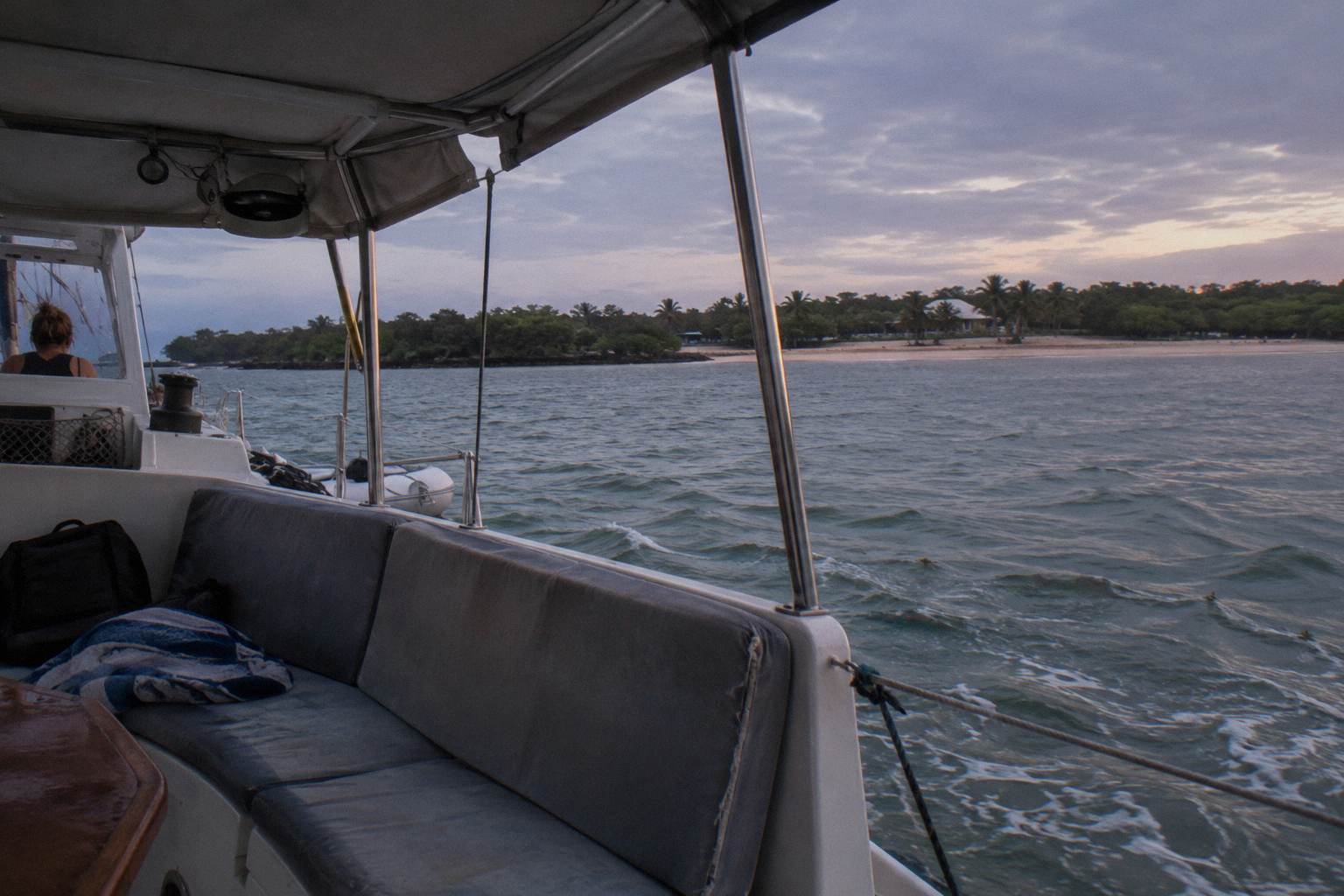
Below deck facilities are also part of the honest picture. Ballena keeps its two toilets below deck, which means stairs or a ladder of some kind on every visit. Orcaella has a toilet aboard, but neither operator describes a step-free route to it. A guest who manages the boarding chain but not a companionway stair should ask specifically about the route from deck to toilet when contacting the operator.
Seating is the other practical question. Shaded cockpit seats (8) and bow shade seating (10) are stated for Ballena; shaded back and top decks for Orcaella. For guests who cannot stand for long periods, a stated seat count is genuinely useful when booking, because it can be raised with the operator in advance rather than negotiated on a crowded deck at departure.
The featured cruise on this site, Broome's Iconic Catamaran Sunset Cruise aboard Ballena, carries the operator's price of A$160 adult, A$145 senior or concession, A$110 for children 5 to 14, infants up to 2 free, and A$505 for a family of 4, with a duration of about 3.5 hours. It departs ahead of sunset, and its beach boarding and ankle-deep wade are the ones described above, so the mobility conversation belongs with the booking.
What About Strollers, Children And Companions?
Strollers are explicitly ruled out by Broome Whale Watching, which states there is no stroller room on board, and no operator describes stroller-friendly boarding; children are welcome under per-operator age rules, with child bands of 2 to 14 at Broome Whale Watching, 5 to 14 on the Broome Tours sunset cruise, and 2 to 14 on its whale-and-sunset cruise.
The stroller answer is as firm as the wheelchair answer. A beach departure and a tender transfer leave nowhere to wheel a pram and no dry, level place to park one, and Broome Whale Watching says so directly. Families with very small children should plan for a carrier or arms, plus a towel, since the wade at Broome Tours means the boarding adult gets at least damp.
Children themselves are well provided for in the stated rules. Broome Tours sets no minimum age, holds adults responsible for children, and carries child and infant lifejackets aboard. Broome Whale Watching requires anyone under 18 on the first travel date to be accompanied by an adult, and asks that pregnancy be disclosed at booking. The site will not guess whether any of that suits a particular child; the age bands and lifejacket facts are the decision inputs.
| Operator | Child age band | Infants and minimum age | Family and child support stated |
|---|---|---|---|
| Broome Whale Watching | 2 to 14 | Under 18 must travel with an adult | Family of 4 A$498 (page says it saves A$40) |
| Broome Tours (sunset cruise) | 5 to 14 | No minimum age; infants up to 2 free | Child and infant lifejackets aboard; family of 4 A$505 |
| Broome Tours (whale-and-sunset) | 2 to 14 | No minimum age stated | Not stated; check the booking page |
Companions have one concrete support to know about: Broome Whale Watching accepts Companion Cards, which in ordinary terms means the support person accompanying a cardholder can be admitted under the card's terms rather than buying a separate ticket. For a guest with an invisible illness, chronic pain or fatigue rather than a mobility aid, that is the single most useful accessibility fact on the roster, and it pairs sensibly with the shaded decks on Orcaella's back and top levels, since heat management is often the harder half of an evening on the water.
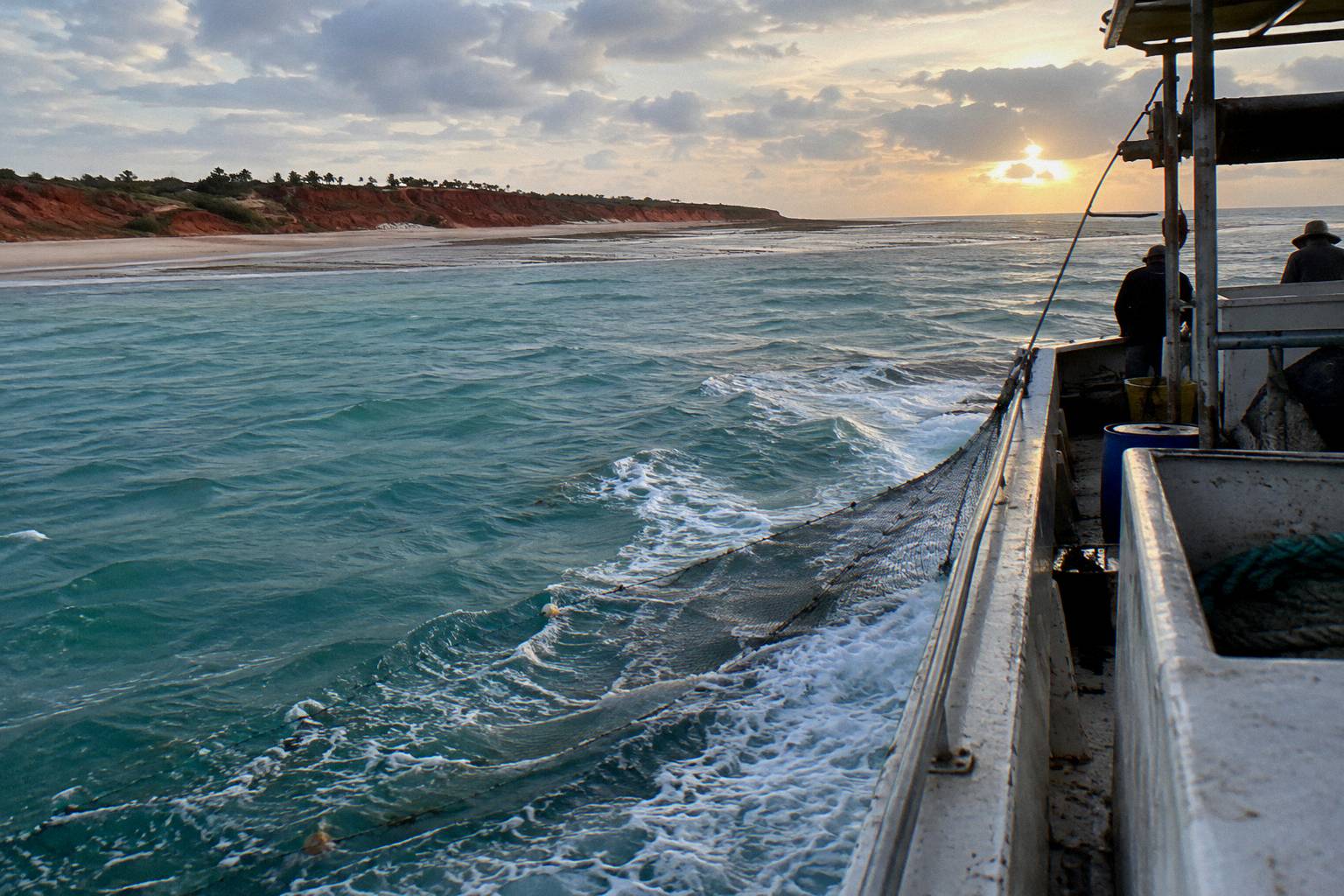
Boom-net swimming, offered by Broome Whale Watching late March to early October and by Broome Tours April to early October when conditions permit, deserves a mobility note of its own. It is an optional activity involving a net towed behind the boat, and joining it means climbing over a rail or transom and back. A guest can skip it entirely and lose nothing from the cruise, but it should not be assumed available to everyone aboard; conditions and capability both gate it.
What to wear and carry interacts with mobility too. Broome Whale Watching lists bathers and a towel, a camera, sunglasses, a hat, a water bottle and thongs or slip-off shoes. Broome Tours advises a light jacket from June to August after sunset and repeats that slip-on shoes can stay on the bus because of the wade. The site's sunset cruise clothing and footwear guide expands on the wardrobe side; the mobility-relevant point here is simply that footwear you can remove and hold, or that can survive salt water, is the practical choice for every operator.
What Should You Ask Before Booking?
Ask the operator, in writing, four things: whether your specific mobility level can complete the beach-to-boat transfer, what seating is guaranteed at departure, what the route to the toilet involves, and what happens to your fare if you cannot board on the day. Every operator states cancellation terms, and none of them softens the boarding requirement after booking.
The booking conversation is where accessibility decisions are actually made, and it works best when it is specific. "Is it accessible?" invites a yes shaped by optimism. "I can walk 50 metres with a stick and manage two steps with a handrail; can I wade ankle-deep to a tender, and is there a seat reserved near the boarding point?" invites an answer you can plan around. Operators answer this kind of question all season, and each of the three named here publishes contact detail and FAQs for exactly this purpose.
Cancellation terms are the financial half of the same conversation, and they differ sharply. Broome Whale Watching gives no refund inside 48 hours of departure, needs one week's notice for bookings of 4 or more guests and two weeks for exclusive charter, charges no-shows in full, and reschedules or refunds in full if it cancels for weather or low numbers. Broome Tours gives a full refund more than 48 hours before departure, treats the total cost as lost inside 48 hours, refunds in full on its own weather or mechanical cancellation, and forfeits the fare if a guest fails to board.
| Operator | Refund window (guest cancels) | Group notice | Operator cancels |
|---|---|---|---|
| Broome Whale Watching | No refund inside 48 hours | 4+ guests: one week; charter: two weeks | Reschedule or full refund |
| Broome Tours | Full refund more than 48 hours; fare lost inside | Not stated | Full refund |
The listing pages some of these cruises appear on carry their own terms, and some show free cancellation up to 24 hours, which can differ from the operator's own policy. Read the terms of the page you actually book on; this site never promises a refund or a place. The what if the sail is cancelled explainer walks through the weather-cancellation side in more detail.
Notice requirements deserve extra weight for accessible travel. A family or group of four or more at Broome Whale Watching needs a week's notice for changes, and a plan that depends on confirming mobility arrangements the day before departure collides with every operator's cut-off. Build the accessibility conversation into the booking itself, not the countdown to it.
For guests who weigh the risk of a moving deck, the honest gap is that no operator page states anything about sea state, swell or seasickness rates, and this site prints none of it. Questions about conditions on a given evening belong with the operator, whose skippers make those calls daily.
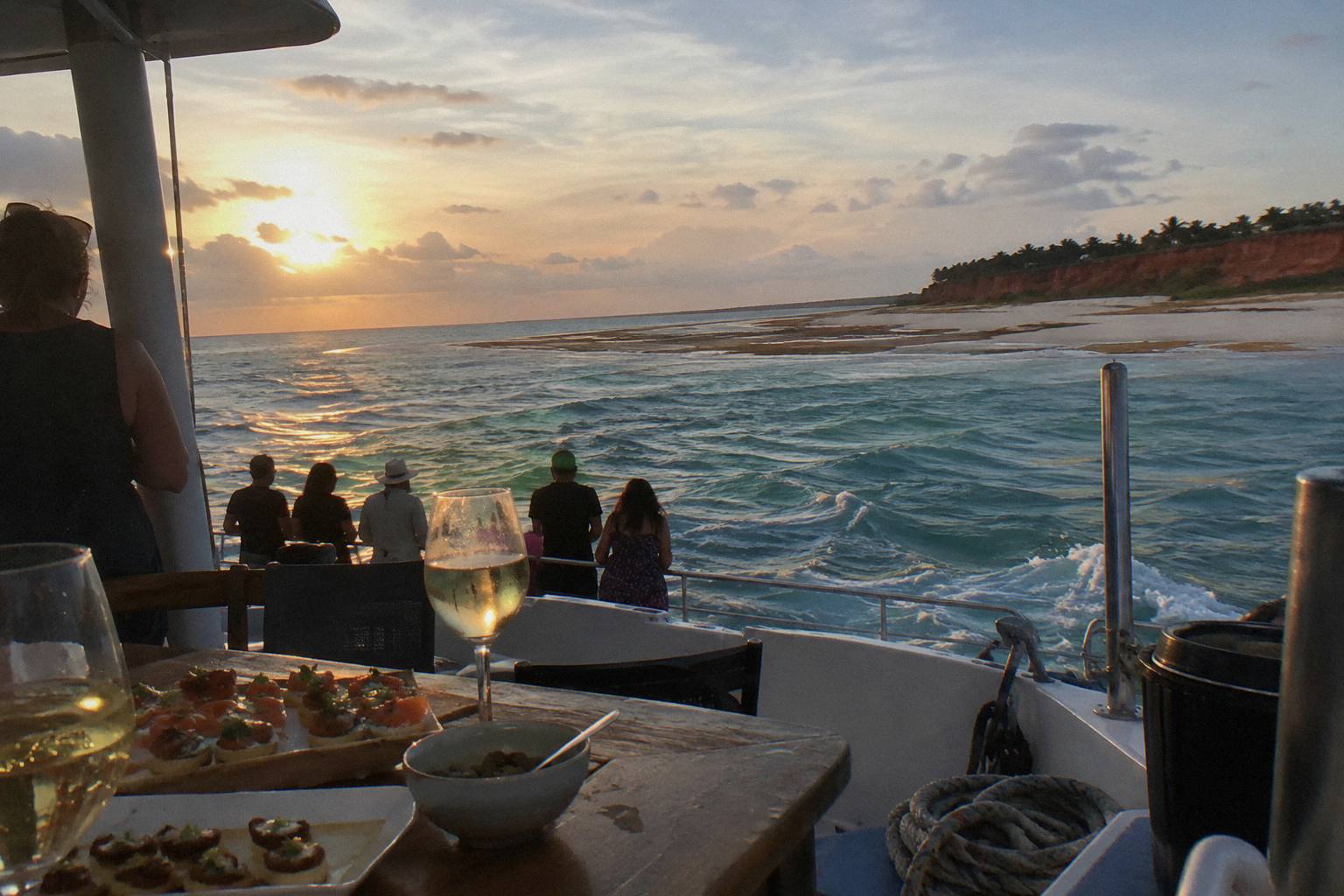
The canape cruise on the roster, the Sunset Cruise With Canapes And Transfers run by Broome Whale Watching aboard Orcaella, carries a rating of 4.2 across 11 reviews and the operator's price of A$170 adult, A$160 senior, A$99 child (2 to 14) and A$498 for a family of 4, a package the operator's page says saves A$40. Boarding is via the amphibious transfer from Roebuck Bay, with the operator's note that some agility is required, so the same pre-booking questions apply.
What Can You Do Instead If The Boat Is Not An Option?
Broome's best step-free sunset experiences are on land: the Town Beach (Guwarri) precinct on Roebuck Bay is the stated best viewing area for the Staircase to the Moon, which occurs 2 to 3 nights a month between March and October, and Cable Beach itself offers a drive-to dune edge with no boarding requirement, while camel rides are a separate activity this site holds no facts for.
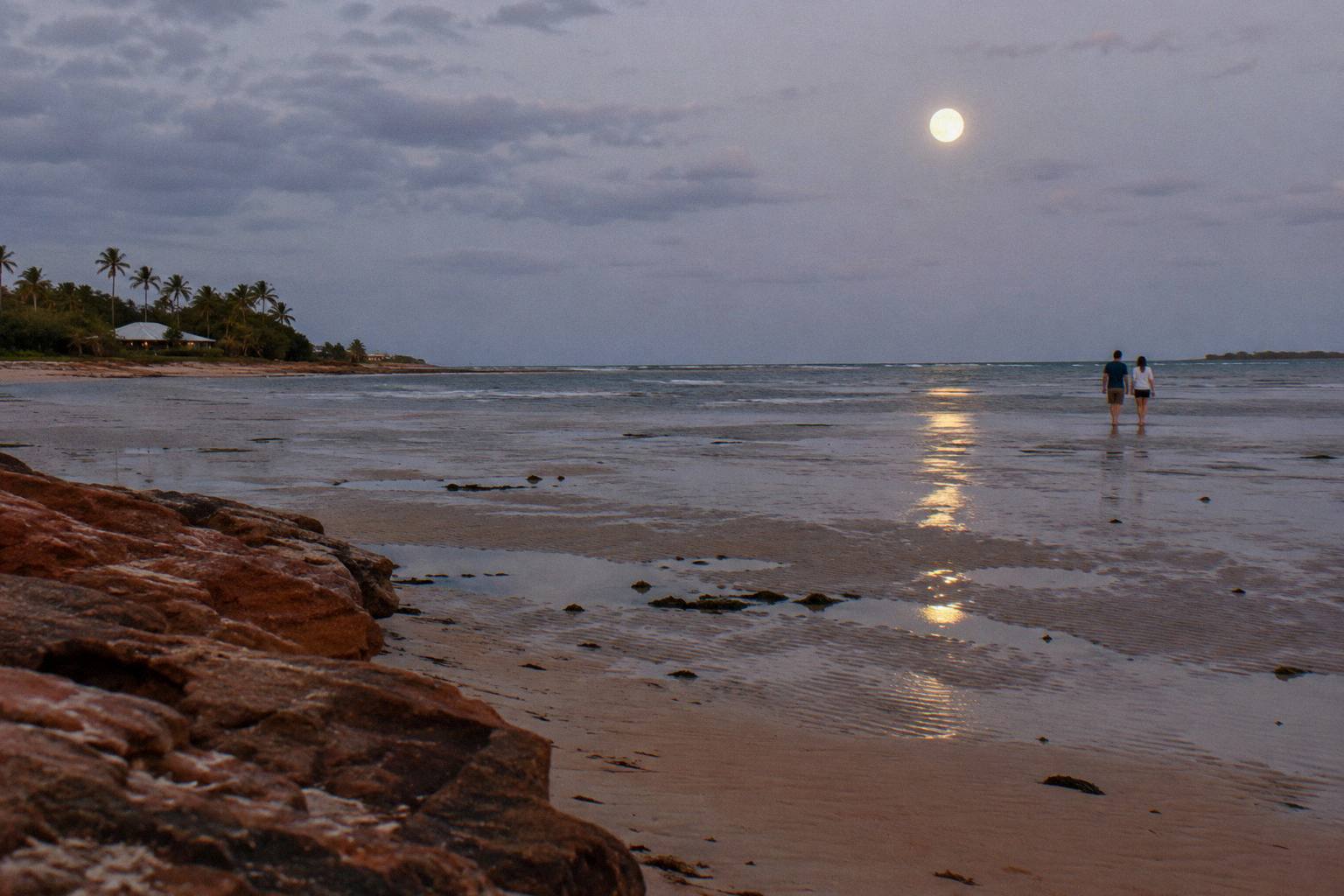
An honest accessibility page has to offer a real alternative, not a consolation prize. The Staircase to the Moon, the full moon rising over the exposed tidal flats of Roebuck Bay so its reflection looks like a staircase, is a shore experience by definition, and Visit Broome names the Town Beach precinct as the best place to see it. Markets run at Town Beach on Hamersley Street from 4pm to 8pm on selected dates. The 2027 dates supplied to Visit Broome by Kimberley Astronomy Tours include March 23, 24 and 25, April 22, 23 and 24, and May 21, 22 and 23, with moonrise times published for each night; the site's Staircase to the Moon dates page carries the full table and the viewing notes.
No sunset boat product on the local roster is a Staircase to the Moon cruise. No operator states a Staircase departure, a moonrise cruise or a return time, and the one Staircase-titled boat product found earlier no longer runs. Treat the Staircase as an evening to plan beside a cruise, from the shore, not as something a cruise delivers.
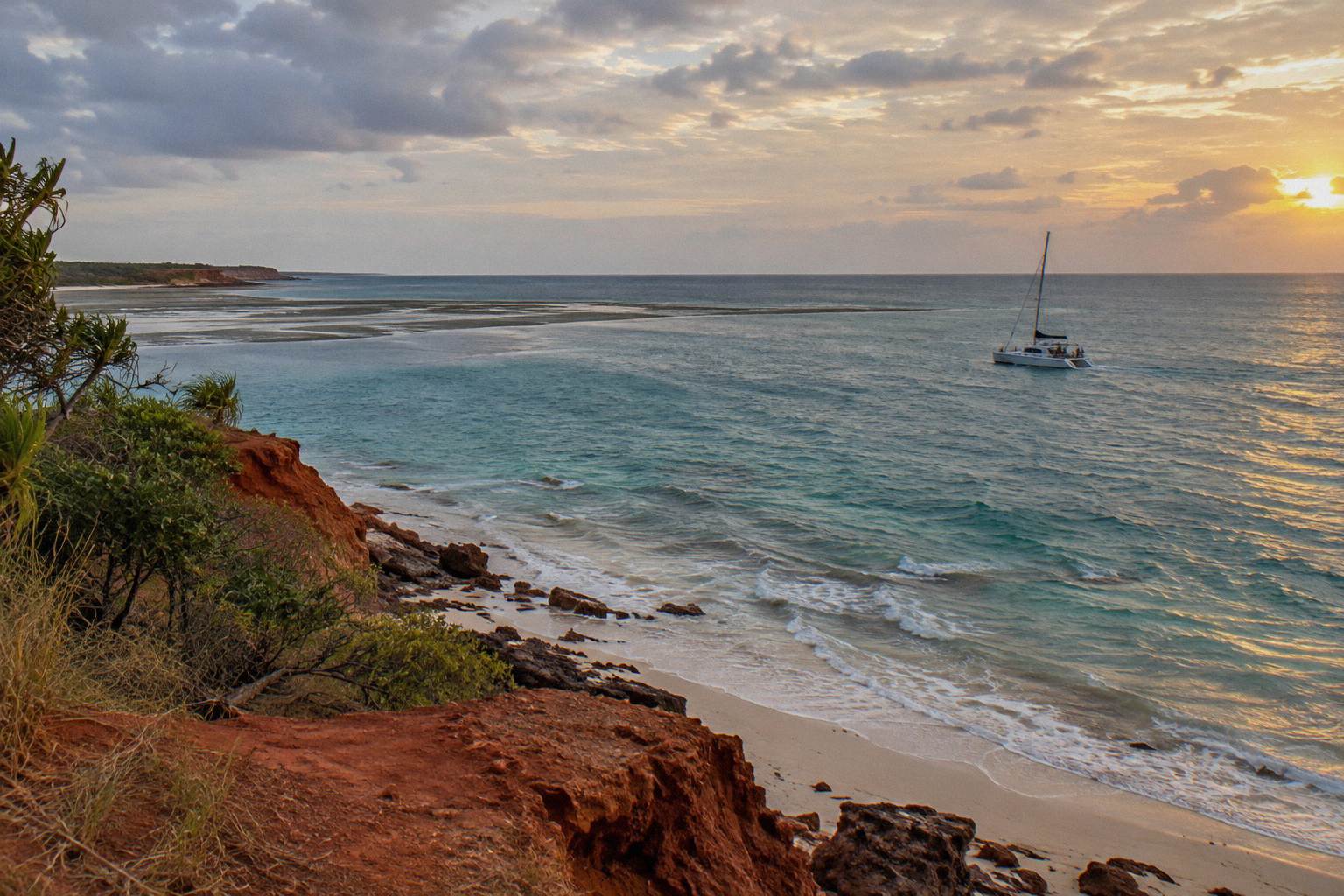
Cable Beach camel rides are the other famous sunset activity in town, and they are not on this site's roster: the sources hold no camel operator, price, duration or booking fact, so this page names none and invents none. The decision frame the boat facts support is simple: a boat leaves the beach by tender or amphibious vessel and runs 3 to 4.5 hours, while a shore evening asks nothing of your legs beyond what the sand does. The sand itself is the shared constraint, and a wheelchair user contemplating either should scope the beach access at Town Beach or Cable Beach separately.
Tides are the wild card in any shore plan, and no operator or authority states a tide-by-evening rule. The tides and evening cruises guide explains what is known and what is not; the short version is that the link between a given tide and a given boarding is unstated anywhere, so the operator or the booking confirmation is the only source.
The whale-season cruises add one more accessibility wrinkle: the small-group whale cruise meets at Gantheaume Beach, and the listing does not state a pickup. It runs about 4.5 hours on the 42-foot Zenysis with an amphibious transfer, and the Whale Watching And Sunset Cruise joins it as the other bookable whale-season option. No boarding detail is stated for either beyond what the operators publish generally.
Common Questions About Accessibility On A Sunset Cruise
Are Any Broome Sunset Cruises Wheelchair Accessible?
No. Broome Whale Watching states it has no wheelchair access on board or at the beach, and Broome Tours states passengers must be mobile and wheelchairs are not carried. No operator on the roster claims wheelchair access.
How Deep Is The Water When Boarding?
Broome Tours describes an ankle-deep wade to its tender. Broome Whale Watching uses an amphibious transfer vessel with no stated wade depth, but notes some agility is required.
Can I Bring A Stroller On Board?
Broome Whale Watching states there is no stroller room. No other operator describes stroller boarding, so plan for a carrier and confirm with the operator before booking.
Do Any Operators Accept Companion Cards?
Yes, Broome Whale Watching accepts Companion Cards and links accessibility information on its own site. It is the only operator on the roster that states this.
Can A Guest With Limited Mobility Still Board?
Possibly, depending on the guest. Each operator states a mobility requirement rather than a blanket ban on limited mobility: the practical test is the beach walk plus the transfer, plus stairs to below-deck toilets on some vessels. Ask the operator in writing about your specific needs before booking.
What Happens If I Cannot Board On The Day?
Failing to board forfeits the fare at Broome Tours, and no-shows pay in full at Broome Whale Watching. Guest cancellations are refunded only outside each operator's window, so resolve mobility questions before the 48- or 72-hour cut-offs. If the operator cancels for weather or low numbers, all three reschedule or refund.
Every evening on Broome's water begins the same way, with sand underfoot and a small boat waiting beyond the shallows. Broome Sunset Cruises exists to make that beginning as predictable as it can be: the wade depths, the transfer types and the operator-stated limits on this page are the full picture the operators publish, and the honest next step for any guest with a mobility question is to put it in writing to the operator before the cancellation windows close.