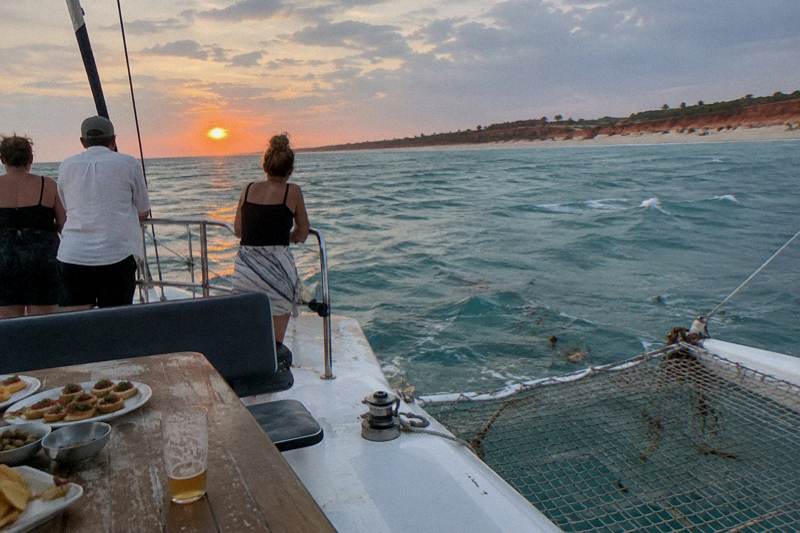
Which Side Of The Boat Is Best For The Sunset?
No Broome operator names a best side of the boat for sunset. Here is what the operators do state about decks, shade and seats, and how to pick a spot.
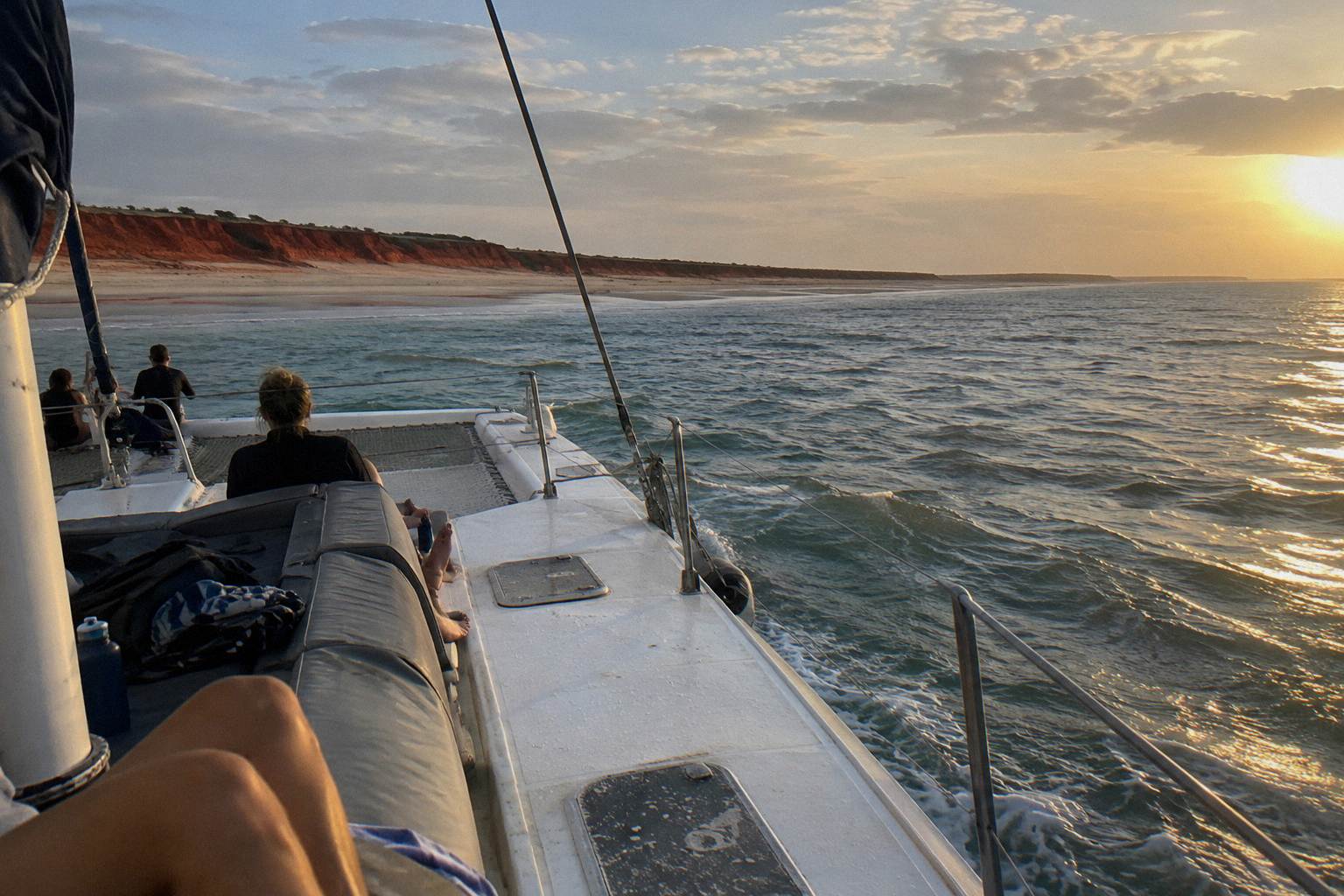
No Broome sunset-cruise operator states that one side of the boat is better for the sunset, so any page that names a side is guessing. What the operators do publish is deck layout: shaded and open seating areas, saloons, and where the sun falls. On every boat on the roster the vessel moves through the water, so the view shifts around the deck all evening rather than staying fixed to one rail.
That is the short, honest answer, and it is worth sitting with for a moment because almost every other article on this question invents a winner. The framing usually goes that because the sun sets roughly westward in Broome, one rail faces the show and the other faces the dark. On a moving vessel that logic barely holds. The boats cruise along the coast, turn at points, drift, and reposition for the light, and the crew are not trimming the boat to give one half of the passengers a worse evening.
What you can actually control is the kind of seat you take: shaded or open, near the rail or under cover, close to the bar or out on the bow. Those choices differ boat to boat, and the operators describe them in enough detail on their own pages that you can plan a seat before you ever step onto the beach. This article walks through what each published layout offers, how the boats move, and how sunset direction and timing in Broome interact with all of it.
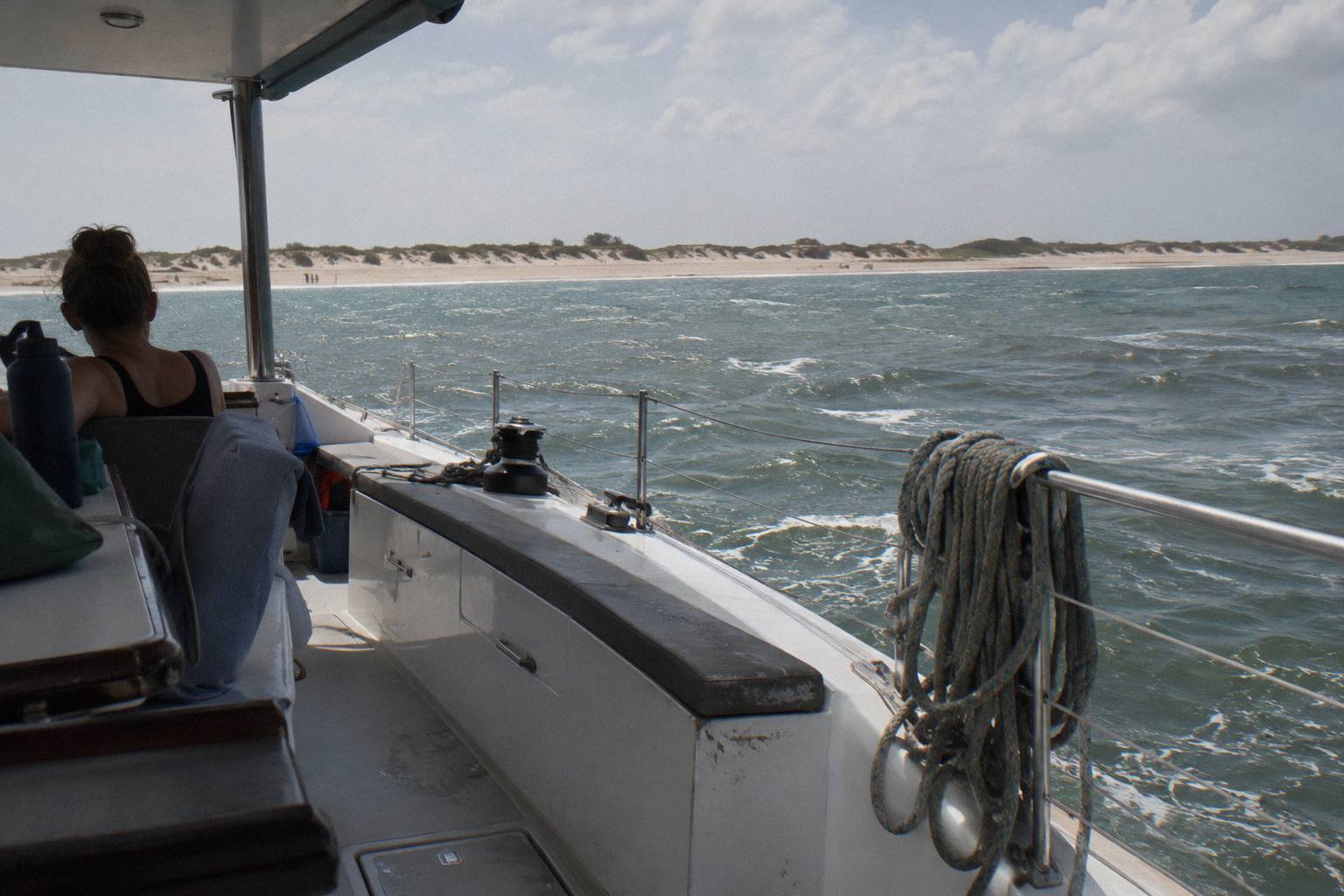
If you are still choosing between the trips themselves, these cover the main formats: a canape catamaran cruise and a dolphin canape cruise with transfers.
What Deck Layouts Do The Broome Sunset Boats Actually Have?
Starting with Ballena, because it is the boat behind Broome's Iconic Catamaran Sunset Cruise. The operator's FAQ describes a 42-foot catamaran it calls a sailing or low-powered catamaran, carrying a minimum of 5 and a maximum of 36 guests. The published seating map is unusually specific: 8 shaded cockpit seats, bow shade seating for 10, an air-conditioned saloon for retreating from the heat, 2 toilets below deck, and filtered desalinated water on tap. That is a boat where you can move between three distinct zones during a roughly 3.5-hour cruise, and the operator's own description invites exactly that. The operator's price for the sunset cruise is A$160 adult, A$145 senior or concession, A$110 for a child aged 5 to 14, infants up to 2 free, and A$505 for a family of 4.
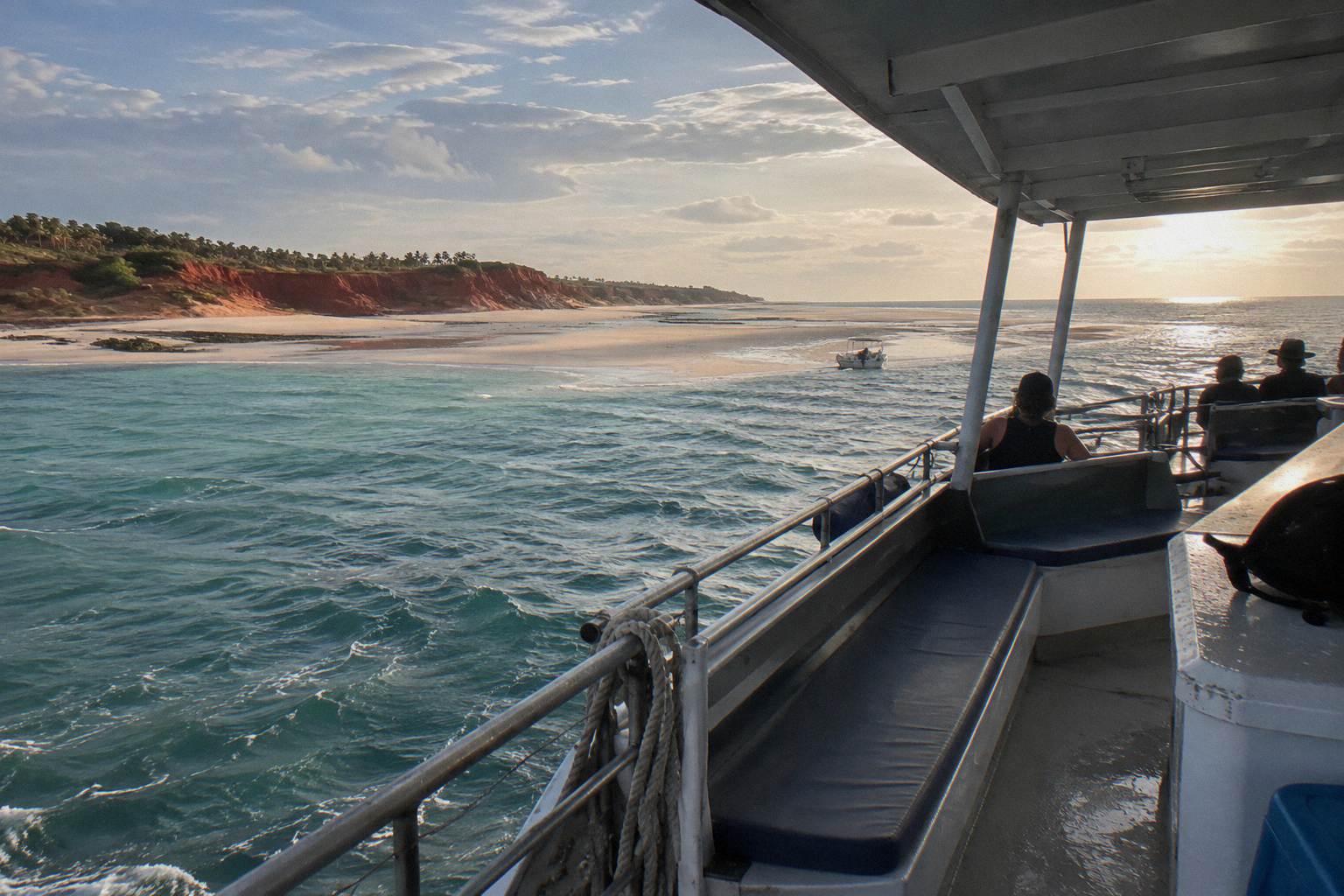
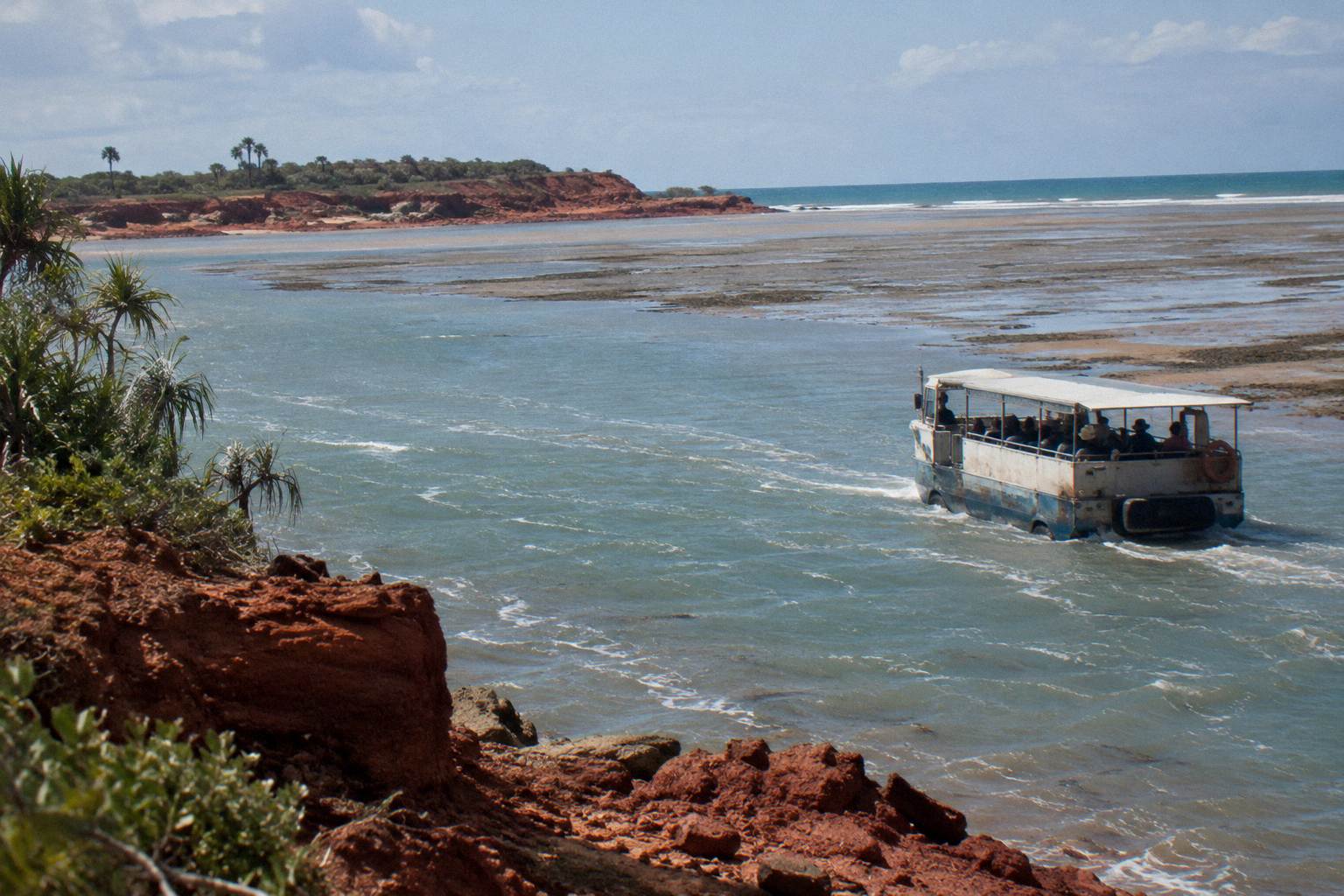
Orcaella, the Broome Whale Watching vessel, is a 50-foot catamaran surveyed for 46 passengers and limited to about 38 on its dolphin and whale cruises, with guests boarding from the beach by amphibious transfer vessel. On shade, the operator is direct: there is no stroller room, the bow is in the sun, and the back deck and top deck are shaded. For a sunset cruise that is effectively a two-zone choice, an open bow or shaded decks at the stern and aloft, and it maps cleanly onto whether you want direct light on you for the last hour or shade until it cools. A toilet is aboard.
| Vessel | Operator | Stated size and capacity | Stated seating and shade zones |
|---|---|---|---|
| Ballena | Broome Tours | 42-foot catamaran, 5 to 36 guests | 8 shaded cockpit seats, bow shade seating for 10, air-conditioned saloon, 2 toilets below deck |
| Orcaella | Broome Whale Watching | 50-foot catamaran, surveyed for 46, about 38 on dolphin and whale cruises | Shaded back deck and top deck, bow in the sun |
Because the seat question is really a shade question in the tropics, the layout facts matter more than a compass reading. If you know you burn, the shaded zones on Ballena and Orcaella are the stated answer. If you want the sun on you until it drops, the bow areas are the open option the operators themselves flag. Neither choice costs more, and no operator reserves either zone at a premium.
If the 36-guest catamaran format sounds right, the cruise runs about 3.5 hours with canapes and a fruit platter included, and the bar is for purchase.
Why No Operator Will Name A Better Side
The reason is practical rather than evasive: the boats are moving for the whole cruise, and no operator states a fixed orientation toward the sunset. Broome Whale Watching's routes differ by season, April to June toward Reddell Beach and Cable Beach, September to November within Roebuck Bay. A rail that faces the sun on one leg faces away on the return.
Add the turning that any coastal cruise involves and the "right side" changes several times in an evening. A boat that runs north along Cable Beach and comes back south gives each rail the sunset at different moments. The same is true in Roebuck Bay, where the operator's stated route is a loop out of and back to the bay. The sources for this site, the operators' own pages and Visit Broome, contain no view description, no claim about colours or light from the water, and no statement from any operator that one side sees more.
So a page that tells you a specific side is best is writing fiction with a compass. What the operators do say, and what you can plan around, is that the boats are catamarans and amphibious beach-launch vessels with open deck areas, and that guests move around them. On Ballena the operator publishes seat counts for separate zones, which only makes sense on a boat where people choose where to sit and shift during the trip. On Orcaella the shaded back and top decks and the open bow are all available to the same ticket.
The one thing worth knowing before you board is that boarding itself is from the beach, because Broome has no marina or jetty. Broome Whale Watching uses an amphibious transfer vessel and notes some agility is required; Broome Tours guests wade ankle-deep to a tender, and slip-on shoes can stay on the bus. None of that affects your seat choice, but it affects your footwear, which we come back to below.
How To Pick Your Seat By What You Want From The Evening
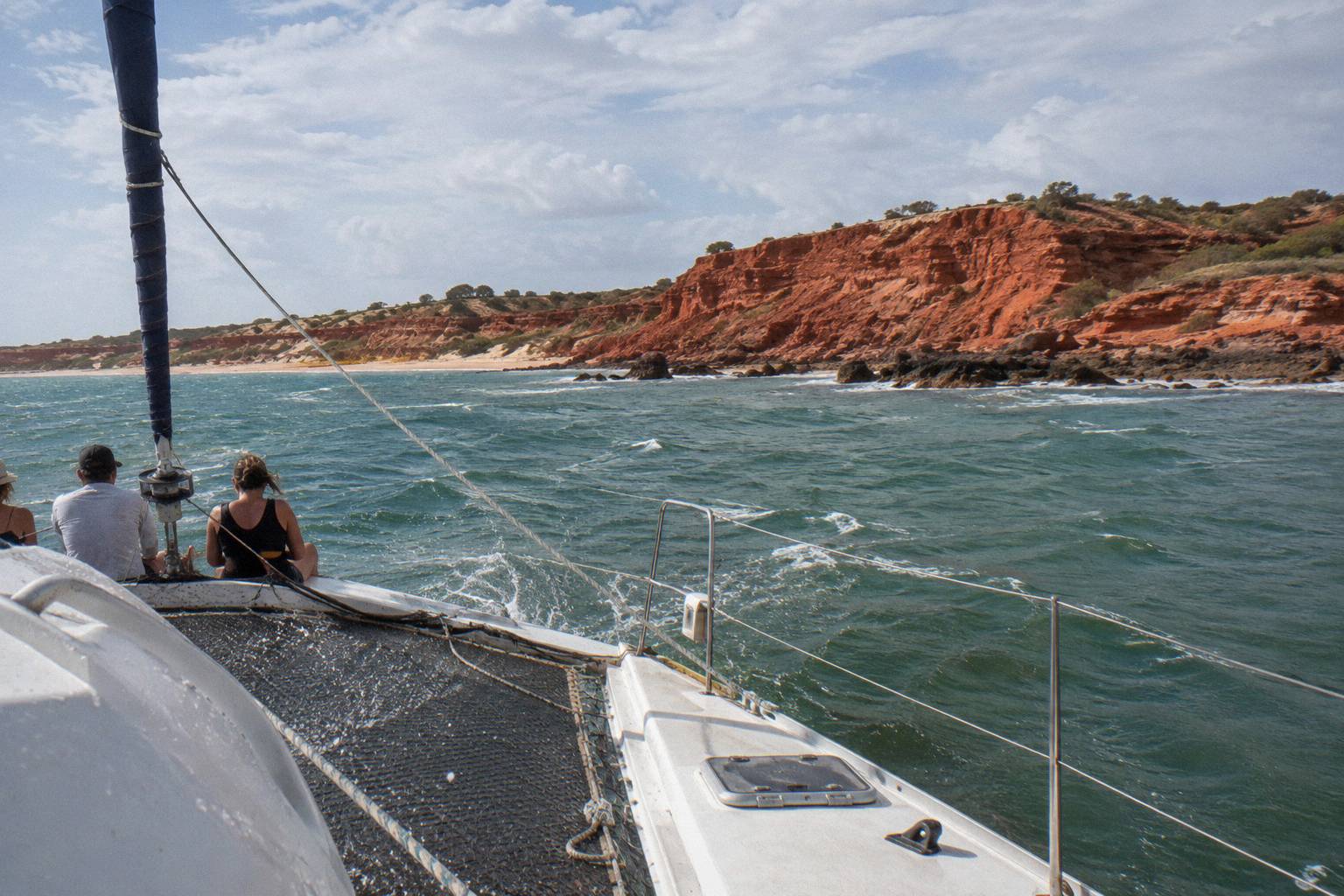
Choose by comfort and activity, not by compass. For sun on you until it drops, the stated open areas are the bow of Orcaella and the bow shade seating on Ballena; for shade, the shaded back and top decks of Orcaella and the 8 shaded cockpit seats or air-conditioned saloon on Ballena; for photographs, a rail position with room to move beats any fixed seat; for boom-net swimming, you go where the net is when conditions permit.
Breaking that into the real decision axes. Shade first: the operators' own words give you a shade map, and in a tropical late afternoon it is the difference between a pleasant cruise and an uncomfortable one. Orcaella's operator states plainly that the bow is in the sun and the back deck and top deck are shaded. Ballena's operator counts its seats, 8 shaded in the cockpit and 10 under bow shade, which suggests most guests get some cover without claiming the whole boat is covered. The air-conditioned saloon is the retreat option unique to Ballena among the stated layouts.
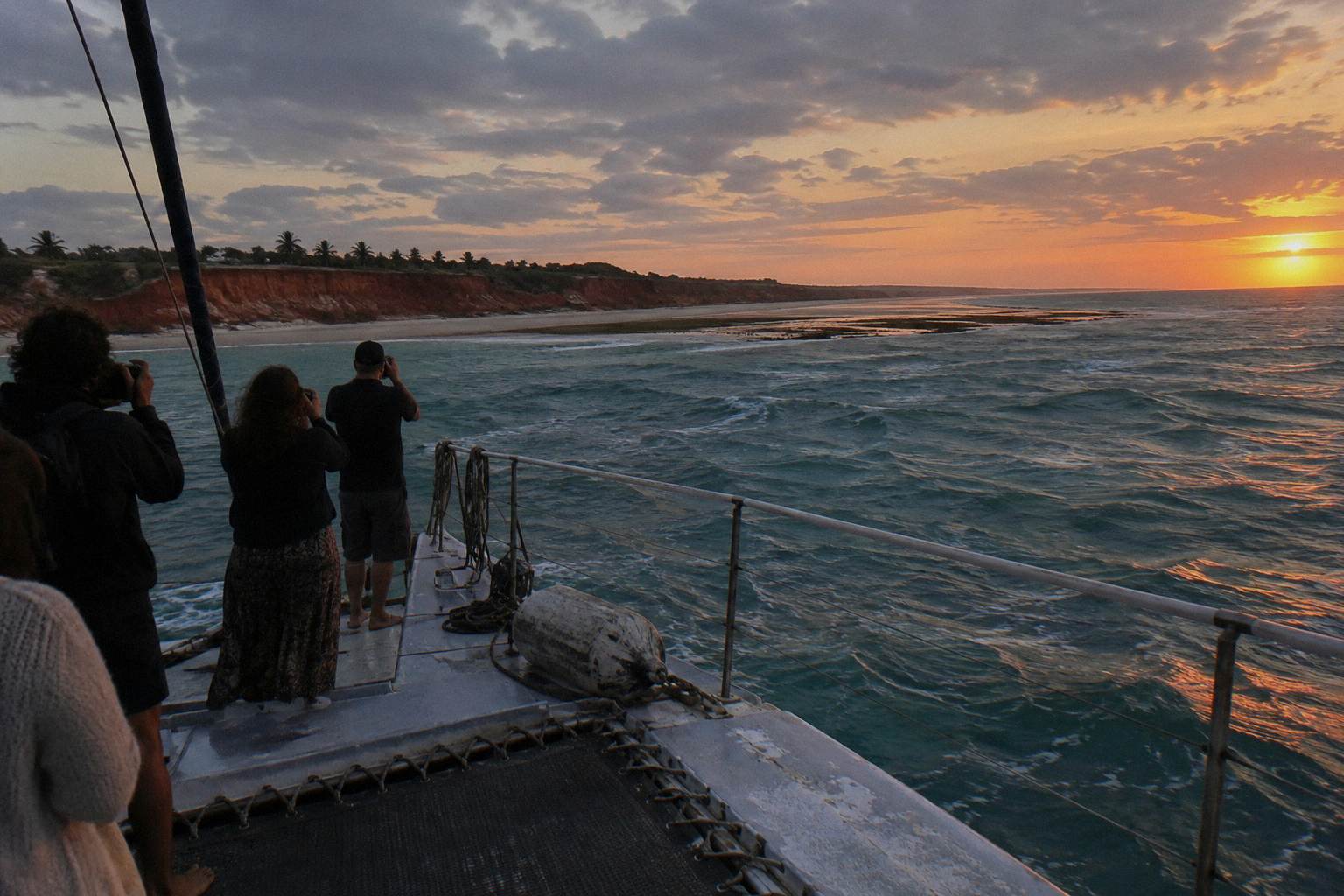
Photography next. If the camera is the point of the evening, the moving-boat reality works in your favour: over a roughly 3.5-hour cruise the boat changes heading enough that a rail seat you keep, or better, a spot you can walk to on either rail, will get you the sun at some stage. The wider framing advice sits in our guide to sunset photography from a boat, which covers what to pack and how to work a moving deck. Broome Whale Watching's own packing list, a camera, sunglasses, a hat, a water bottle and thongs or slip-off shoes, is built around exactly this kind of evening.
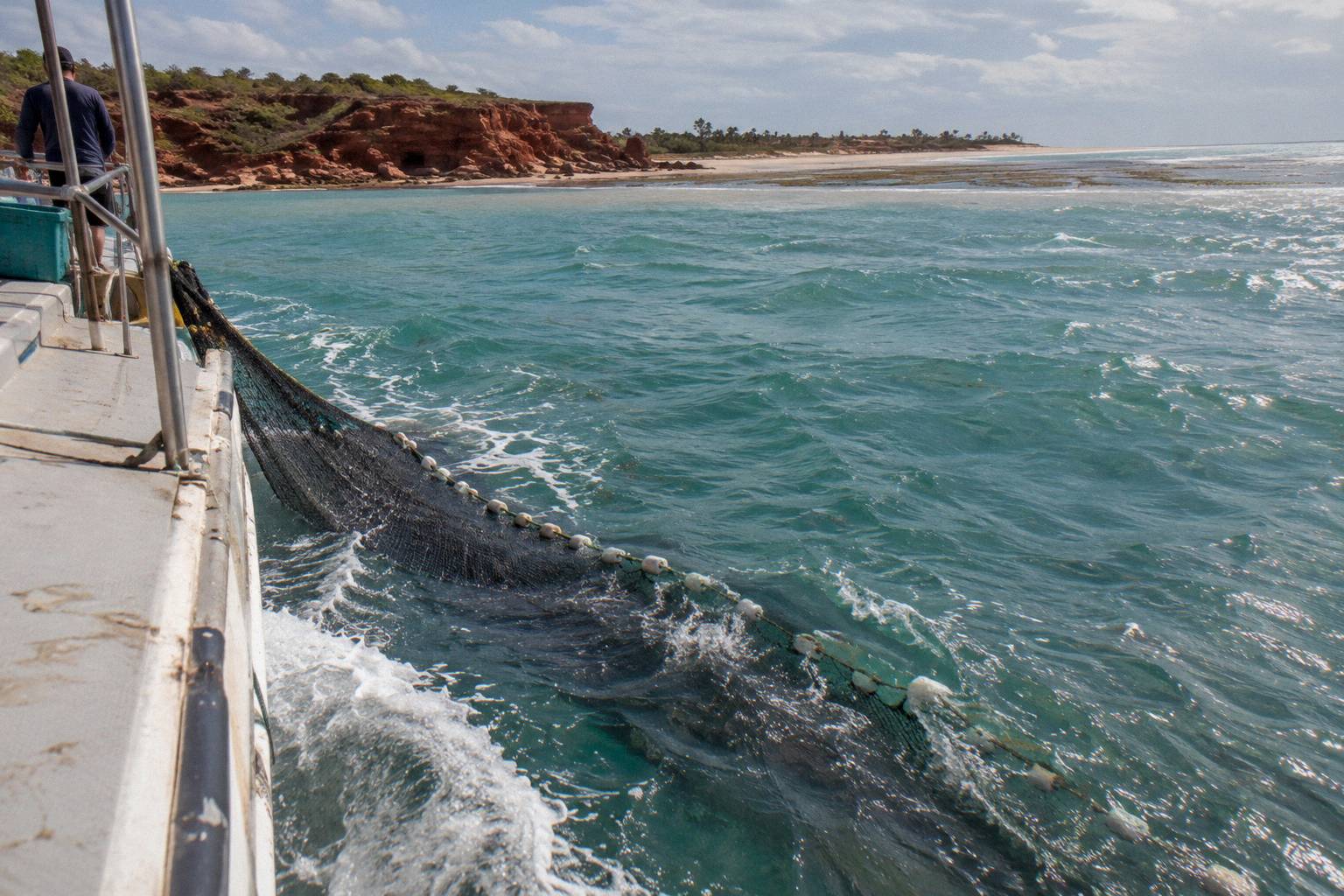
Then activity. Boom-net swimming, a net towed behind the boat, is offered by Broome Whale Watching late March to early October and by Broome Tours April to early October, when conditions permit. When the net goes in, the question of which side is best answers itself: the net side, for as long as the swim lasts. That is a reminder that the deck reorganises around events, and a fixed seat matters less than you would think.
| If you want | The stated option | Vessel | Operator wording |
|---|---|---|---|
| Sun until it drops | Open bow | Orcaella | The bow is in the sun |
| Cover from the sun | Shaded back and top decks | Orcaella | Back deck and top deck are shaded |
| Cover from the sun | 8 shaded cockpit seats | Ballena | Shaded cockpit seating |
| Indoor retreat | Air-conditioned saloon | Ballena | Air-conditioned saloon |
| A swim | Boom net when conditions permit | Orcaella, Ballena | Late March or April to early October, conditions permitting |
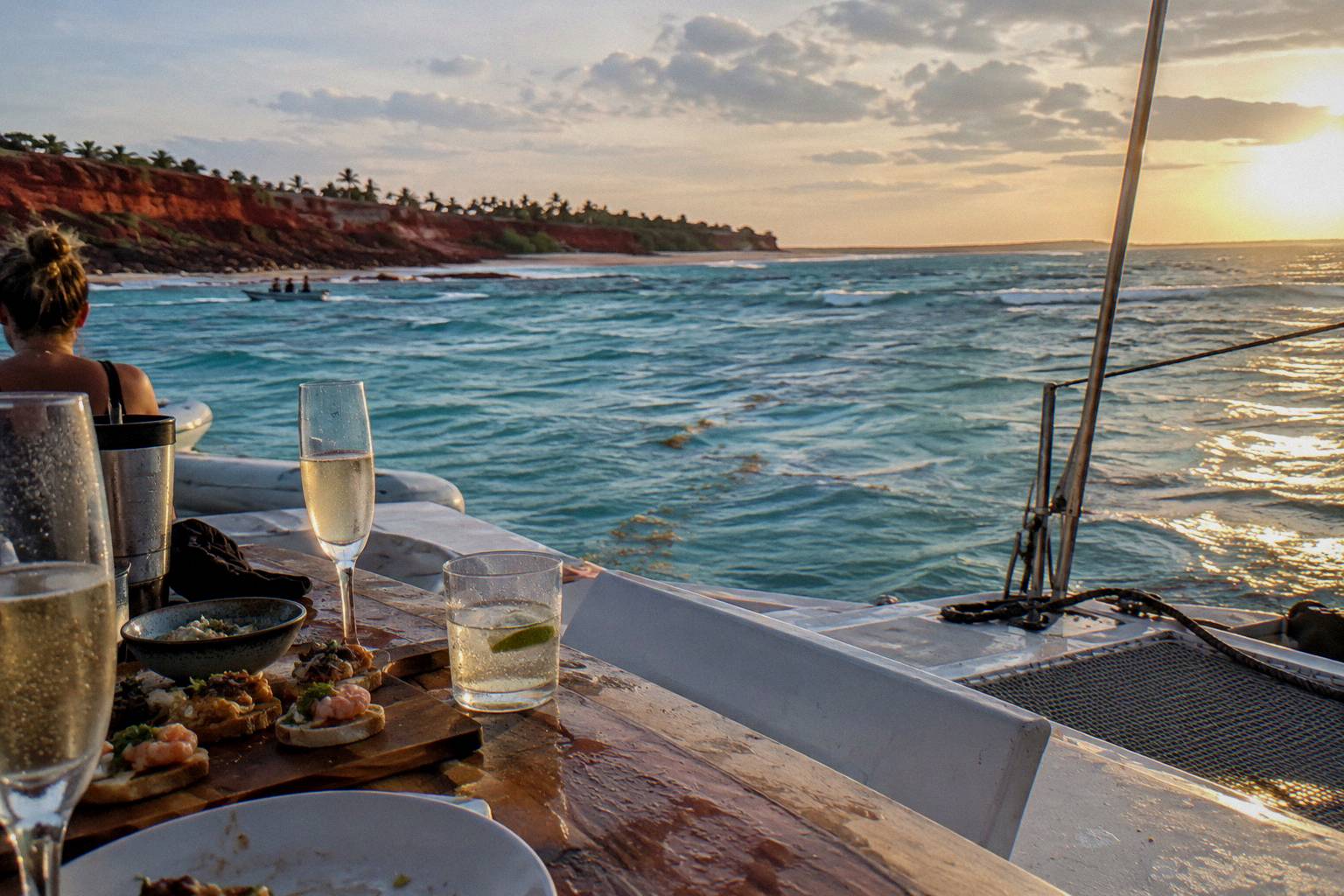
One caution worth repeating: never write off the shaded zones as "the wrong side". On several of these boats the shade is where the canapes, the bar and the tables live, and on the canape format that is where the evening happens. The Sunset Cruise With Canapes And Transfers includes complimentary Mediterranean canapes with a licensed bar selling cocktails, carries a rating of 4.2 across 11 reviews, and is priced by the operator at A$170 adult, A$99 for a child aged 2 to 14, and A$498 for a family of 4, a package the operator's page says saves A$40.
Where Does The Sun Actually Set From Broome?
Broome's sunsets move through the year, from about 5:23pm in mid-June to about 6:33pm in mid-January, Australian Western Standard Time, which has no daylight saving. These are approximate, computed times for the 15th of each month, plus or minus about 2 minutes, not official published figures, and they are sunset times, not departure times: every boat leaves well before them.
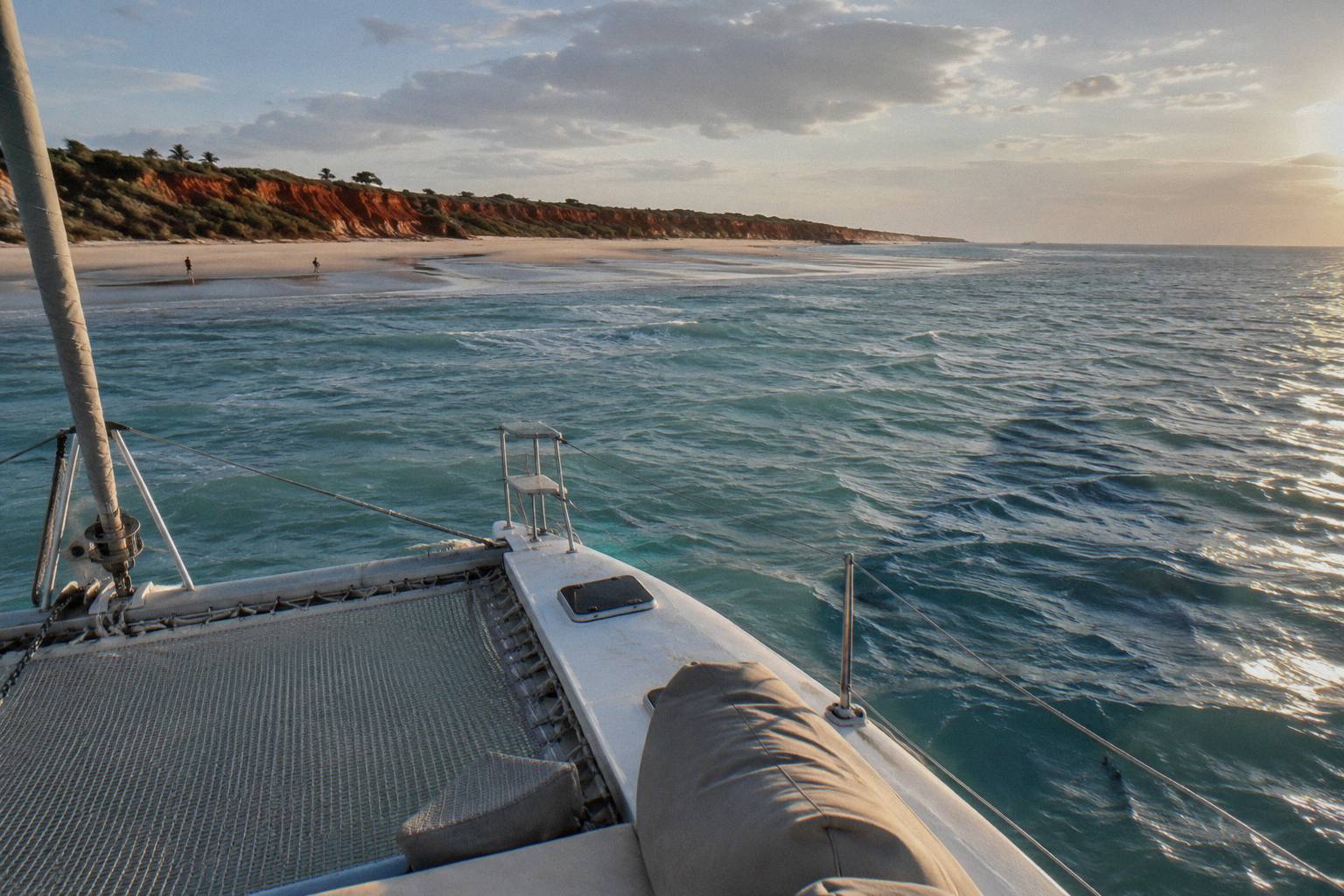
The reason a sunset-direction seat strategy keeps failing is that the direction and timing drift all year, and the boats schedule around the moving target. In the dry season, which Visit Broome describes as usually May to October, the sun sets earliest, about 5:23pm in June and about 5:26pm in May, so a cruise departing ahead of sunset has its whole first hour in late-afternoon light. By November the sunset is back to about 6:04pm and December about 6:22pm, and Visit Broome notes the December to March wet season brings what it calls magnificent sunsets and amazing lightning displays. Other pages covering the same trip are gathered on Broome Sunset Cruises.
| Month (15th) | Approximate sunset | Month (15th) | Approximate sunset |
|---|---|---|---|
| January | about 6:33pm | July | about 5:31pm |
| February | about 6:26pm | August | about 5:41pm |
| March | about 6:07pm | September | about 5:46pm |
| April | about 5:42pm | October | about 5:51pm |
| May | about 5:26pm | November | about 6:04pm |
| June | about 5:23pm | December | about 6:22pm |
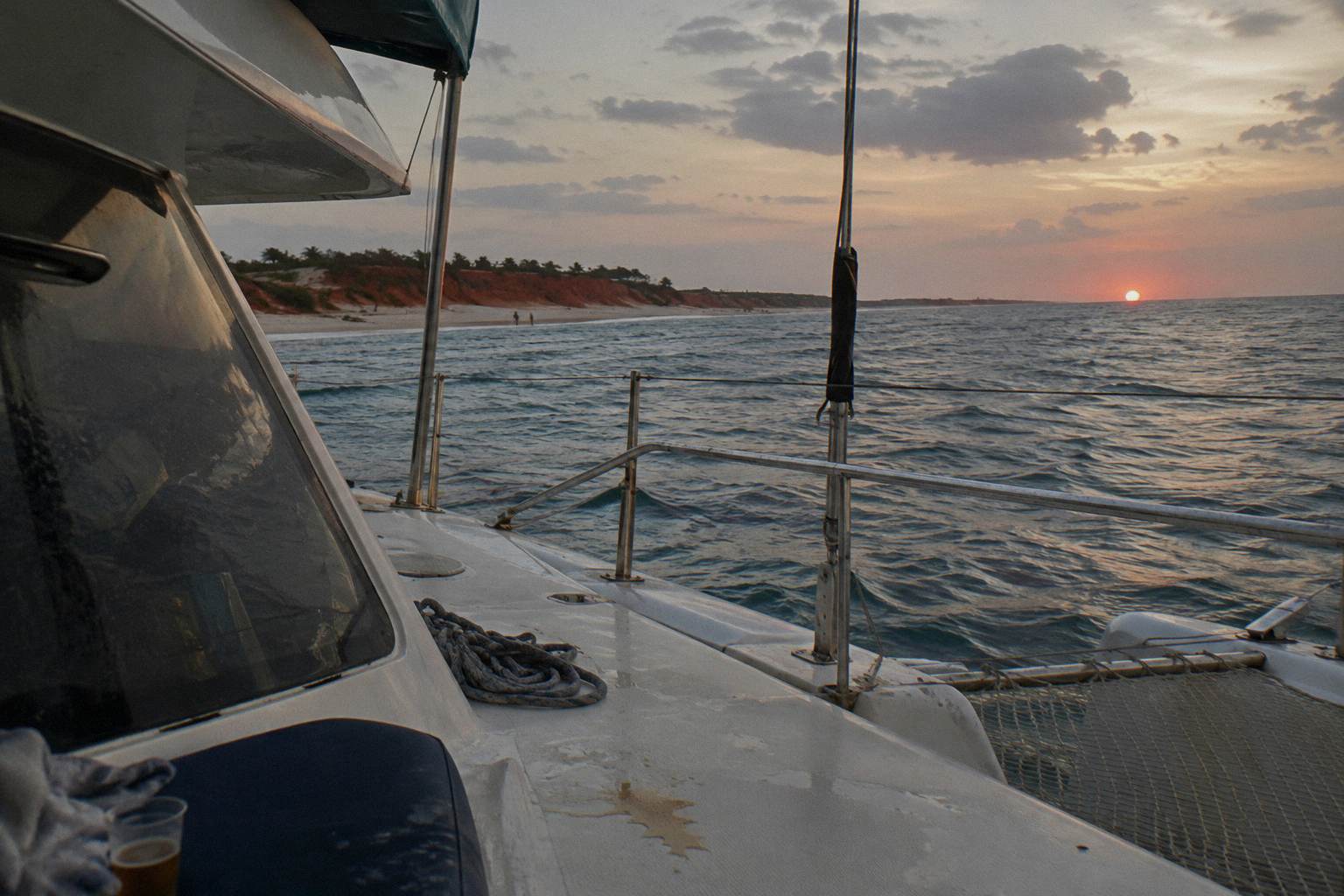
The deeper point for seat planning is timing, not direction. A roughly 3.5-hour cruise that ends after a June sunset spends its final hour in dusk, and Broome Tours advises a light jacket from June to August after sunset, exactly the kind of detail that matters more to your comfort than which rail you claimed at boarding. No operator prints a departure clock time; write none, and note that the booking page and confirmation give the pickup time, with each operator running a courtesy bus from accommodation, Broome Tours with a brief town tour en route.
The timing question, what a sunset sailing schedule actually looks like month by month, is covered in full in what time does the sunset sail leave, which keeps the operator-by-operator detail in one place. The whale-season variant, where the roughly 4.5-hour whale-and-sunset format pushes the sunset portion later into the trip, sits in can you see whales on a sunset sail.
Do The Tides Or The Route Change Which Side You See?
No operator states how tides change a cruise, a boarding or a departure, and no tide-by-cruise rule exists, so print none. The route facts that are stated: Broome Whale Watching boards in Roebuck Bay, cruising Reddell Beach and Cable Beach April to June; Broome Tours departs Cable Beach or Roebuck Bay.
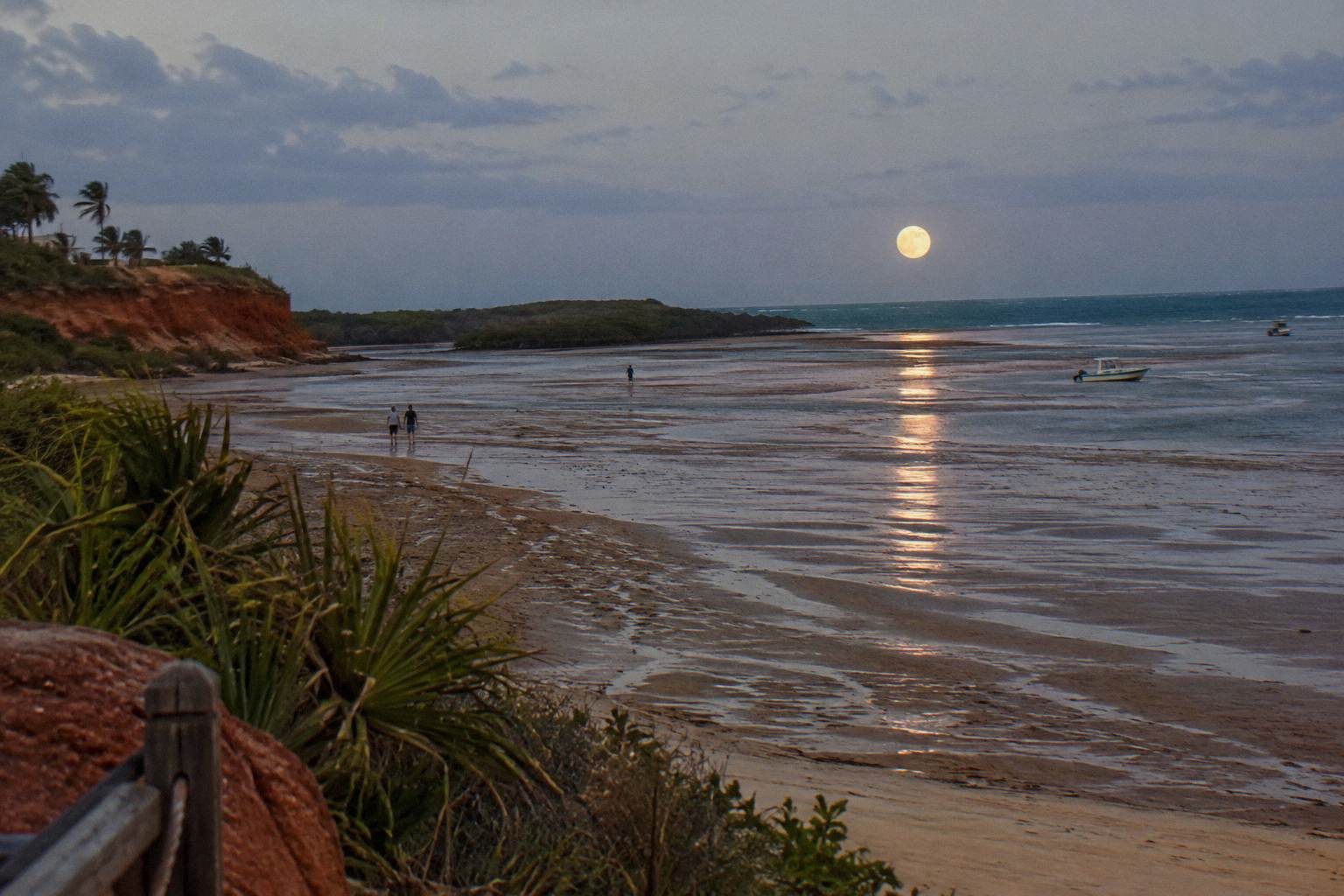
The tide context is real but the connection to your seat is not. Visit Broome notes the Kimberley Coast has the biggest tides in the southern hemisphere, with the difference between high and low reaching around 10 metres, and the exposed tidal flats of Roebuck Bay, the Yawuru Nagulagun Roebuck Bay Marine Park, are what create the famous Staircase to the Moon effect when the full moon rises over them 2 to 3 days a month between March and October. But no sunset-cruise operator states that a tide changes where the boat goes or what you see, and this site will not invent a rule. If tides matter to your date, ask the operator or read the booking confirmation, once, and move on. The full tidal picture, including the Visit Broome tide tables and the low-tide dinosaur footprints at Gantheaume Point, sits in our tides and evening cruises guide.
Route is the better lever. Because the operators state their routes, you can pick a cruise whose water matched what you want to look at, and on any looped route both rails get their turn toward the shoreline. The choice between Cable Beach and Roebuck Bay boarding is a genuine decision axis on this roster, and the Roebuck Bay side of the question, including the marine park context of the bay itself, is laid out in the Roebuck Bay sunset cruise guide.
A note on what not to expect: no operator states a view description, a colour, a light effect or a scenery summary beyond naming those route landmarks, Reddell Beach, Cable Beach, Gantheaume Point, Entrance Point and Roebuck Bay. Any article that describes "the burnt-orange cliffs glowing on the western side" is decorating. What you can say is which water the boat is on stated to be, and that the crew reposition the boat through the cruise.
What Should You Wear And Bring For Your Chosen Spot?
Pack for sun, a possible wade and a post-sunset cool change: Broome Whale Watching lists bathers and a towel, a camera, sunglasses, a hat, a water bottle and thongs or slip-off shoes; Broome Tours advises a light jacket from June to August after sunset and notes slip-on shoes can stay on the bus because of the ankle-deep wade to the tender. A toilet is aboard Orcaella and both Ballena toilets are below deck.
The footwear point deserves its own sentence. Boarding is from the beach on every boat, because Broome has no marina, so the shoes you wear to the beach are the shoes you wade in: ankle-deep for Broome Tours guests, dry feet on the amphibious transfer with Broome Whale Watching. Thongs or slip-off shoes solve the wade and are on the operator's own packing list, and leaving them on the courtesy bus, as Broome Tours suggests, is the local move.
The jacket point is the one travellers from southern winters forget in reverse. A June to August sunset means the last hour of the cruise happens after dark on open water, with the sun going down about 5:23pm in mid-June and about 5:31pm in mid-July, and the operator's light-jacket advice for those months is stated for exactly that stretch. It costs nothing to carry and it is the difference between staying on deck for the whole run and retreating to the saloon early. The fuller packing treatment, including what to wear across the seasons, is in what to wear on a sunset cruise.
Also pack for the format you chose. Boom-net swimming needs bathers and a towel, and the swim windows are stated per operator, late March to early October for Broome Whale Watching, April to early October for Broome Tours, always conditions permitting. Photography gear benefits from the free deck movement we discussed above.
How Early Should You Claim A Spot On Deck?
No operator publishes boarding-order, seat-reservation or demand statistics, so there is no stated rule for how early to position yourself, and this site will not invent one. What is stated: Broome Tours runs 5 to 36 guests, Orcaella is limited to about 38 on dolphin and whale cruises, and the courtesy buses pick up from accommodation before the cruise, so the whole group boards together from the beach.
That last fact matters more than it sounds. On a boat with no pre-assigned seating, everyone boards at once from the transfer vessel or tender, and the seat you take in the first ten minutes is the seat zone you start in. The stated capacities are modest, 36 or about 38 on the two catamarans, and the layouts are intimate enough that no seat is far from a rail.
The practical reading of all the stated facts is this: arrive with the courtesy bus, board when your group is called, take a shaded seat if the sun is high, and move when the light changes. The crew run the cruise around the sunset, the boat changes heading through the trip, and both rails get their moment. That is the whole strategy, and it is more honest than a compass bearing. If you want the fuller booking picture, how to book a sunset sail covers the operator pages, and the cost comparison across the stated prices sits in sunset cruise cost.
Whether any of it justifies the ticket at all is a fair question, and the honest answer with figures is in is a sunset cruise worth it in Broome.
Before the closing questions, here again are the three main formats, so the deck layouts above can be matched to the actual trips.
Common Questions About Boat Sides And Sunset Views
Which Side Of The Boat Is Best For The Sunset?
No Broome operator states that one side is better, and this site will not name one either. The boats are moving for the whole cruise and change heading along their stated routes, so the view rotates around the deck. Plan by the stated shade zones instead: the shaded back and top decks of Orcaella, the 8 shaded cockpit seats and bow shade seating for 10 on Ballena, and the air-conditioned saloon on Ballena.
Do The Boats Assign Seats?
No operator on the roster states a seat-assignment or reservation system. Stated capacities are 5 to 36 guests on Ballena and about 38 on Orcaella's dolphin and whale cruises.
Does The Sunset Time Change The Best Place To Sit?
It changes when, more than where. Broome sunsets run from about 5:23pm in mid-June to about 6:33pm in mid-January, approximate computed times, and every boat departs ahead of sunset. After dark, Broome Tours advises a light jacket from June to August, which is a comfort factor worth planning alongside your seat.
Is The Shaded Side Worse For Photos?
No operator states a photography disadvantage for any deck area, and the boats change heading through the cruise, so both rails get the sun at some stage. Broome Whale Watching's packing list includes a camera, sunglasses, a hat and slip-off shoes. For framing advice, see our guide to sunset photography from a boat.
Can You Move Around The Boat During The Cruise?
The stated layouts imply free movement: Ballena has separate cockpit, bow and saloon zones with counted seats, Orcaella has a shaded back deck, top deck and open bow, and boom-net swimming is offered in season by two operators when conditions permit. Some agility is required to board from the beach on every boat, since Broome has no marina.