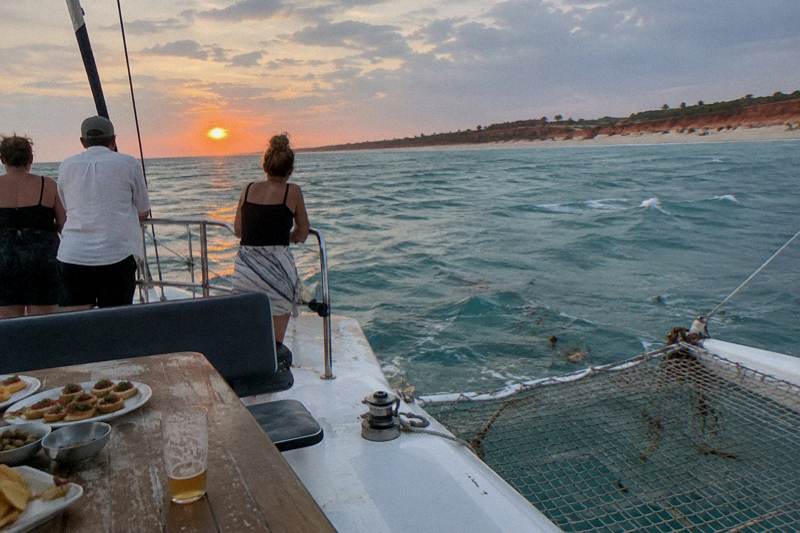
Broome Weather By Month For Evening Boat Trips
Weather decides whether an evening boat trip in Broome is even on offer. Here is how the town's two seasons run, which months each operator sails, and what the operators themselves say about cancellations and refunds.
Short answer
Broome's dry season usually runs May to October and the wet season November to April, with January to March the wettest and most monsoonal months. Cruise seasons differ by operator: Broome Tours sails April to early December, and Broome Whale Watching March to June and September to December. Every operator reschedules or refunds if it cancels for weather.
Weather is the single factor that decides whether a Broome evening boat trip exists at all in the month you visit. The town sits on a tropical coast with two pronounced seasons, and the cruise operators each run their own calendar inside those seasons, so a boat that sails daily in August may not sail at all in February. This guide works through the year month by month using only what Visit Broome and the operators themselves publish, then covers the cancellation rules that matter when the sky turns.
Two honest limits up front. No operator or official source publishes month-by-month temperatures, wind speeds, swell or sea state for these cruises, so none appear here. And no operator publishes demand or sell-out statistics, so nothing here claims a month is busy or quiet in booking terms. What the sources do give is season structure, rain months, sailing windows, gear advice and refund rules, and that is what decides most weather-related questions anyway. For a broader take on choosing a date, see the companion page on the best month for a Broome sunset cruise.
There is a second reason to keep the sources this tight. Weather claims travel badly. A temperature figure copied from a generic climate site tells you nothing about whether a specific boat departs, because the operators do not publish a weather threshold of any kind: no wind limit, no swell limit, no rain-out rule appears on any of their pages. The only weather-related statements the operators make are their sailing seasons, their conditions-permitting qualifiers and their cancellation remedies. Everything a visitor can actually plan with lives in those three categories, so those are the three this page is built on.
What Is Broome's Weather Pattern By Month?
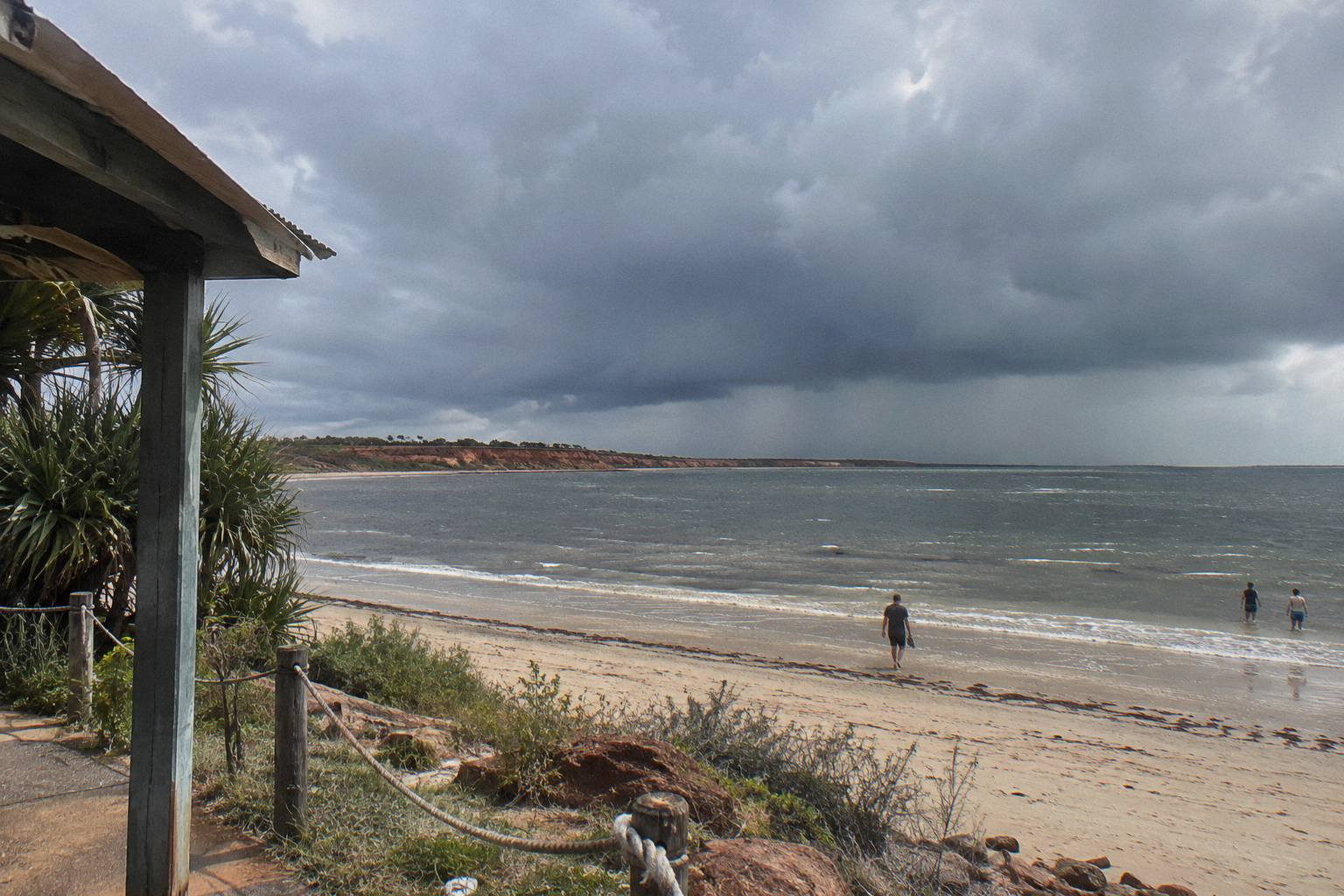
Broome has a dry season that usually runs May to October and a wet season that usually runs November to April, with January to March the wettest and most monsoonal stretch, when flooding and cyclones are possible. That is Visit Broome's own framing, and it is the frame every cruise calendar hangs inside. The operator pages add no temperature, wind or swell figures at all, so the honest month-by-month picture is a season map, not a number table.
Visit Broome's climate page is the primary source for the season split, and it is worth reading the wording closely. Dry season, wet season, monsoonal: these are the published categories, and the rain falls overwhelmingly in the wet half of the year, concentrated in January to March. That is also the stretch Visit Broome flags for possible flooding and cyclones, which is plain language for the months where boat schedules are most at the mercy of the sky. If you are weighing whether the wet months are a write-off, the page on when not to go to Broome covers that trade-off directly.
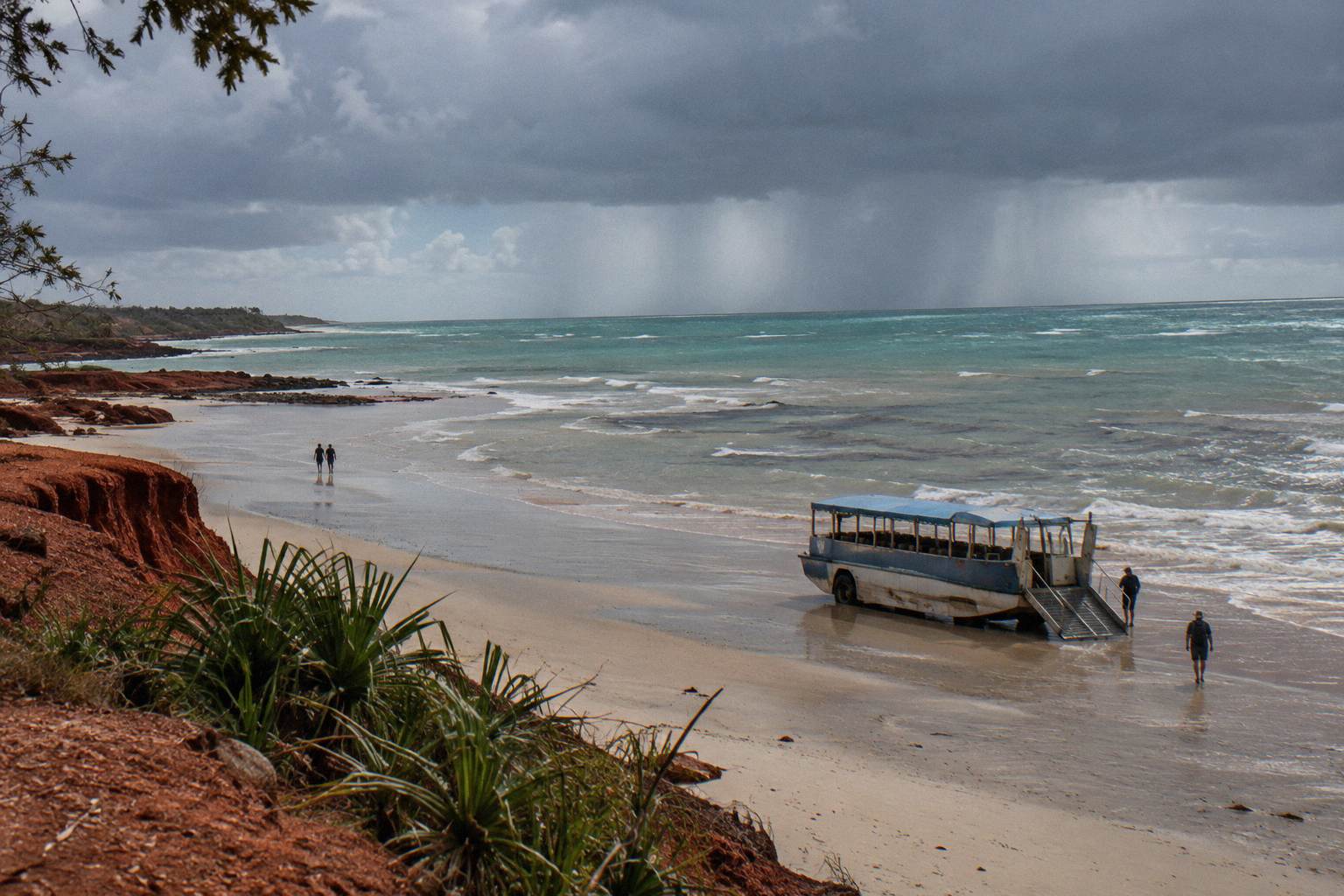
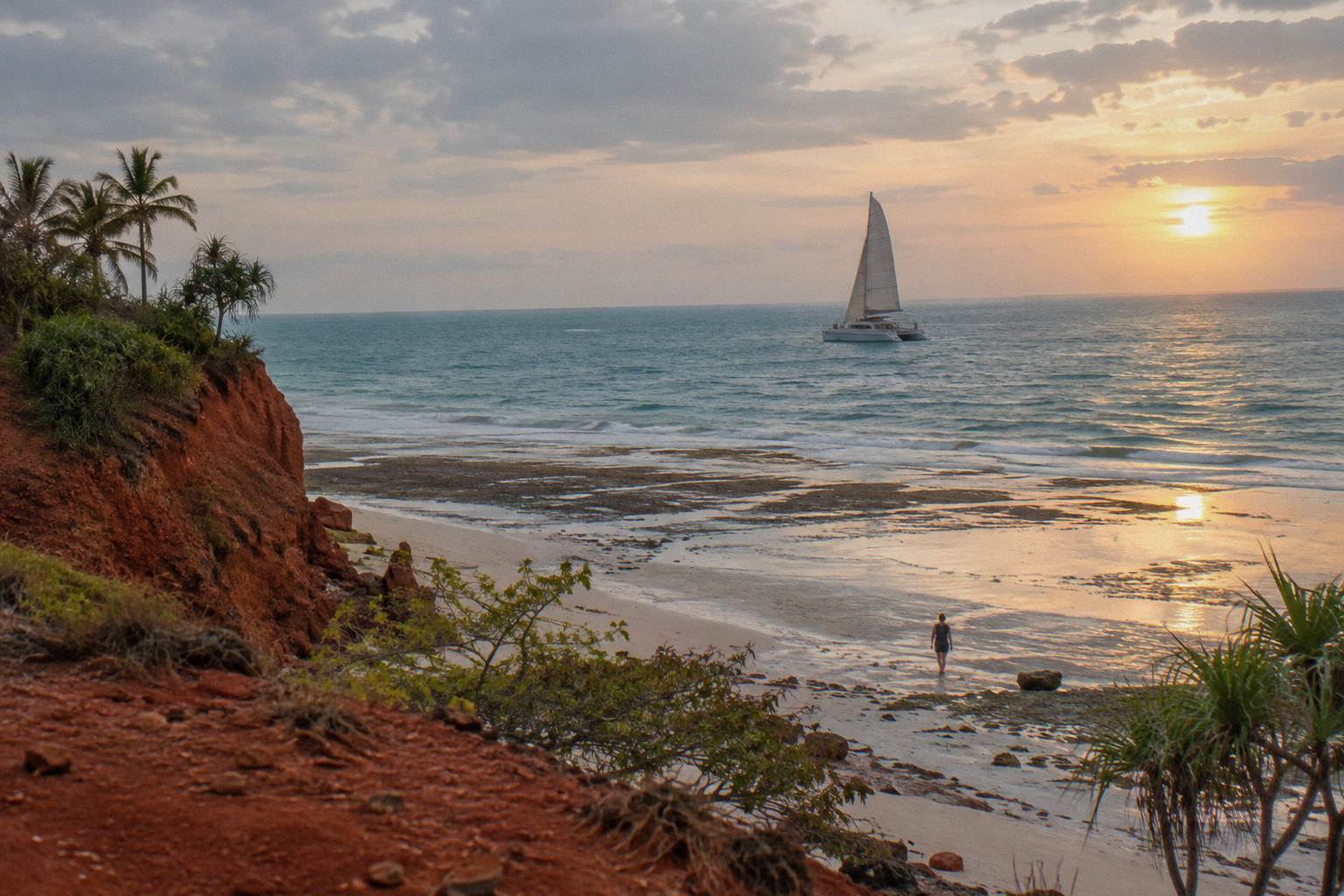
The interesting twist is that Visit Broome does not describe the wet season as visually poor. For December to March it notes magnificent sunsets and amazing lightning displays. That is the source's own phrasing, and it points at the real appeal of the shoulder and wet months: dramatic evening skies rather than the reliably clear dry-season ones. The catch, covered below, is that fewer boats sail then, and the ones that do sail weather permitting.
A month-by-month reading of the published seasons runs like this. January, February and March sit in the monsoonal peak: most rain, flooding and cyclones possible, and the thinnest published sailing calendars of the year. April is the hinge, the month where the wet season usually gives way to the dry, and it is also the month Broome Tours restarts its season and boom-net swimming begins on its boats. May through October is the core dry window, the stretch where every operator's calendar is open and the stretch most visitors mean when they say they are coming to Broome. November and December slide back toward the wet, with sunsets that Visit Broome singles out and sailing windows that begin to close one by one.
| Months | Season (Visit Broome) | What the sources say |
|---|---|---|
| January to March | Wet, monsoonal | The most rain, possible flooding and cyclones |
| April | Wet tail to dry start | Wet season usually ends this month |
| May to October | Dry | The usual dry season window |
| November to December | Wet begins | Wet season usually starts in November |
Which Months Do Broome's Sunset Cruises Operate?
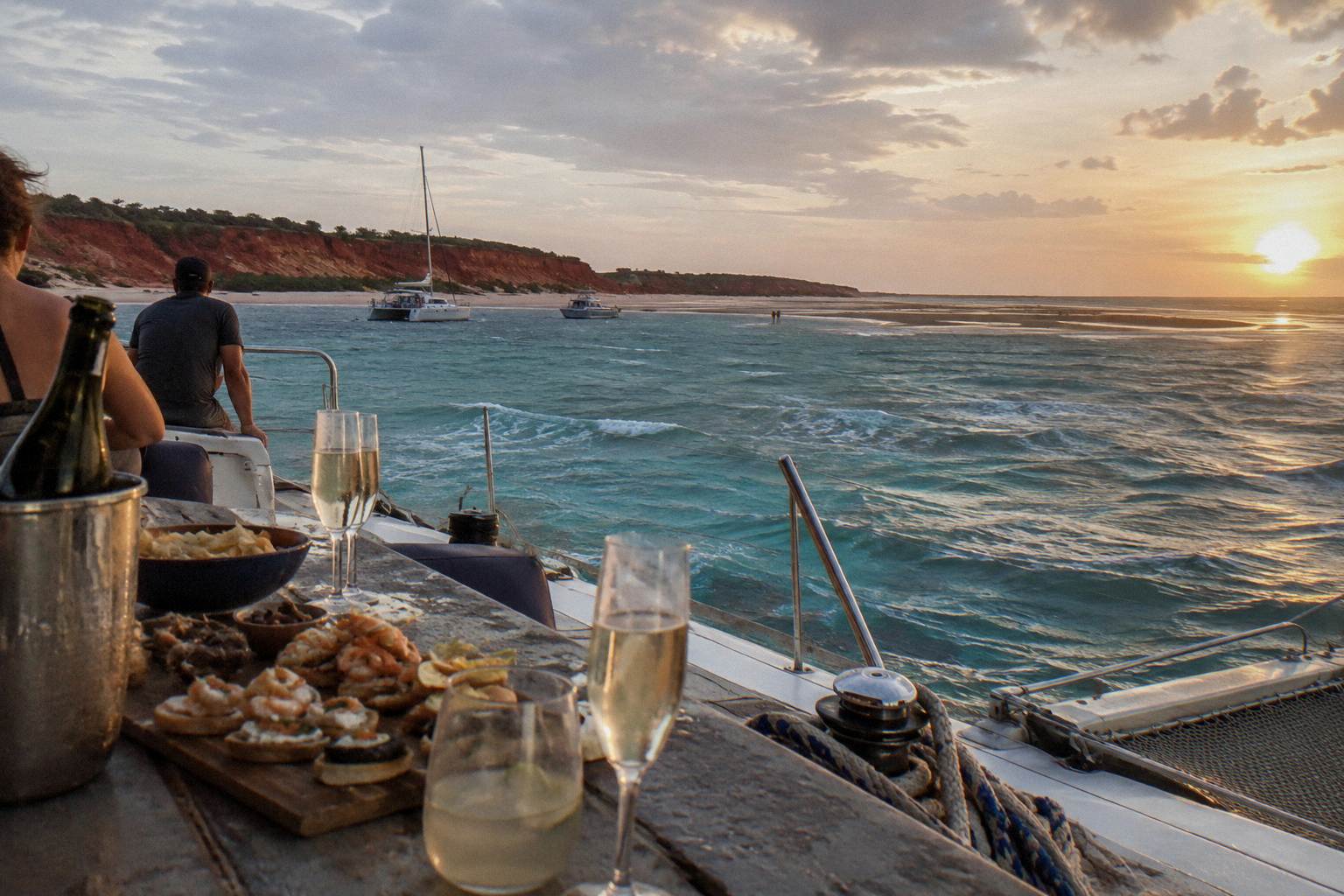
This is the fact most likely to surprise a first-time visitor planning by month. Two bookable operators, two windows. Broome Tours, which runs Broome's Iconic Catamaran Sunset Cruise from its 42-foot catamaran Ballena, states a cruising season of April to early December. Broome Whale Watching, on the 50-foot catamaran Orcaella, splits its dolphin sunset cruise into two blocks: March to June, then September to December, with a gap over the peak of the dry season where its whale cruises take over.
The practical reading: in the middle of the dry season, roughly May to September, both bookable operators are on the water. In the shoulder months, April and October to December, the choice narrows. And in the heart of the wet, January to March, the published calendars leave no operator-scheduled sunset cruise on this site, which is a different proposition from a guaranteed departure. Weather permitting is the operator's own qualifier, and it deserves to be taken at face value.
Lay the windows side by side and the months divide cleanly. March belongs to Broome Whale Watching. April adds Broome Tours for a season that runs eight and a half months. May to June is the first overlap of both, and the strongest months for choice. July and August belong to the dolphin sunset cruise's gap, so the canape-evening choice rests on Broome Tours through the peak of the dry. September brings Orcaella back for its second block. October, November and December thin the field again as Broome Tours stops in early December and the dolphin cruise ends its year in December. January and February are the bare months on paper.
| Operator | Sailing window stated | Source of the statement |
|---|---|---|
| Broome Tours | April to early December | Operator's own pages |
| Broome Whale Watching (dolphin sunset cruise) | March to June and September to December | Operator's own pages |
If you are choosing between the bookable evenings, the two canape-and-drinks cruises run most of the year and make the natural starting point, while the whale-season options only matter inside their whale windows.
When Do Operators Cancel A Cruise For Weather?
Every bookable cruise operator states it cancels for weather, and each one states a remedy: Broome Whale Watching reschedules or refunds in full, and Broome Tours gives a full refund for a weather or mechanical cancellation. Those are the operators' own published terms. Weather cancellation is a normal part of the calendar, not an exception, and the refund outcome is written down before you book.
The exact wording differs but the shape is the same. Broome Whale Watching's terms say that if the operator cancels for weather or low numbers, the guest is rescheduled or refunded in full. Broome Tours states that a weather or mechanical cancellation by the operator is a full refund. Low numbers matter too: Broome Whale Watching states it cancels for them, which is a scheduling risk that behaves like weather risk from the guest's side.
Note the direction of these rules. Every one of them covers the operator cancelling on you. None of them is a weather guarantee of good conditions, and no operator page says anything about sea state, swell or seasickness, so this site prints nothing on those either. What you can plan on is that a weather cancellation by the operator does not cost you the fare, whoever you sail with, subject to the terms of the page you actually book on.
It is also worth understanding what these remedies do not cover. A reschedule assumes you have another evening in Broome to give, which is a real constraint on a short stay. A refund returns the fare but not the evening. Neither remedy is a promise that a replacement sailing exists on a date that suits you, and the operators do not publish schedules far enough ahead for a guest to bank on one. In the wet months especially, where the published calendars are already thin, a weather cancellation can simply end the boat option for a trip, which is a quiet argument for keeping a non-boating evening in reserve.
| Operator | Cancels for | Stated remedy when the operator cancels |
|---|---|---|
| Broome Whale Watching | Weather, low numbers | Rescheduled or refunded in full |
| Broome Tours | Weather, mechanical | Full refund |
A related and easily confused question is what happens when you cancel, rather than the operator. That is a different set of rules entirely, and they vary more.
What Are The Cancellation Rules If You Cancel?
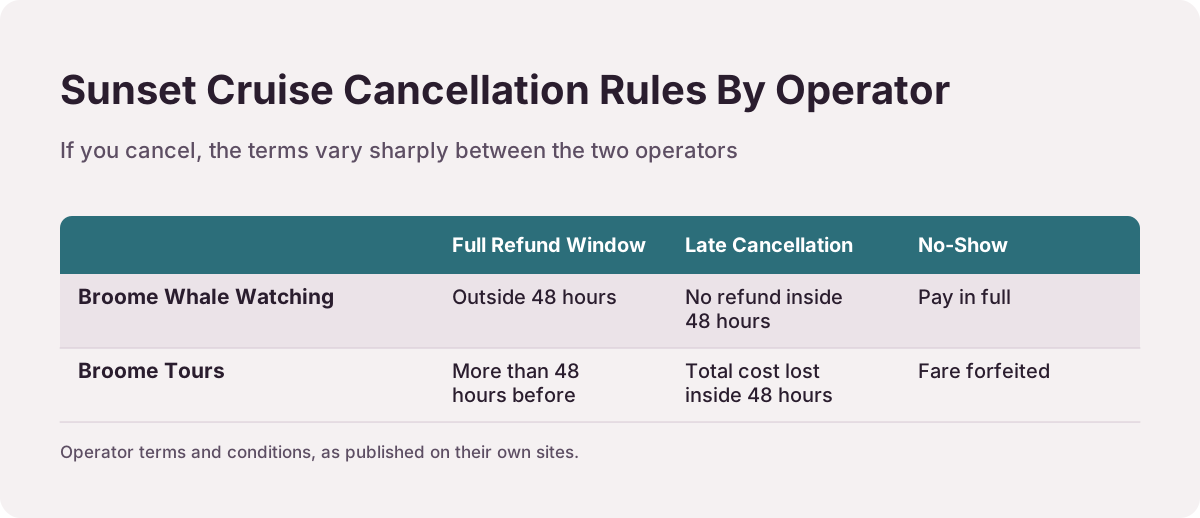
The detail sits in each operator's terms and conditions, which are published on their own sites. Broome Whale Watching requires one week's notice for bookings of four or more guests and two weeks for exclusive charter, with no refund inside 48 hours of departure and no-shows paying in full. Broome Tours refunds in full more than 48 hours before departure, with the total cost lost inside that window and the fare forfeited if you fail to board. The booking pages on the roster show their own terms as well, and some show free cancellation up to 24 hours, so the page you book on is the contract that governs.
| Operator | Full refund window | Late cancellation | No-show |
|---|---|---|---|
| Broome Whale Watching | Outside 48 hours | No refund inside 48 hours | Pay in full |
| Broome Tours | More than 48 hours before | Total cost lost inside 48 hours | Fare forfeited |
Weather connects to this in one obvious way: a shaky forecast late in the window can put you inside the no-refund zone before the operator has made its own call. The operators' weather-cancellation remedies protect you when they pull the pin, not when you blink first.
The group rule deserves a second look from families and small friend groups, because it is easy to miss. Broome Whale Watching's one-week notice for bookings of four or more is a much longer commitment than its 48-hour cut-off for smaller parties, and a family of four that reshuffles plans five days out falls under the stricter rule. Its own pricing page lists a family of 4 at A$498 for the dolphin sunset cruise, which puts real money on the table. Broome Tours, whose family rate is A$505 on the same four-person basis, holds a single 48-hour line regardless of party size.
What Should You Wear On An Evening Boat Trip In Broome?
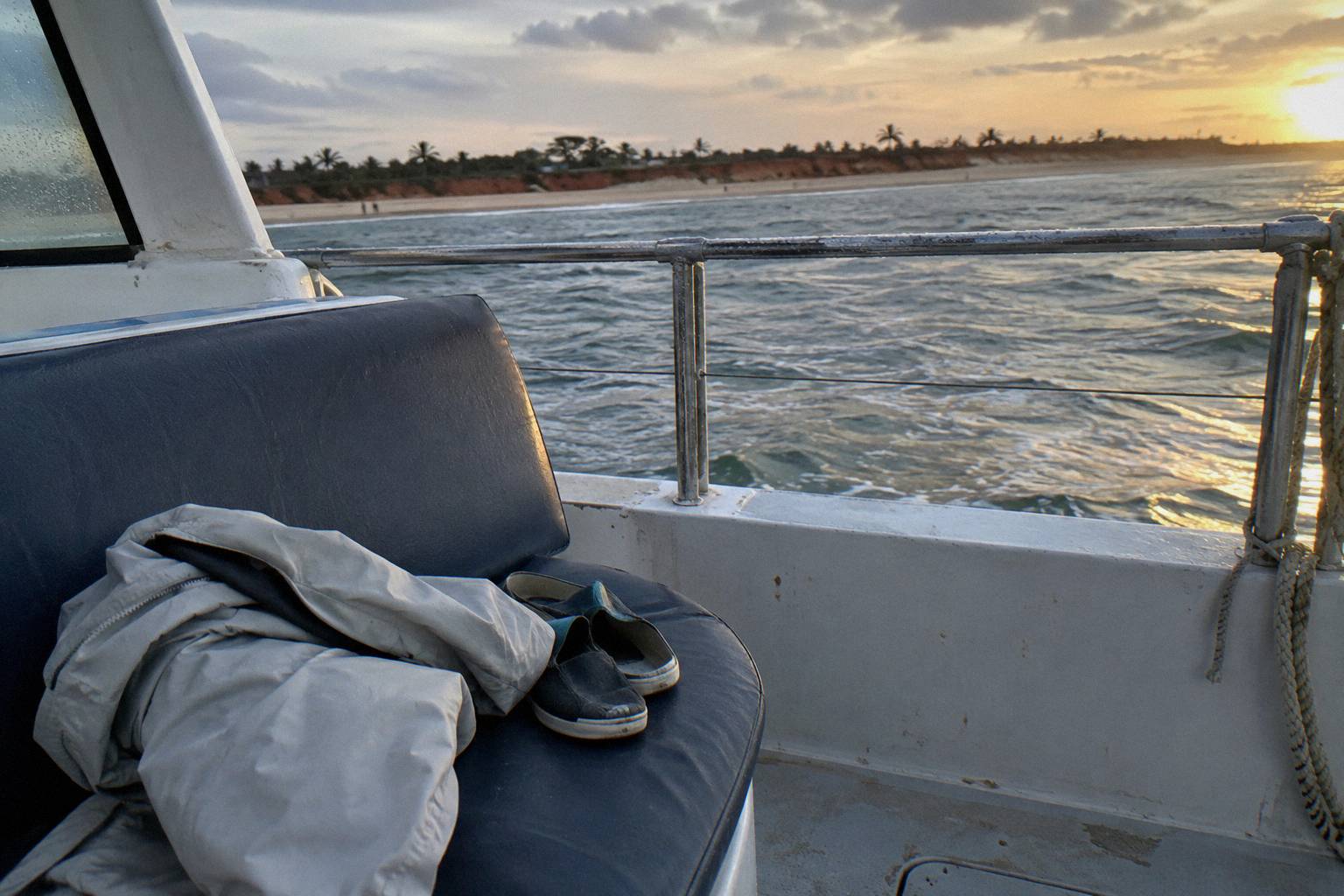
Pack for the season you are sailing in, and trust the operators' own lists: Broome Whale Watching suggests bathers, a towel, a camera, sunglasses, a hat, a water bottle and thongs or slip-off shoes, while Broome Tours specifically advises a light jacket from June to August after sunset because slip-on shoes stay on the bus during the beach wade. No operator publishes a temperature figure for any month.
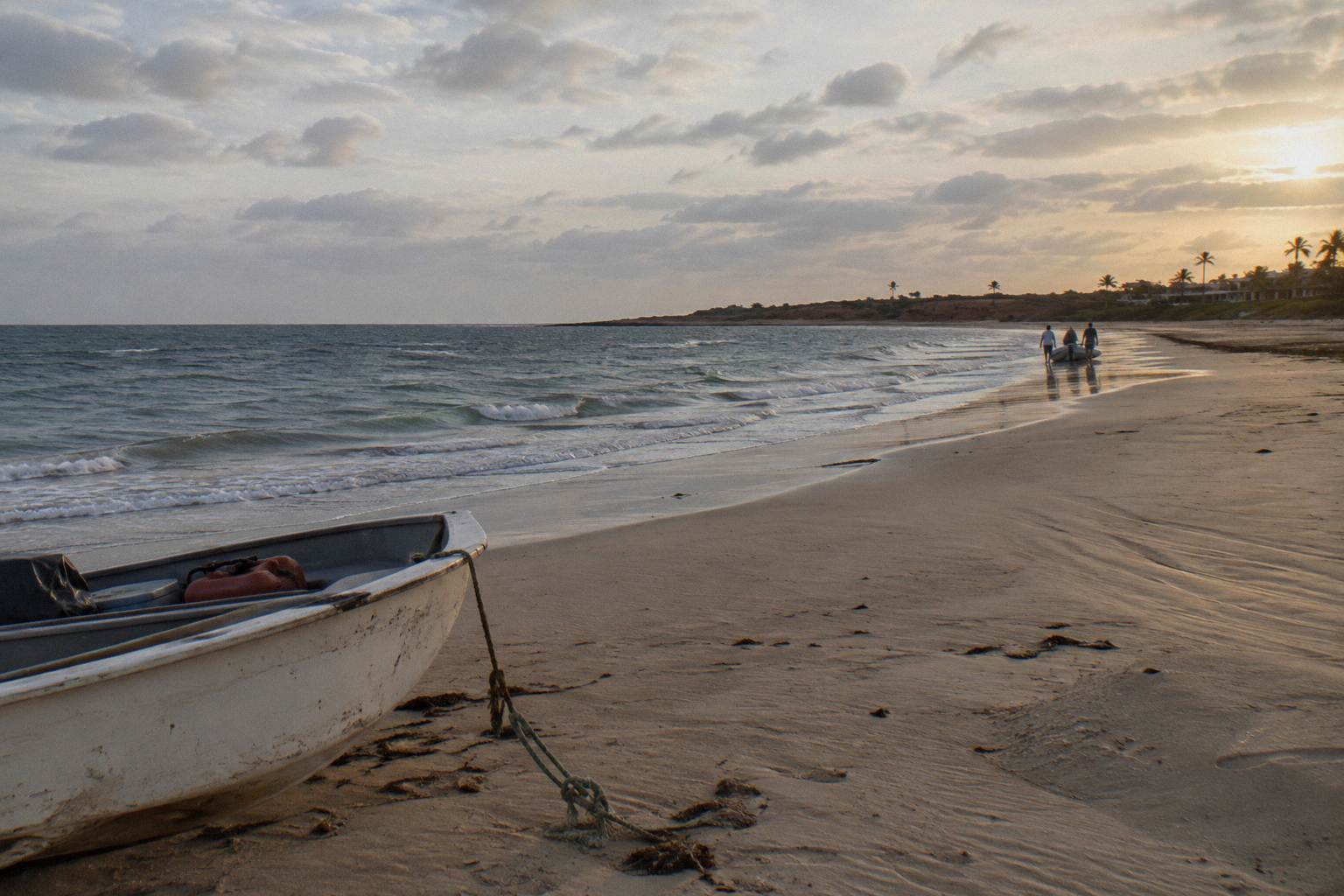
The jacket note is the most useful seasonal detail in the sources. Broome Tours ties it to June to August, the heart of the dry season, and to the period after sunset, which is when a 3.5-hour cruise is heading back to the beach. That is an operator's practical advice, not a climate statistic, and it is the closest thing to a weather-dependent packing rule anyone publishes. The footwear advice is equally practical: boarding from the beach means a short wade, so slip-on shoes that can stay on the bus are the operator's own recommendation.
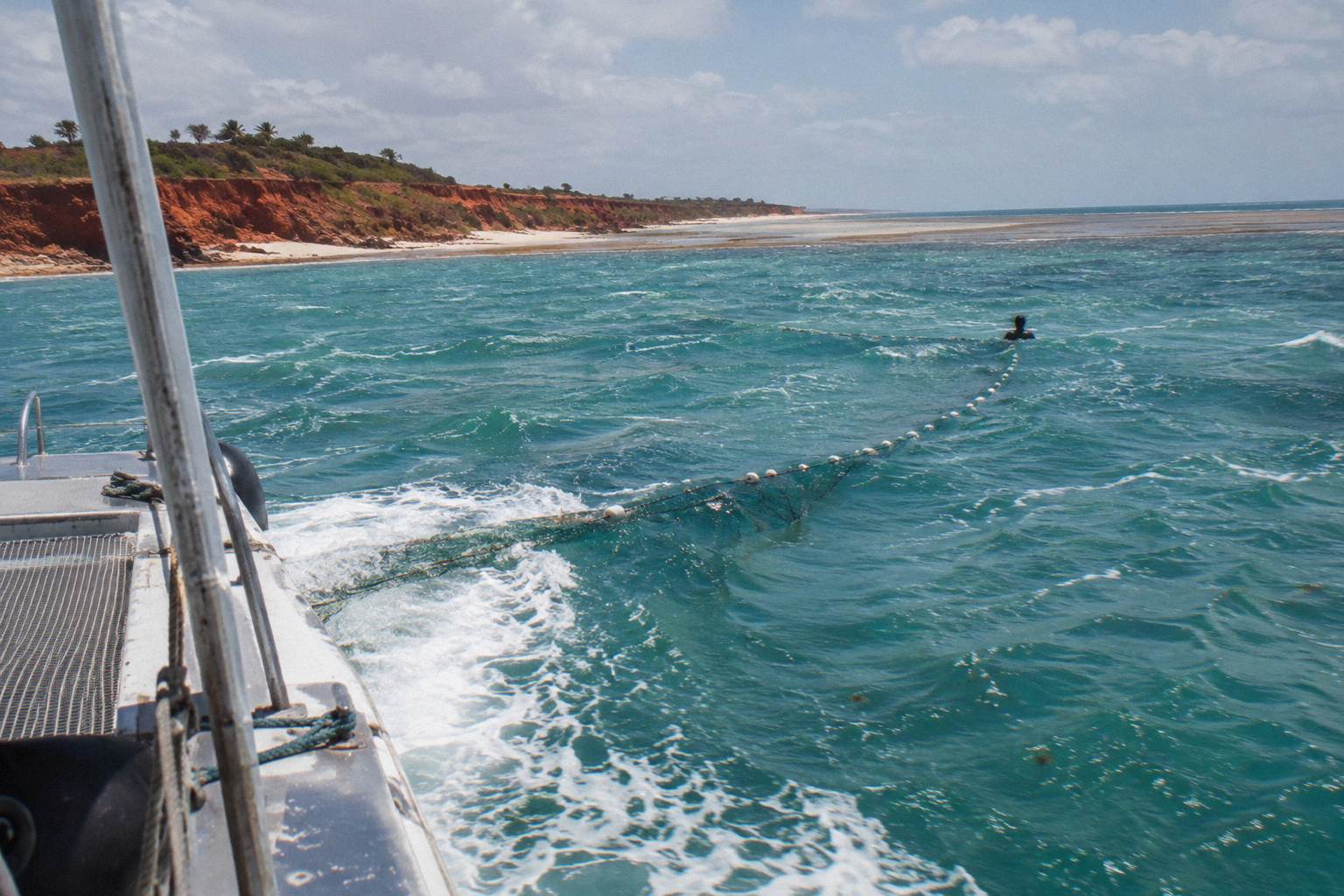
Boom-net swimming, a net towed behind the boat, is the other weather- and season-tied activity. Broome Whale Watching offers it late March to early October and Broome Tours from April to early October, in both cases only when conditions permit. That is why bathers and a towel make the packing list even on an evening trip: in the right months, the swim is part of the outing, subject to conditions on the day. The phrase to notice is when conditions permit, which appears with every boom-net mention the operators publish. It is a weather clause in miniature: the activity is scheduled but not promised, and the decision is made on the day by the crew, not in advance by the booking page. If your whole evening plan turns on clothing and comfort rather than swimming, the what to wear on a sunset cruise page collects the operators' advice in one place.
Are Wet-Season Months Good For Sunset Cruises?
They can be, with two honest caveats. Visit Broome itself notes magnificent sunsets and amazing lightning displays from December to March, so the sky is not the problem; the problem is that January to March brings the most rain plus possible flooding and cyclones, and the operators' calendars largely close over that stretch. Fewer boats, more dramatic evenings.
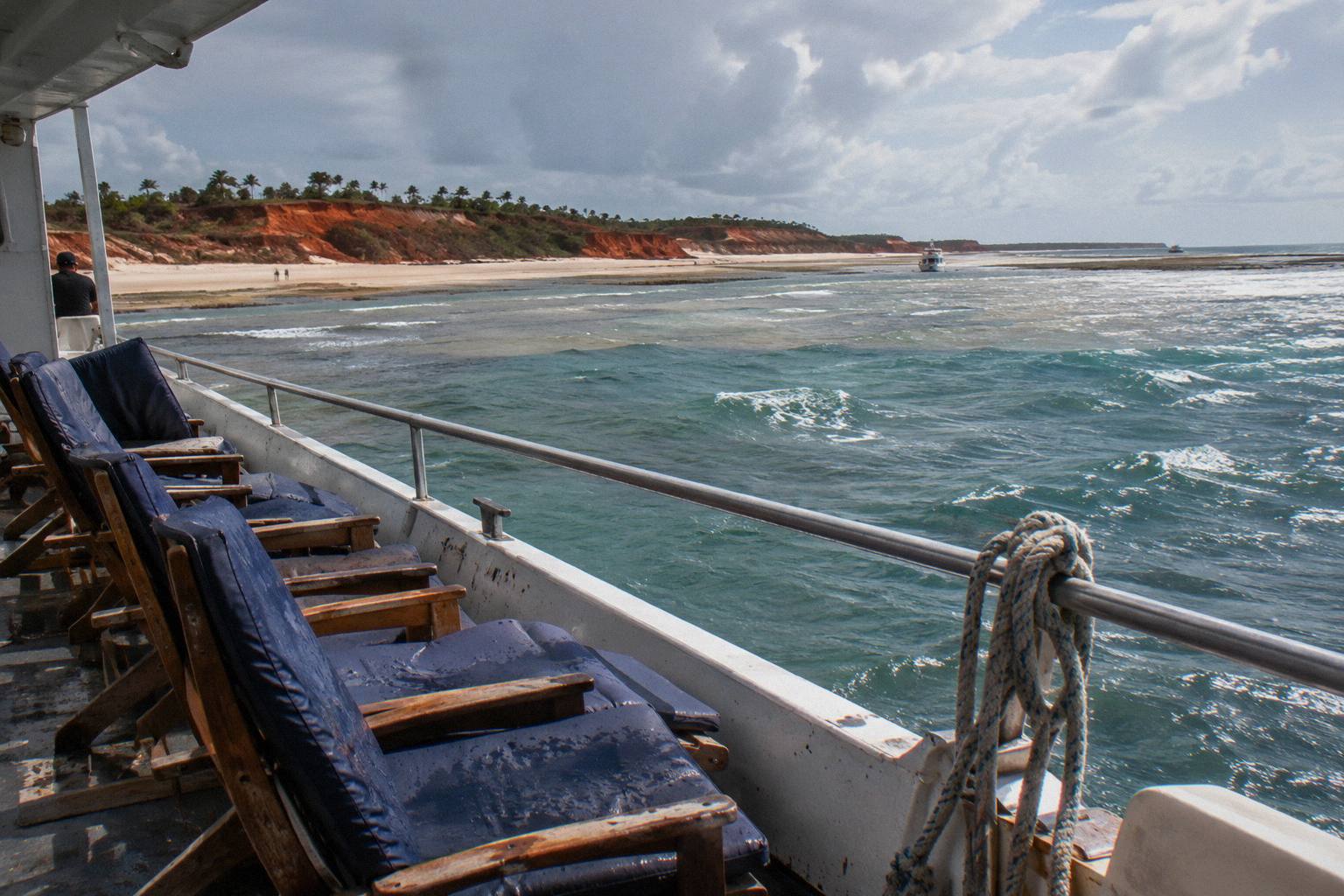
Treat that as a genuine trade-off rather than a dealbreaker. The wet-season sky is the one part of the weather story the sources describe in positive terms, and it belongs to Visit Broome's climate page, not to marketing copy. But the same page names January to March as the monsoonal peak with the most rain, and the sailing windows tell the rest: Broome Tours stops in early December and Broome Whale Watching's dolphin sunset cruise ends its second block in December, leaving no operator-scheduled sunset cruise on this site through the new year. The deeper dive on that trade-off lives on the wet-season sunset cruises page.
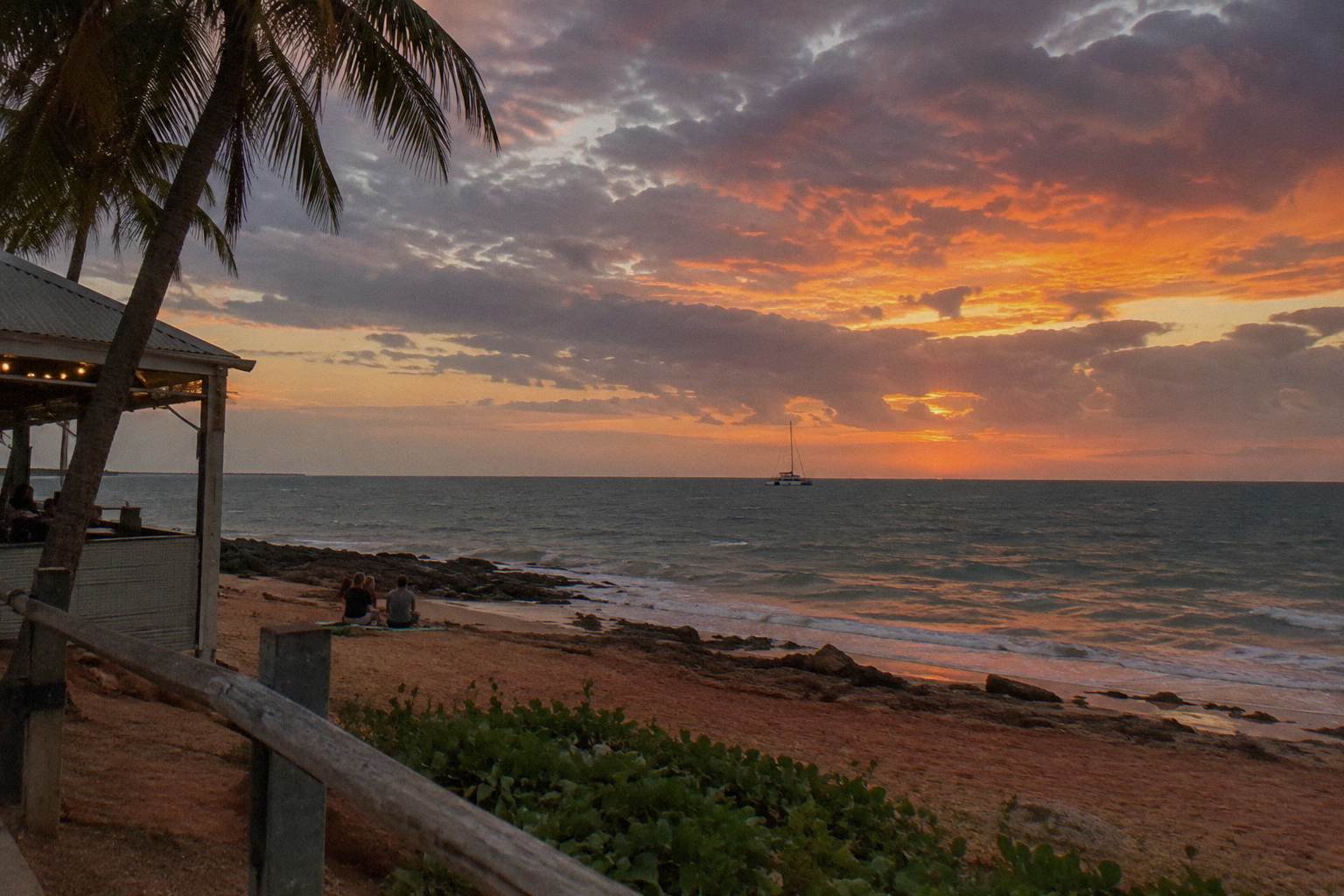
One neighbouring natural phenomenon runs across the same months and is worth separating from the boat calendar. The Staircase to the Moon, the full moon rising over Roebuck Bay's exposed tidal flats so the reflection looks like a staircase, happens two to three days a month between March and October, viewed best from the Town Beach precinct. No cruise product on this site's roster is a Staircase to the Moon cruise, and no operator states a moonrise departure or return time, so plan it as a separate evening from the water's edge. The Staircase to the Moon dates page carries the published calendar.
Does Whale Season Overlap With Sunset Cruise Season?
Yes, substantially. Humpback tours run from late June or July into September by Visit Broome's account, and Broome Whale Watching's whale-and-sunset cruise runs late June to early September, sitting entirely inside both the dry season and the main sunset-cruise calendars. The whale-season sunset products are summer-only evenings; the canape and dolphin cruises run far longer.
The whale windows differ by source and must be printed with their owners. Visit Broome says humpbacks winter in Kimberley warm waters from June to mid September, with tours from late June or July to September, and describes the region as home to the world's largest population of humpback whales, in the tens of thousands. Broome Tours' own whale-and-sunset cruise runs late June to early September. Sightings are never guaranteed on any cruise.
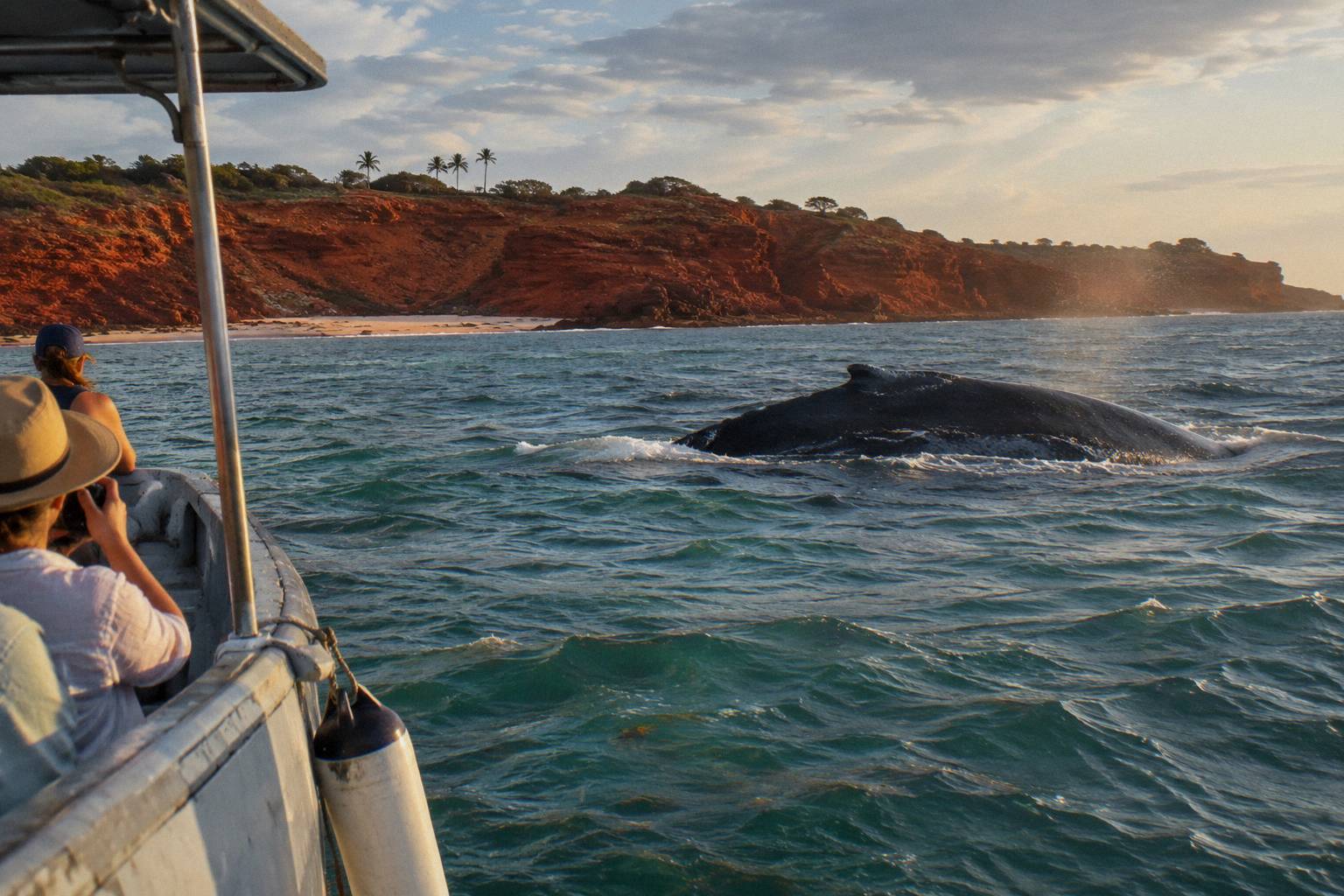
For weather planning the point is simple: a whale-and-sunset evening is a dry-season product, and inside that window it competes directly with the canape cruises on the same evenings. Weather-permitting caveats apply to it exactly as they do everywhere else. If that overlap interests you, the whale-season evening cruise page works through the choices.
Timing inside the window is the other weather-adjacent nuance worth knowing. Broome Whale Watching says mothers and calves are usually seen late August to mid September, and not guaranteed even then, which tilts the back half of the season toward family groups if that sight is the goal. The duration of the whale-season evenings also runs longer than the standard canape cruise, about 4.5 hours on the roster for two of the three products against about 3.5 for the canape evenings, and a longer time on the water is simply more exposure to whatever the evening's weather turns out to be. None of that is a forecast, but it is the shape of the decision.
How Should You Book Around Broome's Weather?
Book with the calendar and the terms in view: pick a month when your chosen operator actually sails, read that operator's cancellation terms before paying, and let the operator's own weather-cancellation remedy carry the risk of a stormy day. No operator publishes sell-out statistics, so no honest guide can name a booking lead time as a number.
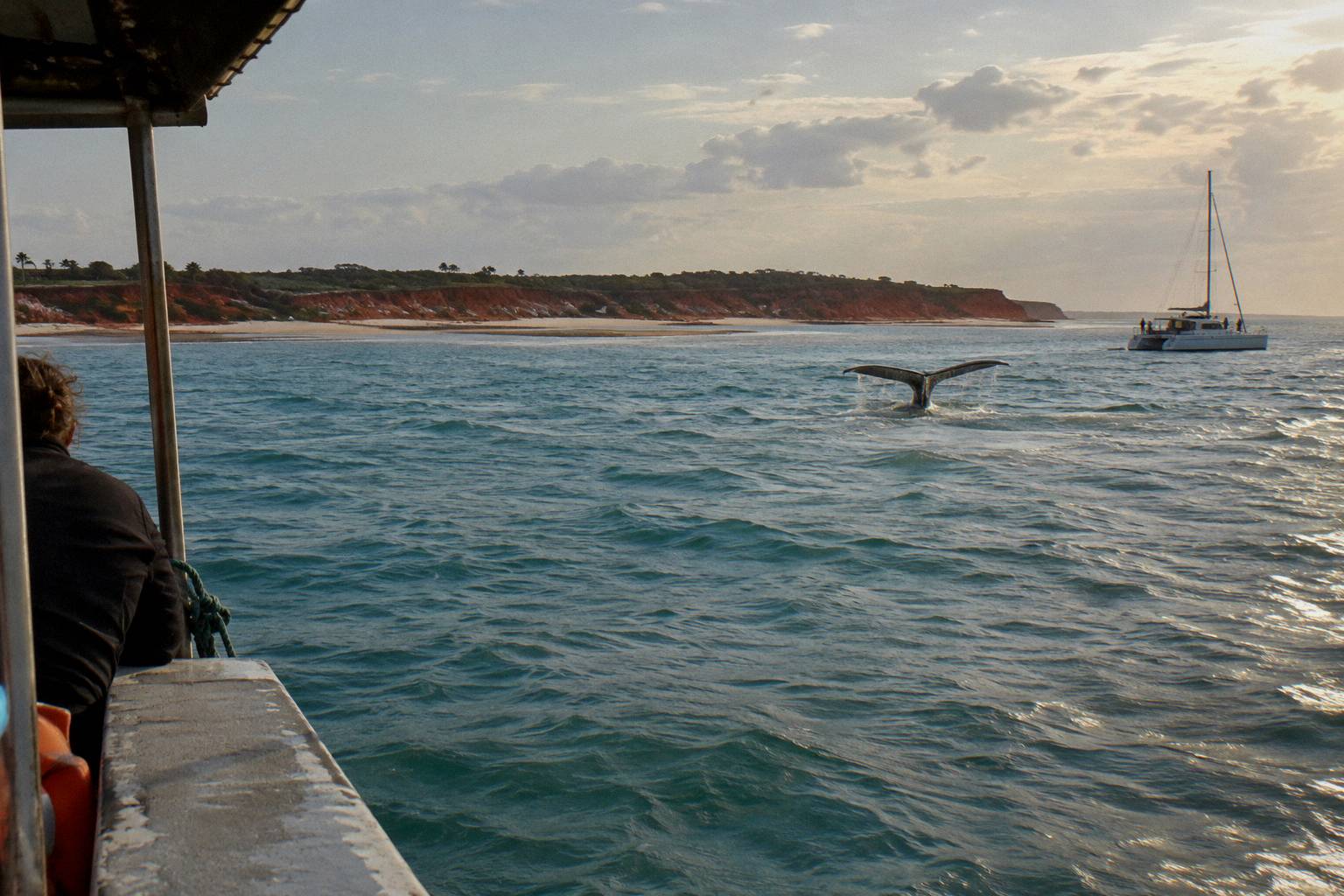
That last sentence is worth dwelling on, because generic travel advice loves a "book six weeks ahead" rule. Nothing in the sources supports one here. What the sources support is structural: sailing windows by operator, refund ladders by operator, and a stated remedy whenever the operator itself cancels for weather. A guest who knows all three has done the weather planning that can actually be done. The pages on how to book a sunset sail and what to do if the cruise is cancelled carry the process in more detail.
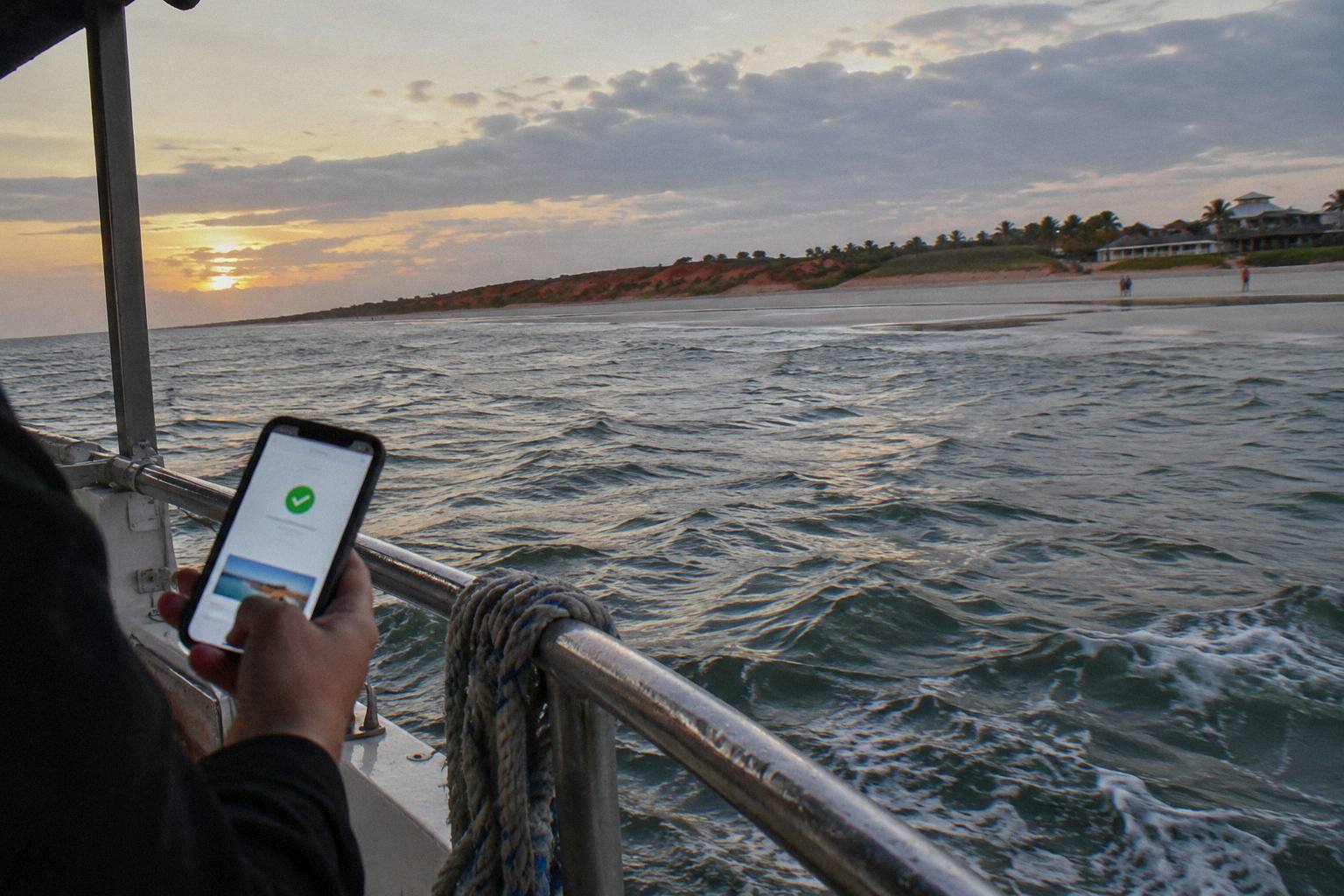
For most visitors the practical sequence looks like this: fix the month, confirm the operator sails then, compare the canape cruises if that is the style of evening you want, and read the terms on the exact page you book from. The two operators that publish prices list Broome Tours' Iconic Catamaran Sunset Cruise at A$160 adult and Broome Whale Watching's canape cruise, which carries a 4.2 rating across 11 reviews, at A$170 adult. Those are the operators' own figures and they say nothing about weather, only about what the evening costs. Broome Sunset Cruises keeps the operator terms and sailing windows side by side so the comparison takes minutes rather than evenings.
Small-group evenings behave the same way on every point above: same seasons, same weather-permitting logic, same advice to read the booking page's own terms. One such product meets at Gantheaume Beach rather than taking pickup, a detail that matters more in wet months when the sky can turn during the drive out. Without a courtesy bus, the weather question at a beach meeting point becomes a personal one rather than an operator-handled one, which is a small but real difference in the shoulder season.
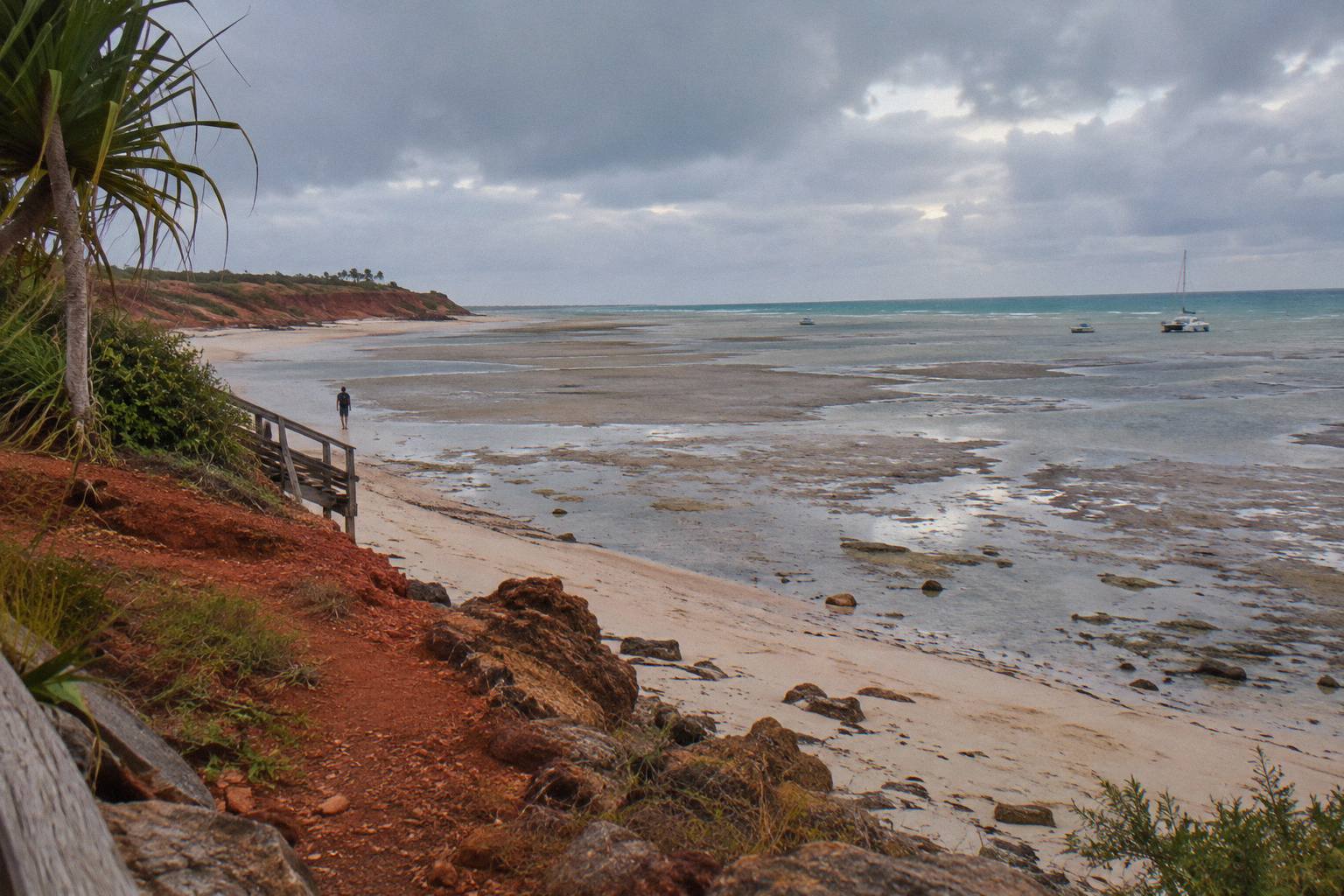
Weather, in the end, sets the boundaries of the decision rather than making it for you. The dry season gives the widest choice of boats, the shoulder months thin the field but keep several operators sailing, and the wet months trade reliability for the skies Visit Broome itself calls magnificent. Every published cancellation rule points the same way: the operators carry the weather risk on their side of the cancellation line, and you carry it on yours. Knowing where that line sits, in which month, with which operator, is the whole of weather planning for a Broome evening on the water.
Common Questions About Broome Weather For Evening Boat Trips
What Is Broome's Weather By Month?
Visit Broome describes a dry season that usually runs May to October and a wet season that usually runs November to April, with January to March the monsoonal peak carrying the most rain plus possible flooding and cyclones. No source publishes month-by-month temperatures, wind or swell figures for the cruises.
Which Months Do Broome Sunset Cruises Operate?
Each operator sets its own window: Broome Tours sails April to early December and Broome Whale Watching's dolphin sunset cruise runs March to June and September to December. Check the booking page for the exact dates of the cruise you want.
What Happens If My Cruise Is Cancelled For Weather?
Each operator states a remedy: Broome Whale Watching and Broome Tours reschedule or refund in full when they cancel for weather or low numbers. Read the terms on the exact page you book from, since booking pages can show their own conditions.
Can I Get A Refund If I Cancel My Own Booking?
It depends on the operator. Broome Whale Watching gives no refund inside 48 hours and Broome Tours loses the total cost within 48 hours. Groups of four or more with Broome Whale Watching need one week's notice. Always read the terms on the page you book from.
Is The Wet Season Bad For Sunsets In Broome?
Visit Broome itself notes magnificent sunsets and amazing lightning displays from December to March. The trade-off is the monsoonal weather in January to March and the fact that most operators' sailing calendars close across those months.
What Should I Wear On An Evening Cruise In The Dry Season?
Broome Tours advises a light jacket from June to August after sunset, and recommends slip-on shoes because of the ankle-deep beach wade at boarding. Broome Whale Watching lists bathers, a towel, a camera, sunglasses, a hat, a water bottle and thongs or slip-off shoes.