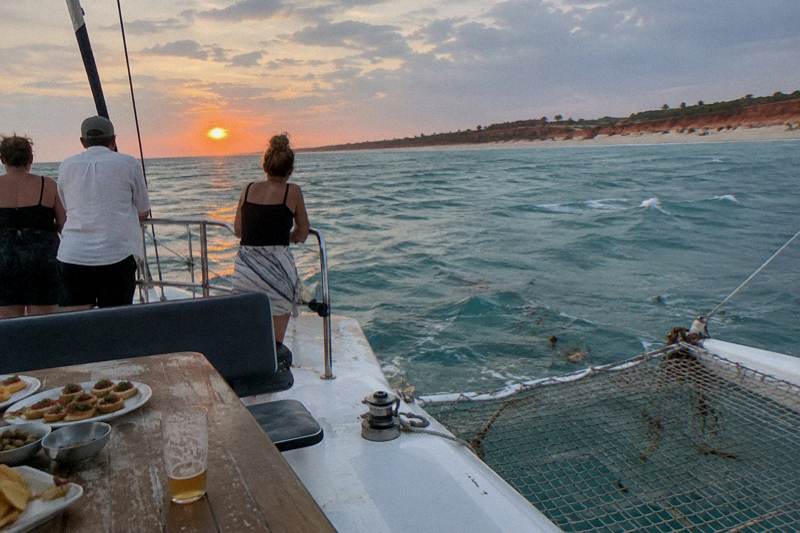
Wet Season Sunset Cruises: Storm Skies, Cloud And Cancellations
Broome's wet season runs roughly November to April, and it splits the sunset-cruise calendar in half: one operator sails most of it, the others shut down for the storm months. Here is what each operator states, what happens to your booking when weather closes in, and what the sky is doing while all this unfolds.
Short answer
Visit Broome puts the wet season from November to April. Broome Whale Watching's dolphin cruise stops after December and Broome Tours pauses after early December. If the operator cancels for weather, each states a reschedule or refund applies.
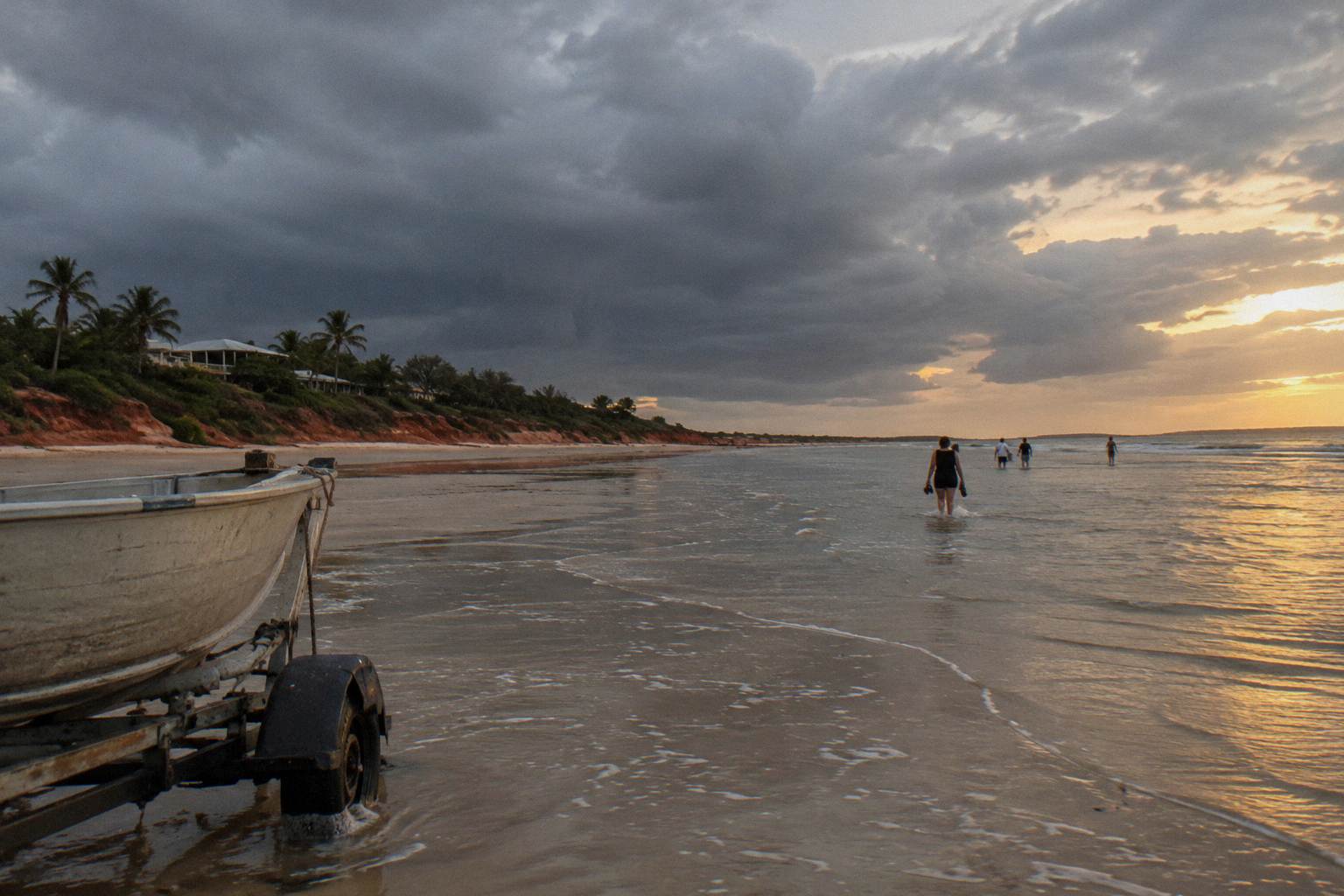
Broome's wet season is not a single experience. November can feel like a hotter, more humid version of the dry, December brings the first real storm build-up, and January to March is monsoonal, the months Visit Broome associates with possible flooding and cyclones and the most rain. The sunset-cruise operators respond to that curve in different ways: two of them step away from the water for the heart of it, and one states it sails on. This page, published by Broome Sunset Cruises, sets out exactly what each operator publishes about its season, what the cancellation rules say when a storm cell rolls in, and how to plan an evening on the water around all of it.
Do Sunset Cruises Run In Broome's Wet Season?
Yes, but not all of them, and not evenly across the season. Visit Broome defines the wet season as roughly November to April and the dry season as roughly May to October. Broome Whale Watching's dolphin sunset cruise runs March to June and September to December, and Broome Tours' season runs April to early December, so both leave January and February out entirely.
The practical shape of the answer is that the wet season has two halves. The shoulder months, November and December, then March and April, still have boats on the water from both catamaran operators, because the stated seasons of Broome Whale Watching and Broome Tours extend into those edges. The deep wet, January and February, is when the two catamaran operators' published seasons simply do not reach, and no bookable cruise on this site covers that gap.
That weather-permitting condition matters more in these months than at any other time of year. Every operator on the roster reserves the right to cancel for weather, and January to March is the stretch when that clause does real work. A listed season is a statement of intent, not a promise that a particular sailing departs on a particular evening.
One framing helps when reading the rest of this page: none of the operators publishes a month-by-month breakdown of cancellations, sea state or rainfall effects on their trips. No such figure exists in any of the sources. What exists is each operator's stated season, its stated cancellation policy, and Visit Broome's general climate description. Everything below sticks to those three things, and where something is not stated, it says so.
If your travel dates fall in the deep wet, treat a sunset cruise as possible rather than planned, read the terms of the page you book on before paying, and have a land-based backup evening in mind. If your dates fall in November, December, March or April, you have real choices, and the sections below walk through them. For the broader question of how evening boat trips handle Broome weather, this site carries a dedicated page.
What The Wet Season Actually Looks Like Over Broome
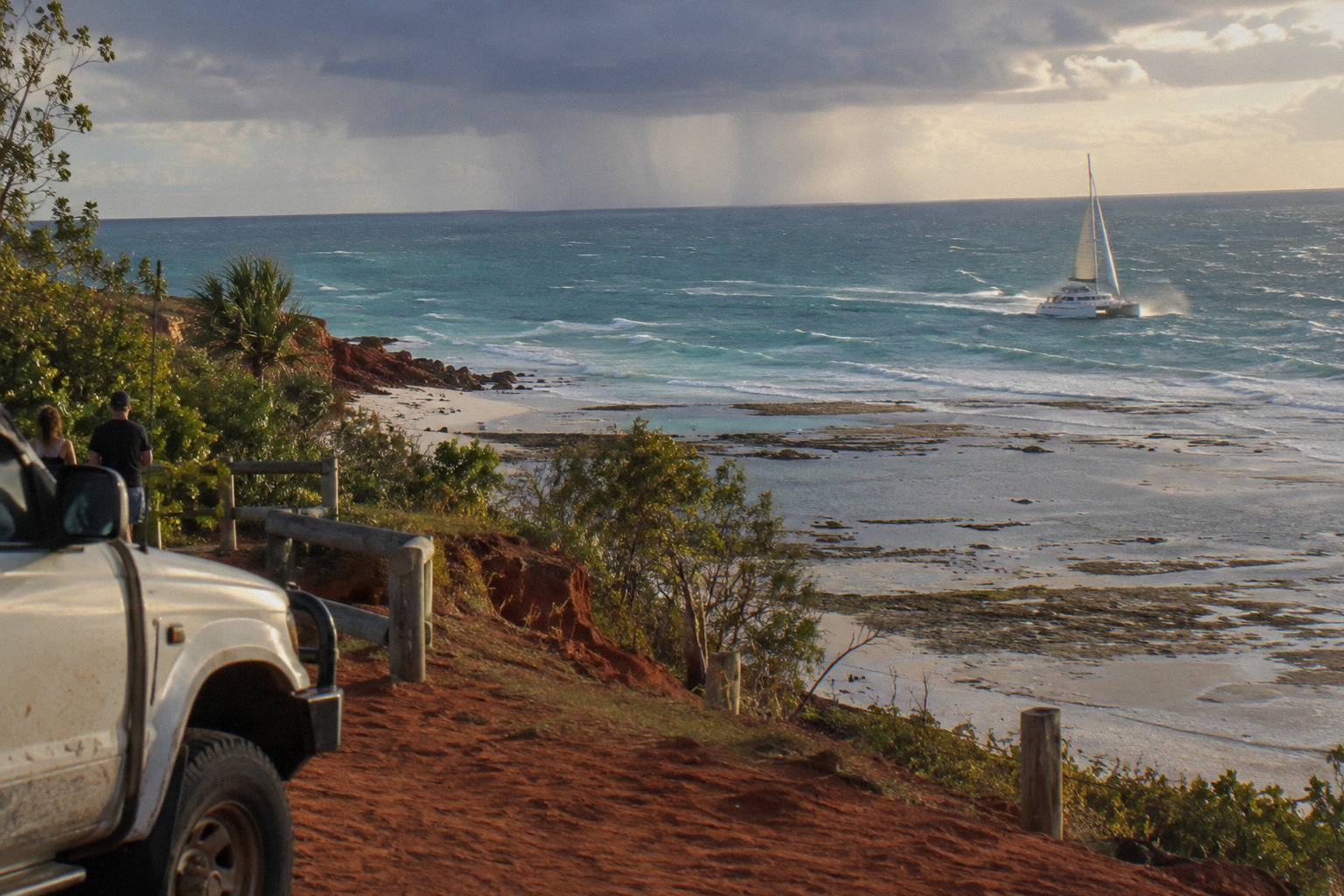
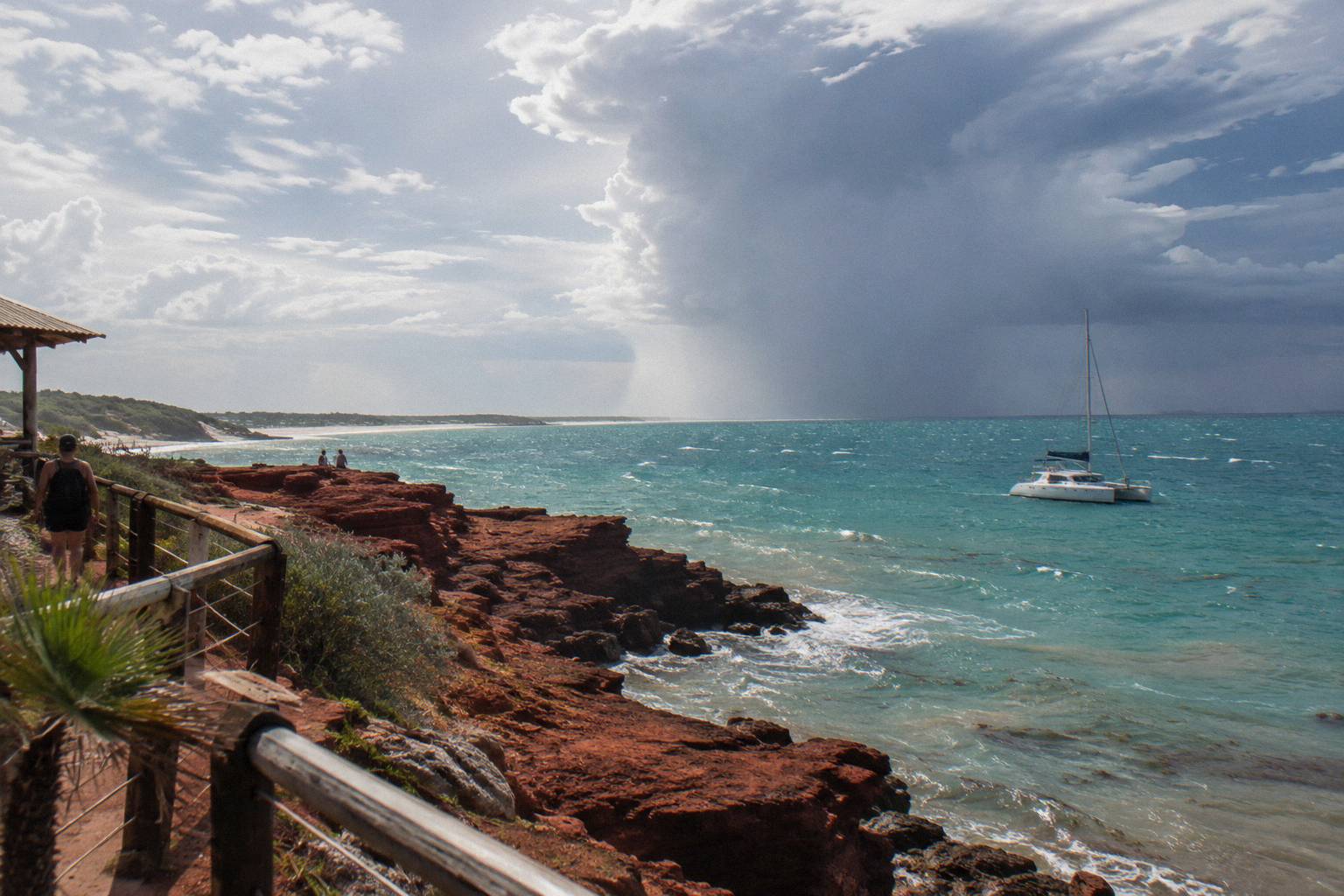
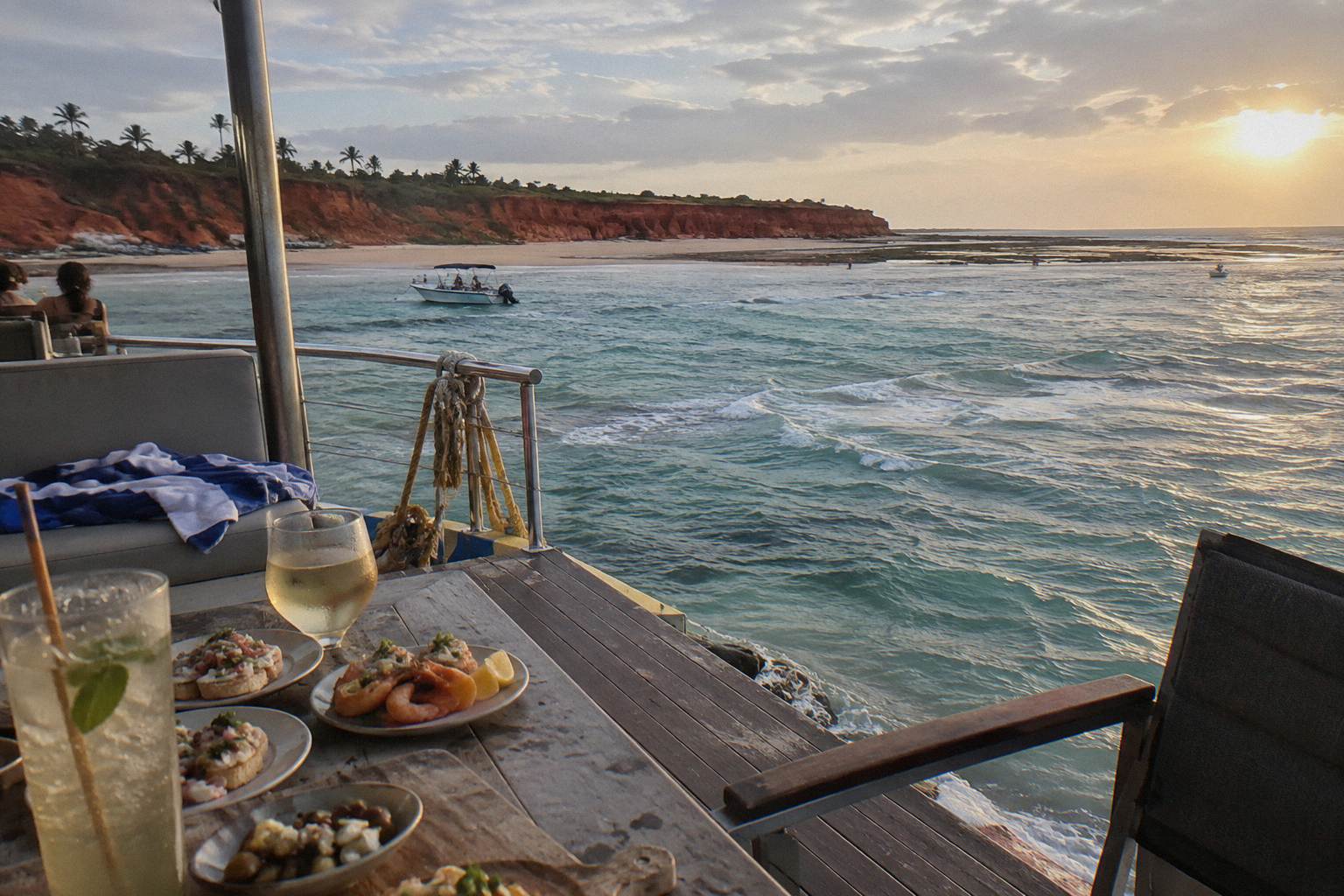
Visit Broome's own description of December to March is direct: 'magnificent sunsets and amazing lightning displays'. That is the trade the wet season offers. Against it sit monsoonal conditions from January to March, with possible flooding and cyclones, and the most rain of the year. No operator page describes the view from the water, and no temperature, UV, wind or sea-state figure is published anywhere in the sources.
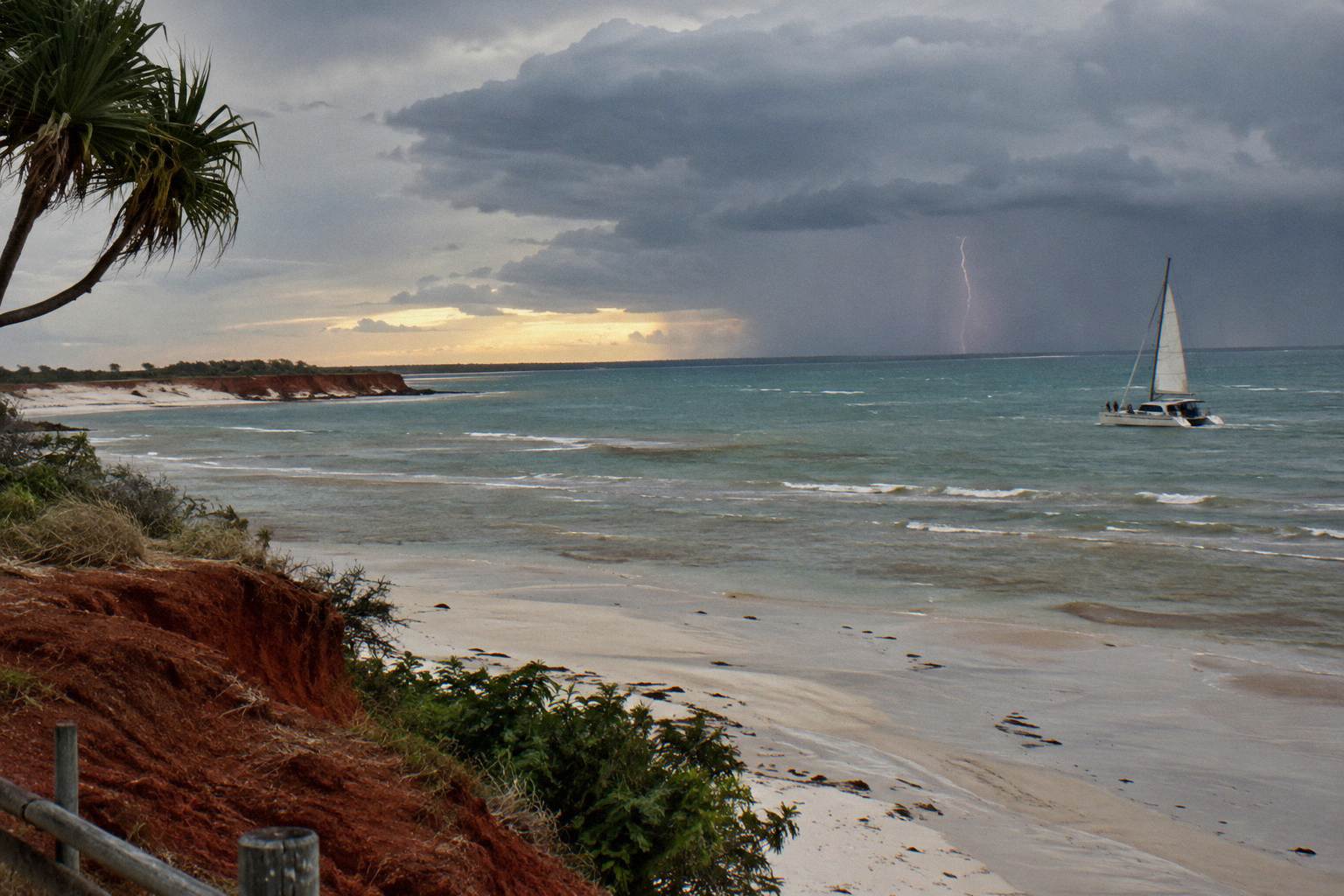
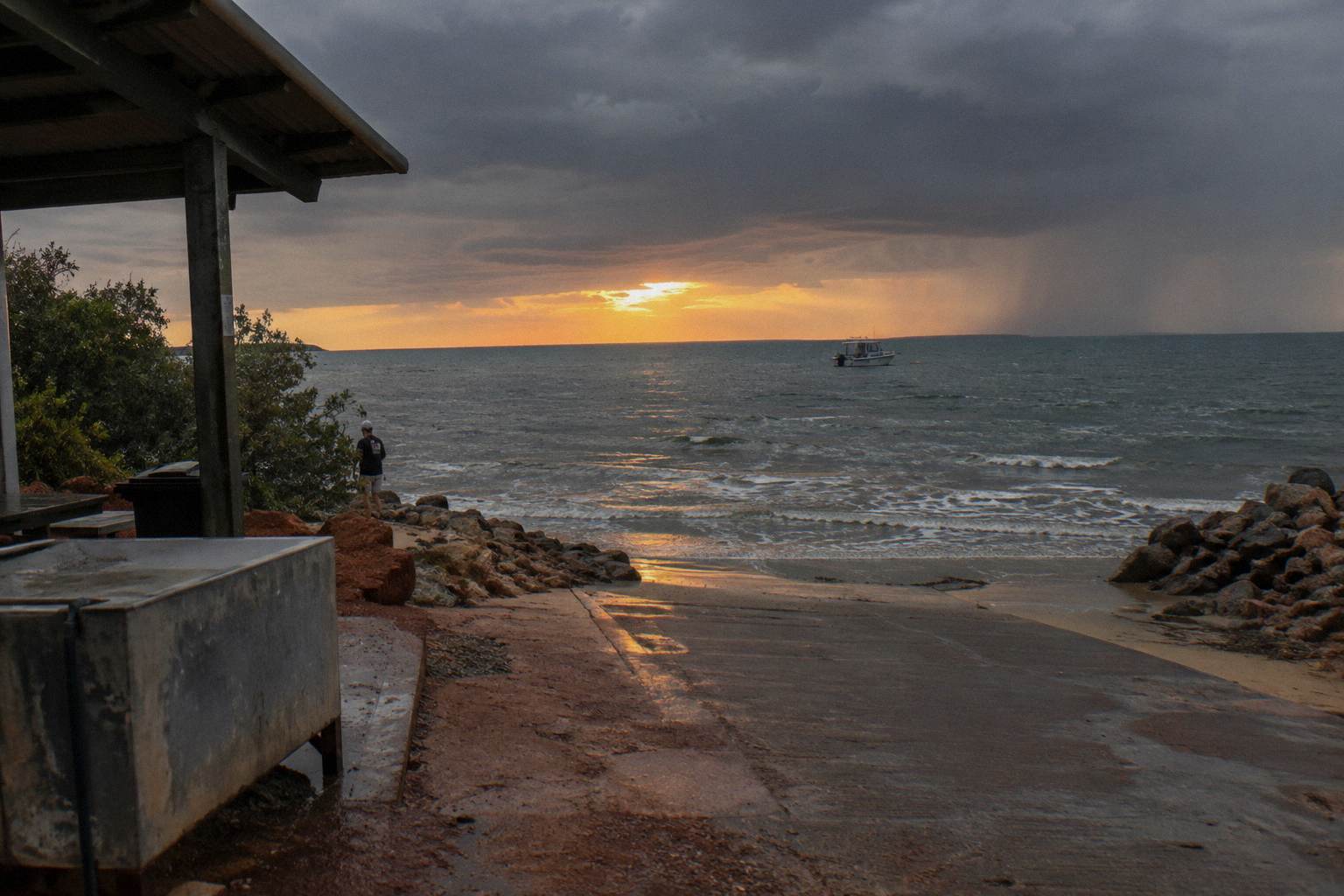
The sky is the reason some travellers deliberately target the build-up. Late-afternoon storm clouds over a tropical coastline can do things a clear dry-season sky cannot, and Visit Broome's climate page is the source for that characterisation. What this site cannot do is promise you a spectacular evening: visibility, cloud and storm position vary night to night, and no operator guarantees a view or describes one as a fact.
What can be said with confidence is structural. Sunset in Broome moves across the wet-season months, roughly from about 6:04pm in mid-November to about 6:22pm in mid-December, back through about 6:07pm in March and 5:42pm in April. Those are computed, approximate figures, discussed in full later on this page. A cruise departs ahead of sunset, and no operator publishes a departure clock time: the booking page and confirmation carry the pickup or meeting time.
The other structural fact is cloud risk. A monsoonal sky can swallow a sunset entirely, and no operator offers a refund for a clouded-out evening; the cancellation clauses cover weather that stops the boat sailing, not weather that dims the show. That distinction is worth holding in your head as you read the cancellation section below, because it is the gap most wet-season questions fall into.
Between those two poles, storm skies and total washouts, sit plenty of ordinary humid evenings. The honest position is that the wet season raises the variance, not that it guarantees either outcome.
Which Operators Sail Which Wet-Season Months
Broome Whale Watching's dolphin sunset cruise runs March to June and September to December. Broome Tours' cruising season runs April to early December. January and February fall outside both stated seasons, and no bookable cruise on this site covers those two months.
This is the decision table for a wet-season traveller, and the source of every cell is the operator's own page or Visit Broome's listing. Notice that the seasons do not line up neatly: Broome Whale Watching returns in March, Broome Tours in April, and neither stated season reaches January or February.
| Operator | Vessel | Stated season | Sails January and February? |
|---|---|---|---|
| Broome Whale Watching | Orcaella, 50-foot catamaran | Dolphin sunset cruise March to June and September to December | No, by its stated season |
| Broome Tours | Ballena, 42-foot catamaran | Cruising April to early December; boom-net swimming April to early October | No, by its stated season |
Two things follow from that table. First, a traveller in November or early December has both catamaran operators to compare, exactly as in the dry season, and the choice comes down to the ordinary axes: canapes or a fruit platter, Roebuck Bay or Cable Beach, boat size and group size. Second, a traveller in January or February finds no bookable sunset cruise on this site, and should plan around that gap.
For the shoulder months, the roster's two canape cruises are the closest comparison. Broome Tours' Broome's Iconic Catamaran Sunset Cruise, at the operator's price of A$160 adult and A$110 child for ages 5 to 14, runs about 3.5 hours and includes canapes and a fruit platter, with bar drinks for purchase. Family pricing exists for both: A$505 for two adults and two children on the Broome Tours product, A$498 on the Broome Whale Watching product, which the operator's page says saves A$40.
Those two figures are each operator's own published price, and they are not a ranking; they are different products with different inclusions and age bands. Both depart ahead of sunset, with the exact time on the booking confirmation.
The whale-season cruises on the roster, Whale Watching And Sunset Cruise and Small-Group Whale Watching Sunset Cruise, sit mostly outside the wet-season conversation, since the operators' whale windows close by early October at the latest. For a January or February evening, what matters instead is the weather-permitting clause attached to the year-round sunset operators, because that is the condition a deep-wet traveller is really reading.
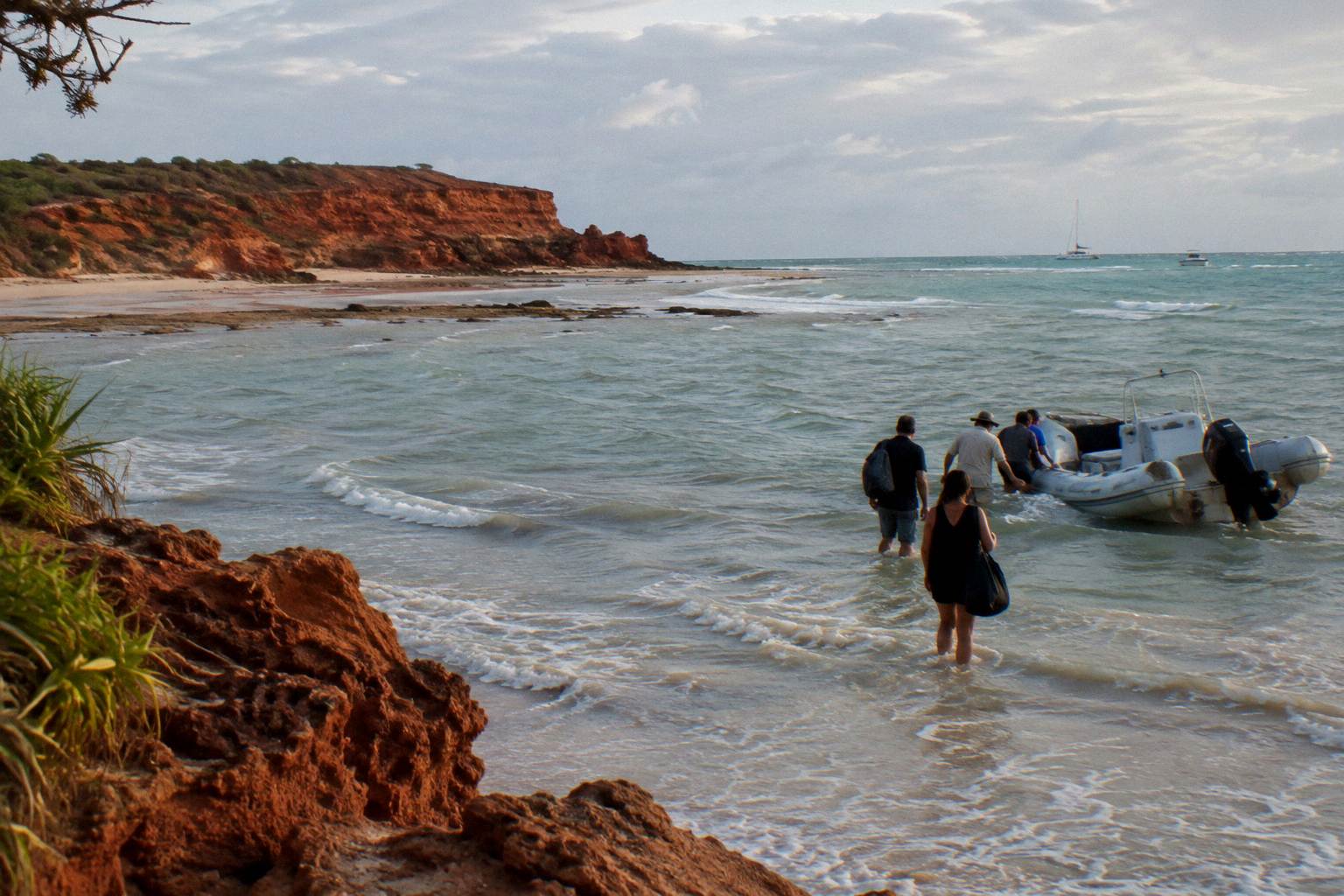
A wet-season note that is easy to miss: Broome Tours includes a brief town tour on its courtesy-bus route, and Broome Whale Watching boards guests from the beach by amphibious vessel in Roebuck Bay. Neither detail changes in the wet, but both mean your evening starts before the boat does, and a storm on the horizon is part of the drive. More on the boarding mechanics, which need some agility, appears in the packing section below.
Cancellation Rules When Storms Build
Each operator states its own terms. Broome Tours: full refund more than 48 hours before departure; inside 48 hours the cost is lost; operator cancellation for weather or mechanical reasons is a full refund. Broome Whale Watching: no refund inside 48 hours, and if the operator cancels for weather or low numbers, guests are rescheduled or refunded in full.
The pattern to notice is how the two operators' windows compare: both hold your money inside 48 hours, so a storm forecast firming up late in the piece can cost you if you pull out yourself. The operators' own cancellation terms are separate from a guest-initiated cancellation, and in every case an operator-initiated cancellation for weather, safety or numbers ends in a reschedule or a full refund.
| Operator | Guest cancels | Operator cancels (weather, numbers, mechanical) |
|---|---|---|
| Broome Whale Watching | No refund inside 48 hours of departure; groups of 4 or more need one week's notice; charter two weeks; no-shows pay in full | Rescheduled or refunded in full |
| Broome Tours | Full refund more than 48 hours before; inside 48 hours the total cost is lost; failing to board forfeits the fare | Full refund |
Two caveats belong beside that table. The first is that the roster's booking pages show their own terms, and some show free cancellation up to 24 hours, which can differ from the operator's own website terms. Read the terms of the page you actually book on, and treat nothing on this site as a promise of a refund or a place. The second is that no operator publishes sell-out or demand statistics, so no honest number exists for how far ahead a wet-season sailing needs to be booked; book when your plans are firm, not to a formula. For the fuller walkthrough of what happens when a sunset sail is cancelled, this site carries a dedicated post.
The group-size clauses deserve a flag for wet-season travel specifically. Broome Whale Watching asks one week's notice for bookings of 4 or more guests and two weeks for exclusive charter. If a family is reshuffling dates around a storm system, those notice periods can outlast the weather window, and the group cancellation interacts with the 48-hour rule in ways the booking page governs.
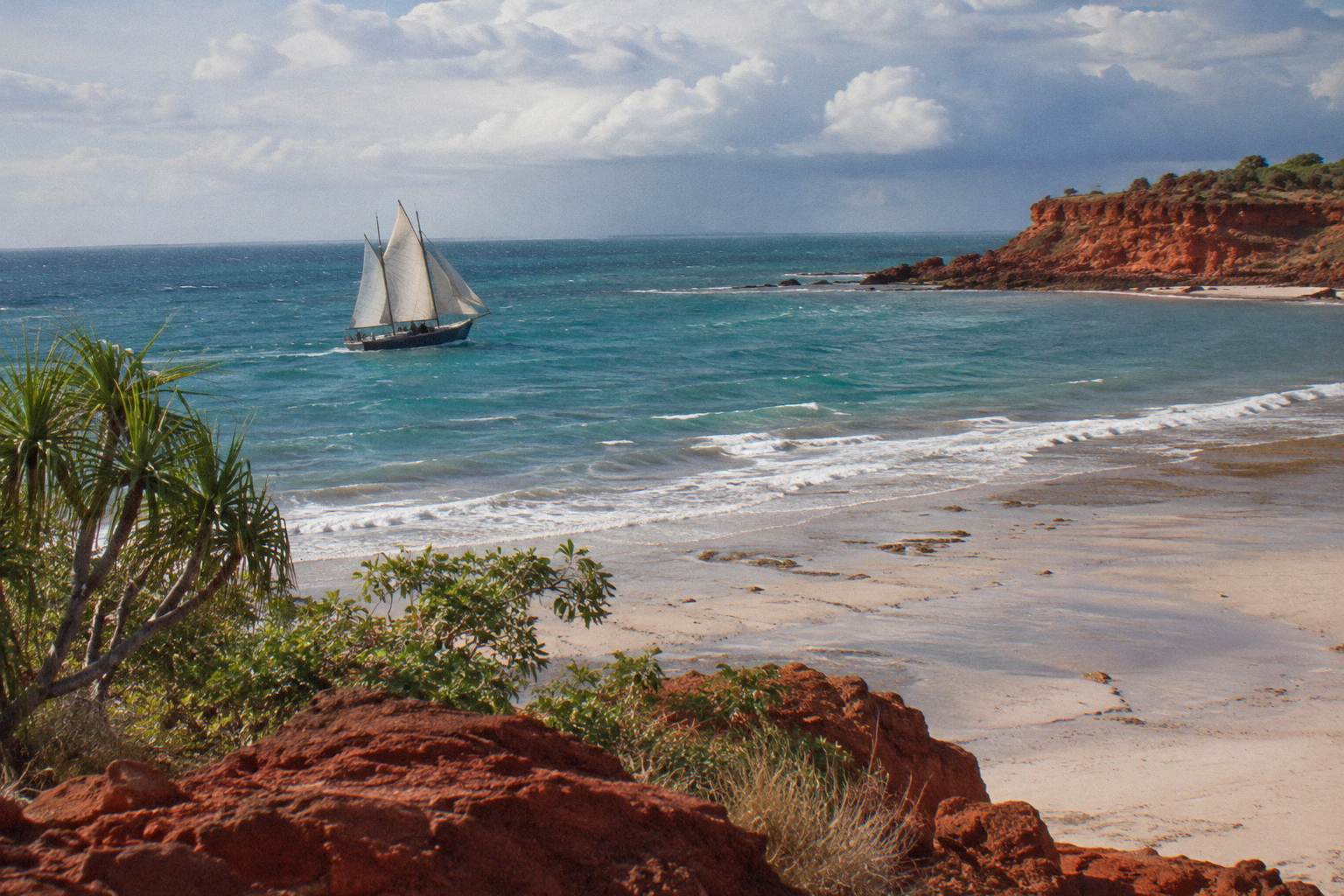
Finally, remember the distinction from earlier: these clauses cover trips that do not sail. A trip that sails under heavy cloud, with the sunset behind it, is a completed trip on every operator's terms. If a visible sunset is the whole point of your evening, the wet season's variance is yours to carry, and the operator's refund rules will not absorb it.
The sunset question in the wet is not whether the boats run, it is what time the sky does its part. That is the next section.
How Sunset Times Shift Through The Wet Months
Across the wet-season half of the year, computed approximate sunset times in Broome run about 6:04pm in mid-November, 6:22pm in mid-December, 6:33pm in mid-January, 6:26pm in mid-February, 6:07pm in mid-March and 5:42pm in mid-April. These are solar calculations, not operator times, accurate to about two minutes. Boats depart ahead of sunset; no operator publishes a departure clock time.
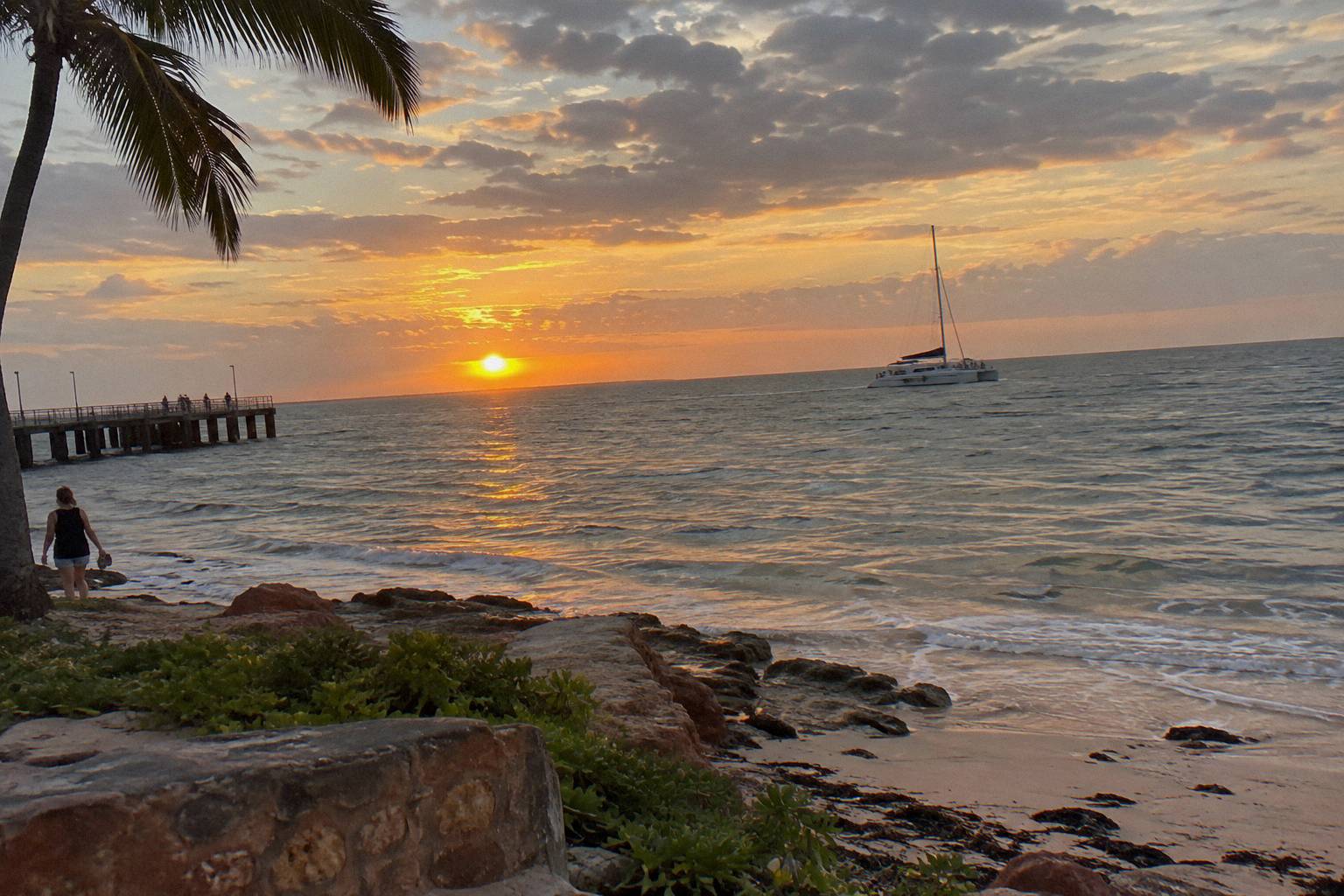
The numbers come from a NOAA solar calculation for Broome, plus or minus about two minutes, taken for the 15th of each month in Australian Western Standard Time, which has no daylight saving. Visit Broome publishes no monthly sunset table, so these are approximations rather than official figures; the official calculators are Geoscience Australia and the Bureau of Meteorology. The full monthly spread, including the dry-season months, is on this site's page of Broome sunset times month by month, worth a look if your dates straddle the seasons.
| Month (15th, approximate) | Sunset about |
|---|---|
| November | 6:04pm |
| December | 6:22pm |
| January | 6:33pm |
| February | 6:26pm |
| March | 6:07pm |
| April | 5:42pm |
The shape of that curve tells the wet-season planner something useful. Sunset sits latest through January, near 6:33pm, and pulls back steadily to its early-April mark of about 5:42pm, which is close to the year's earliest. A February evening on the water starts later than an April one by roughly 50 minutes, which affects kids' bedtimes and how much of the trip runs in the dark. Every cruise on the roster departs ahead of sunset, and the booking confirmation, not the operator's brochure page, carries the actual time.
One caution the facts file insists on: do not read the sunset curve as matching the operators' seasons. The operators' calendars are built around their own vessel schedules and the storm profile of the monsoon, not around the solstice. The two datasets sit side by side on this page, and neither explains the other.
Planning Around Tides, Storms And The Big Kimberley Tides
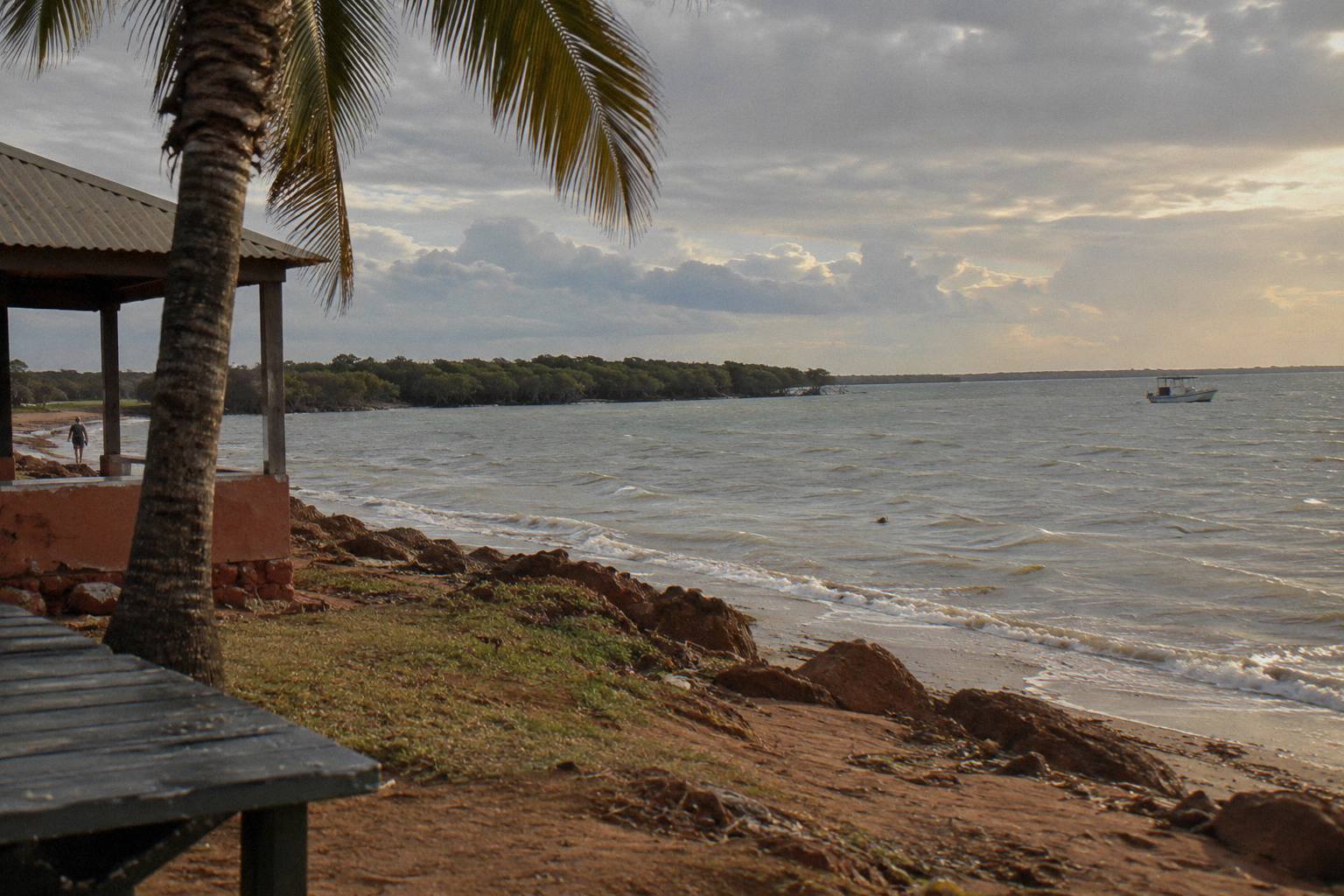
Visit Broome states the Kimberley Coast has the biggest tides in the southern hemisphere, with differences between high and low of up to around 10 metres. No operator states how tides change a cruise, a boarding or a departure, and no tide-by-cruise rule exists in any source. For tide questions, ask the operator or read the booking confirmation; Visit Broome publishes Bureau of Meteorology tide tables for 2026 and 2027.
The tide fact is worth knowing for what sits around a cruise rather than the cruise itself. At Gantheaume Point, per Visit Broome, the dinosaur footprints show on tides under 2.16 metres and the Catalina flying-boat wrecks under 0.86 metres, so a low-tide afternoon before an evening sailing can hold a second sightseeing stop. Whether the tide affects the beach boarding, where guests wade ankle-deep or knee-deep to a tender, is not stated by any operator: it is a question for the operator, not something to assume either way.
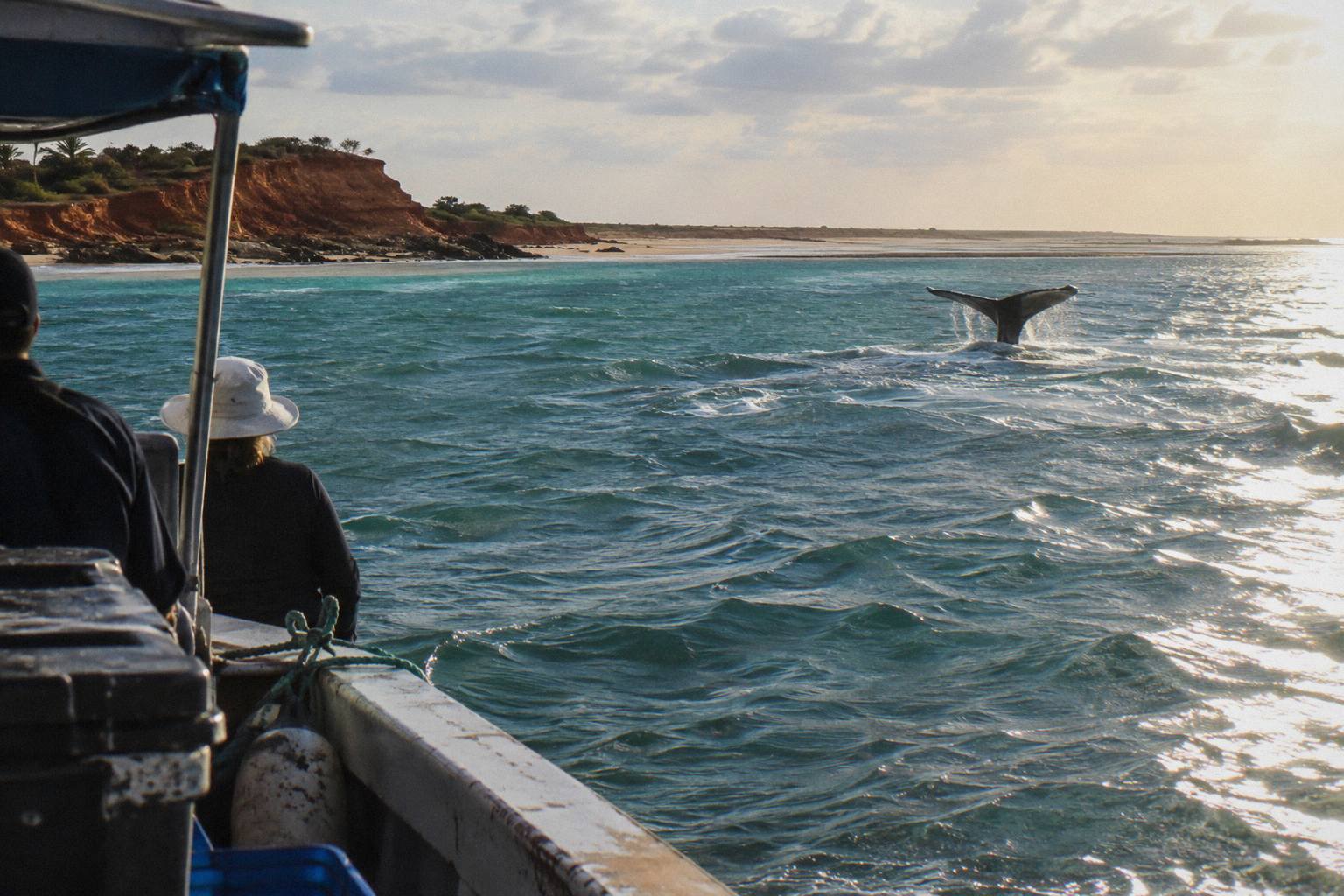
Storm planning follows the same honesty rule. No operator page states anything about sea state, swell, seasickness rates, stingers, crocodiles or sharks, so this site prints none of it. What the operators do state is that they cancel for weather, and for low numbers at Broome Whale Watching, and what happens to your money when they do. That is the complete, verifiable storm plan: book with the cancellation window in mind, watch the forecast inside it, and accept that the operator holds the go/no-go call.
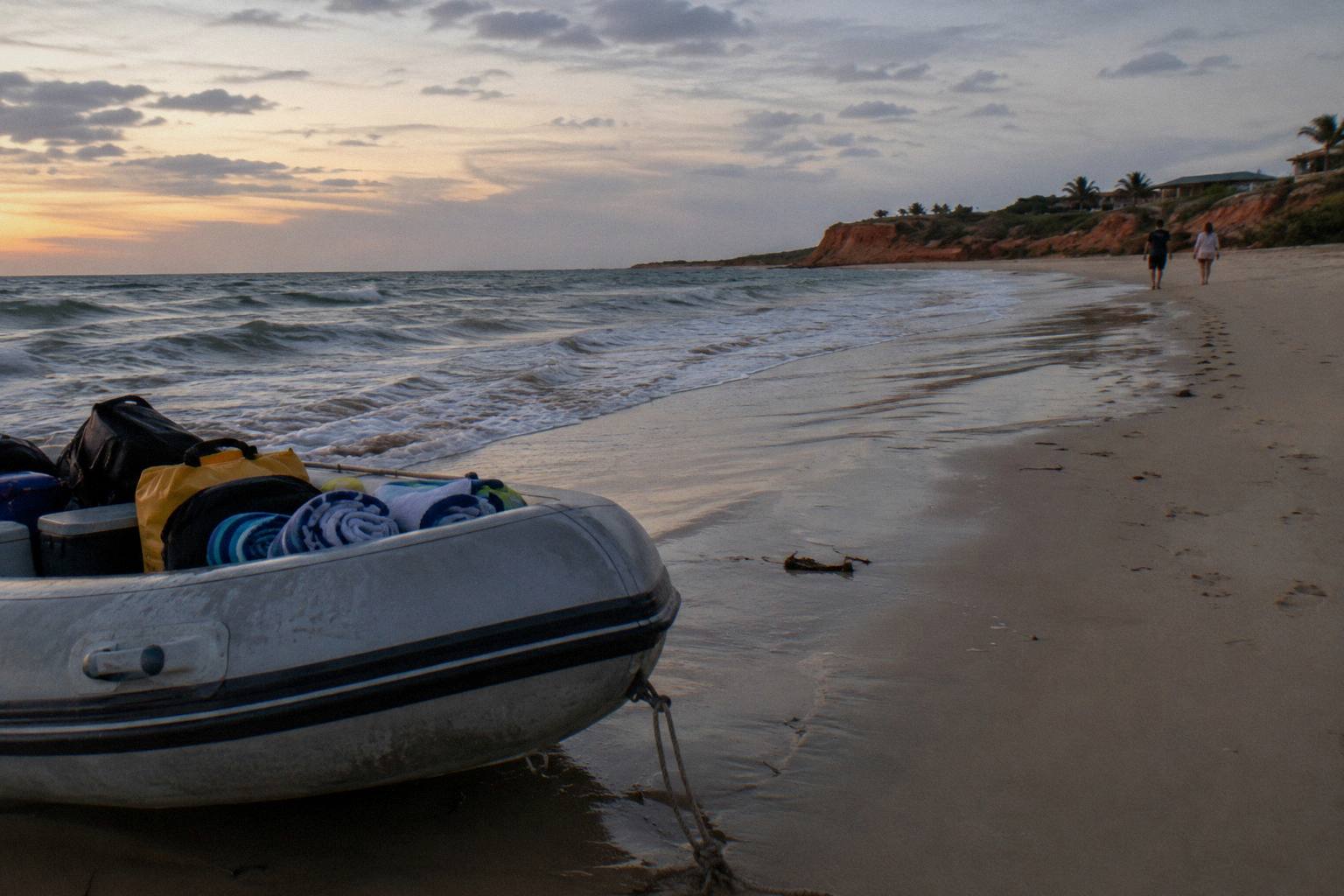
The boarding mechanics deserve one plain paragraph, because they are the same in the wet as in the dry. Broome has no marina or jetty, so each operator moves guests from the beach to the boat: by amphibious vessel with Broome Whale Watching, by tender with an ankle-deep wade with Broome Tours. Some agility is required on both, and Broome Tours passengers must be mobile to board and disembark. A wet-season evening with rain about does not change the mechanics, but it can change the sand underfoot, so the slip-on-shoe advice in the next section earns its place.
What To Bring And How To Book A Wet-Season Sailing
Broome Whale Watching lists bathers and a towel, a camera, sunglasses, a hat, a water bottle and thongs or slip-off shoes. Broome Tours advises a light jacket from June to August after sunset, outside the wet months, and notes slip-on shoes can stay on the bus because of the beach wade. Both include canapes with drinks from a licensed bar, and Broome Whale Watching lets you bring your own drinks under its no-self-service policy.
The wet-season translation of that list is short: the slip-off shoes matter because of the wade, the water bottle matters because of humidity, and the camera is your call, but a dry bag or a towel for it is sensible in rain. Broome Tours' jacket advice is a dry-season months note, not a wet-season one, and no operator publishes a temperature or insect figure, so nothing more specific can be honestly said.
| Operator | Food and drink stated | Wading and boarding |
|---|---|---|
| Broome Whale Watching | Mediterranean canapes included; licensed bar; BYO drinks allowed under its No Self Service policy (no red wine, no homemade drinks, no bottles of spirits) | Beach boarding by amphibious vessel; some agility required |
| Broome Tours | Canapes and a fruit platter included; bar drinks for purchase (its pages are inconsistent on a free welcome drink, so read the booking page) | Ankle-deep wade to a tender; slip-ons can stay on the bus |
Booking strategy in the wet is mostly cancellation-window strategy. If your dates are in November, December, March or April, book the product you actually want, on the page whose terms you have read, and let the operator's own go/no-go call handle the weather. If your dates are in January or February, your realistic operator list is short and the weather-permitting clause is live. Broome Whale Watching gives a full refund until 48 hours before departure, and Broome Tours matches that window, so with either the canape cruises on this site or the whale watching sunset cruises you have room for a changing forecast.
Do not build the evening around assumptions this site cannot verify: no operator publishes a departure time, a sell-out pattern, or a wet-season schedule change, and the Staircase to the Moon, which runs March to October from Town Beach, is a separate land-based evening, not a cruise product, and no cruise on the roster brings you back for the moonrise. If a full-moon staircase night falls in your March or April window, plan it beside your cruise, from shore.
Every other product carries no rating, and a missing rating is not a verdict, it is an absence of data. Choose on inclusions, season, boarding point and cancellation terms, which is exactly what the tables above give you.
Common Questions About Wet Season Sunset Cruises
Do Sunset Cruises Run In Broome's Wet Season?
Partly. Broome Whale Watching's dolphin sunset cruise runs March to June and September to December, and Broome Tours runs April to early December, so January and February sit outside both stated seasons.
What Are The Wet-Season Months In Broome?
Visit Broome puts the wet season at roughly November to April and the dry season at roughly May to October, with January to March monsoonal and the wettest part of the year.
Do You Get A Refund If A Cruise Is Cancelled For Weather?
Yes, in the terms each operator states: Broome Whale Watching reschedules or refunds in full and Broome Tours gives a full refund. Guest-initiated cancellations follow each operator's own notice windows, which differ, so read the terms on the page you book.
Are Wet-Season Sunsets In Broome Actually Good?
Visit Broome describes December to March as bringing 'magnificent sunsets and amazing lightning displays'. No operator guarantees a visible sunset, and a clouded-out evening that still sails is a completed trip on every operator's terms.
What Time Does The Sun Set In The Wet Season?
Approximate computed times run about 6:04pm in mid-November, 6:33pm in mid-January, 6:07pm in mid-March and 5:42pm in mid-April, plus or minus about two minutes. Cruises depart ahead of sunset, and the booking confirmation carries the actual time.
Which Cruise Should I Book For January Or February?
By stated seasons, neither Broome Whale Watching nor Broome Tours covers those months. If your dates are fixed in January or February, you may need to look beyond the four bookable cruises on this site, or shift your trip to the shoulder months when the canape sunset cruises and whale watching sunset cruises run.